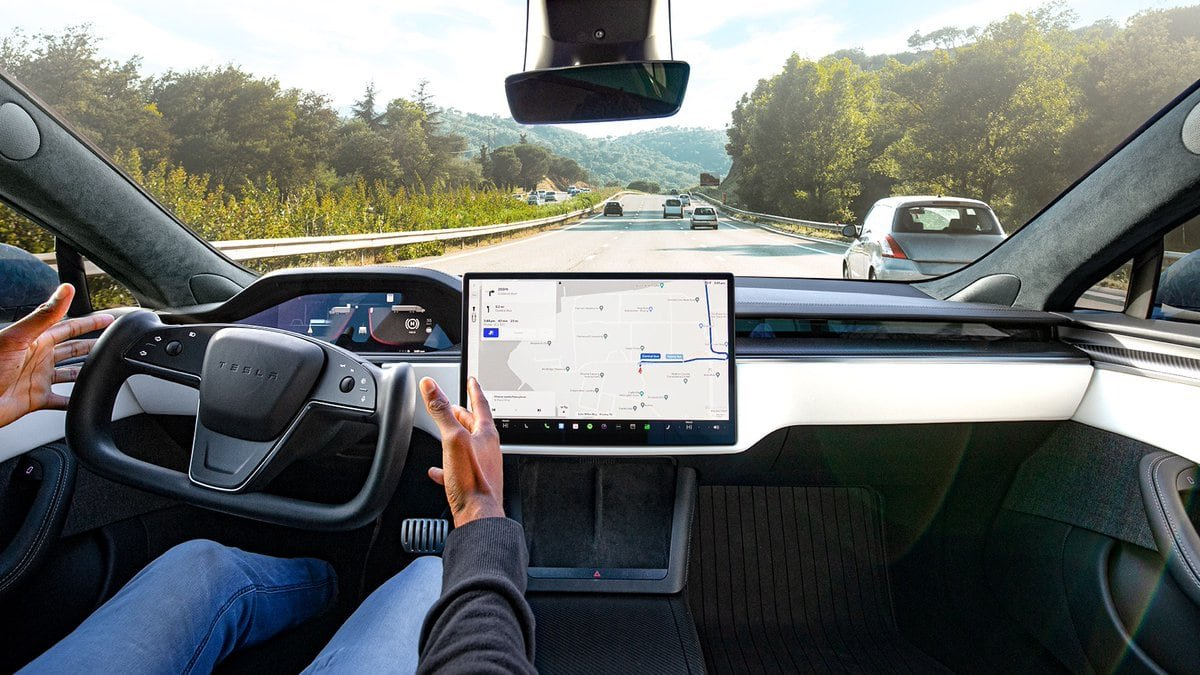
On May 30, Tesla China officially announced the launch of a limited-time transfer policy for its “Full Self-Driving” (FSD) feature, now rebranded as “Enhanced Assisted Driving” for the Chinese market.
According to Tesla’s official announcement, from now until June 30, 2025, eligible existing owners can transfer their previously purchased FSD software rights to a new Model S, 3, X, or Y—provided the purchase is an additional order or a trade-in.

This initiative essentially mirrors Tesla’s Full Self-Driving (FSD) transfer program, albeit under a new name tailored to local regulations. It marks the fourth time Tesla has opened such a transfer campaign in China, following similar moves in 2023 and 2024. The strategy behind it is clear: drive repeat purchases and prop up sluggish sales.
Tesla has recently faced mounting pressure in the Chinese market. In April 2025, Tesla sold 28,731 vehicles in China—a more than 60% drop compared to the previous month. Notably, Model 3 sales fell to just 8,747 units, trailing behind domestic newcomers like Xiaomi.

In addition to the transfer of rights, Tesla has also continuously extended its five-year interest-free financing policy this year, which is also aimed at “propping up” sales. But the question now is: how many people are still willing to repurchase?
For early adopters who once paid a hefty sum for FSD, the transfer offer may feel like little more than a consolation prize—especially as the full functionality of FSD has yet to be rolled out in China. Despite repeated promises, Tesla has not provided a clear timeline for when FSD’s complete capabilities will become available locally.

When a key feature remains perpetually “in the pipeline” and customers can only continue accessing it by buying a new car, one has to ask: how sustainable—and effective—is this kind of repurchase incentive?
Discover more from ChinaEVHome
Subscribe to get the latest posts sent to your email.