- Hesai captured 43% share of global primary ADAS LiDAR shipments, leading the market.
- Chinese LiDAR suppliers now command about 95% of global automotive LiDAR shipments.
- Hesai’s ATX series topped 1M deliveries with a 6M+ order backlog and capacity doubling to 4M by 2026.
According to Yole Group’s Automotive ADAS 2026 report, the global automotive LiDAR market exceeded $1 billion for the first time in 2025, representing a year-on-year increase of 60%.
In terms of shipments, total passenger vehicle LiDAR deliveries reached 3.7 million units for the year, including approximately 3.1 million primary ADAS LiDAR units.
Within this growth cycle, Hesai Technology captured a 43% share of the primary LiDAR market, ranking first globally in shipment volume.

More notably, the report indicates that Chinese LiDAR companies collectively account for approximately 95% of the global market, underscoring a clear shift in supply chain leadership toward China.
Taking Hesai as an example, the company has built a full-stack, chip-based development pathway, establishing a product portfolio spanning multiple series, including AT, ET, FT, XT, OT, and JT, covering diverse application scenarios.
Product form factors are also evolving. Compact LiDAR solutions, represented by the ATX platform, are increasingly being integrated into mainstream vehicle configurations.
Cumulative deliveries of the ATX series have exceeded 1 million units, with an order backlog surpassing 6 million units.
On the demand side, the expansion of advanced driver assistance systems into urban driving scenarios is accelerating adoption.

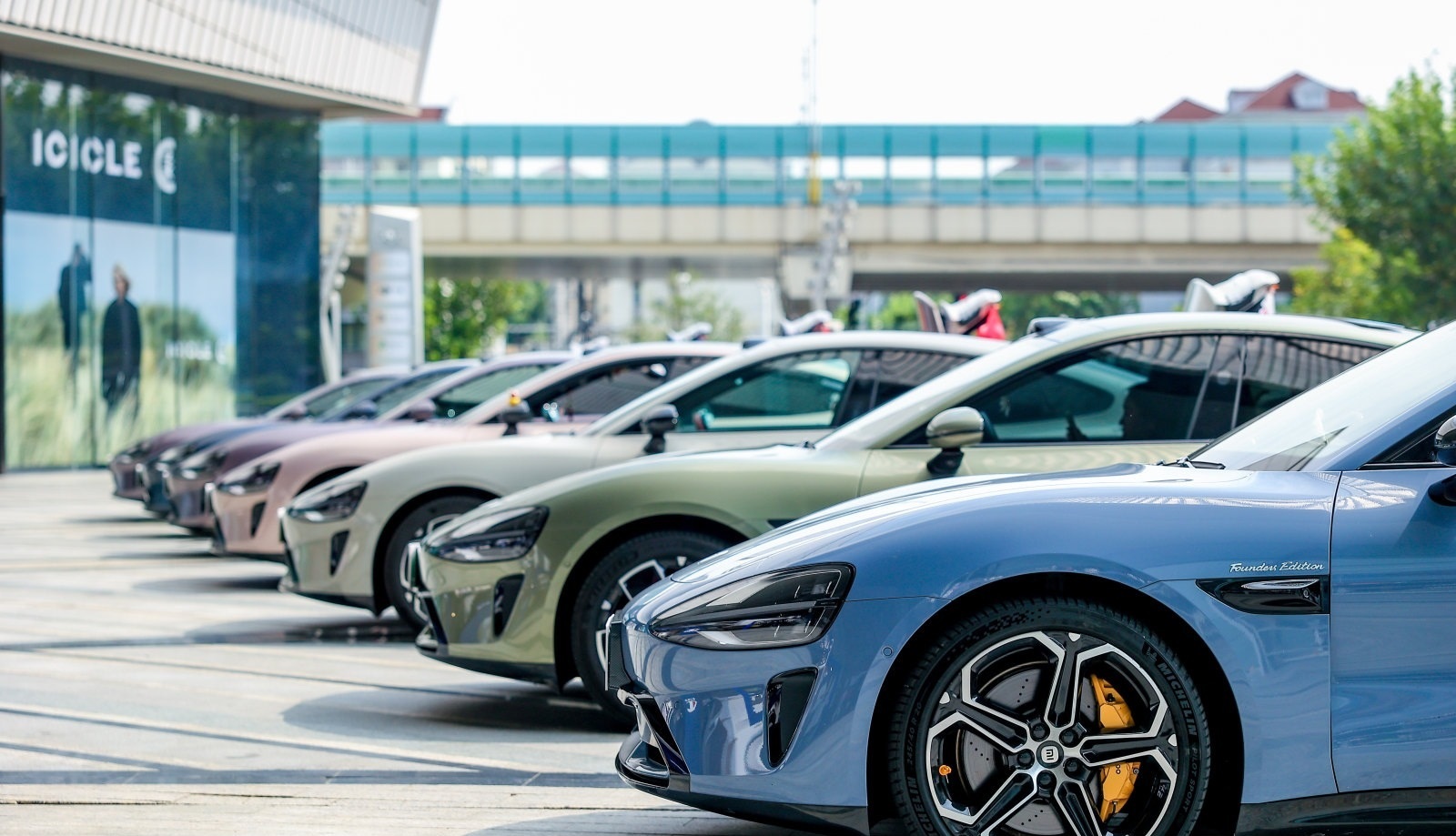
Leading automakers such as Li Auto, Xiaomi, BYD, and Zeekr have integrated Hesai LiDAR into multiple high-volume models, driving rapid shipment growth.
To date, Hesai has secured mass production design wins across more than 160 models from 40 automotive brands, including all of China’s top ten automakers by sales.
It has also secured full lineup ADAS LiDAR supply agreements for 2026 with its two largest customers.

As order volumes ramp up, production capacity is expanding accordingly.
Hesai plans to double its annual capacity from 2 million units to 4 million units by 2026 and is building a new factory in Thailand, expected to begin operations in 2027.
Meanwhile, according to Reuters, Rivian is considering in-house production of LiDAR sensors and may collaborate with Chinese companies to advance this effort.
Rivian CEO RJ Scaringe indicated that the company aims to establish production capabilities in the US or leverage joint ventures to adapt mature Chinese technologies into its own manufacturing system.
This move reflects a broader strategic shift among overseas automakers, which are seeking greater control over core sensor technologies while continuing to rely on China’s established supply chains and technological expertise.
Discover more from ChinaEVHome
Subscribe to get the latest posts sent to your email.