- Afari to buy 100% of Fvidar for RMB 25.908 million to shore up perception tech for autonomous driving.
- The deal plugs a sensor-fusion gap, accelerating Afari’s Perception–Decision–Execution full-stack roadmap.
- Afari targets 1–1.3M vehicle AD installs by 2026 and aims for smart driving to reach 15% of sales.
On June 11, 2026, Afari announced that its subsidiary Afari Zhijia planned to acquire a 100% stake in Ningbo Fvidar Technology for RMB 25.908 million (US$3.756 million).

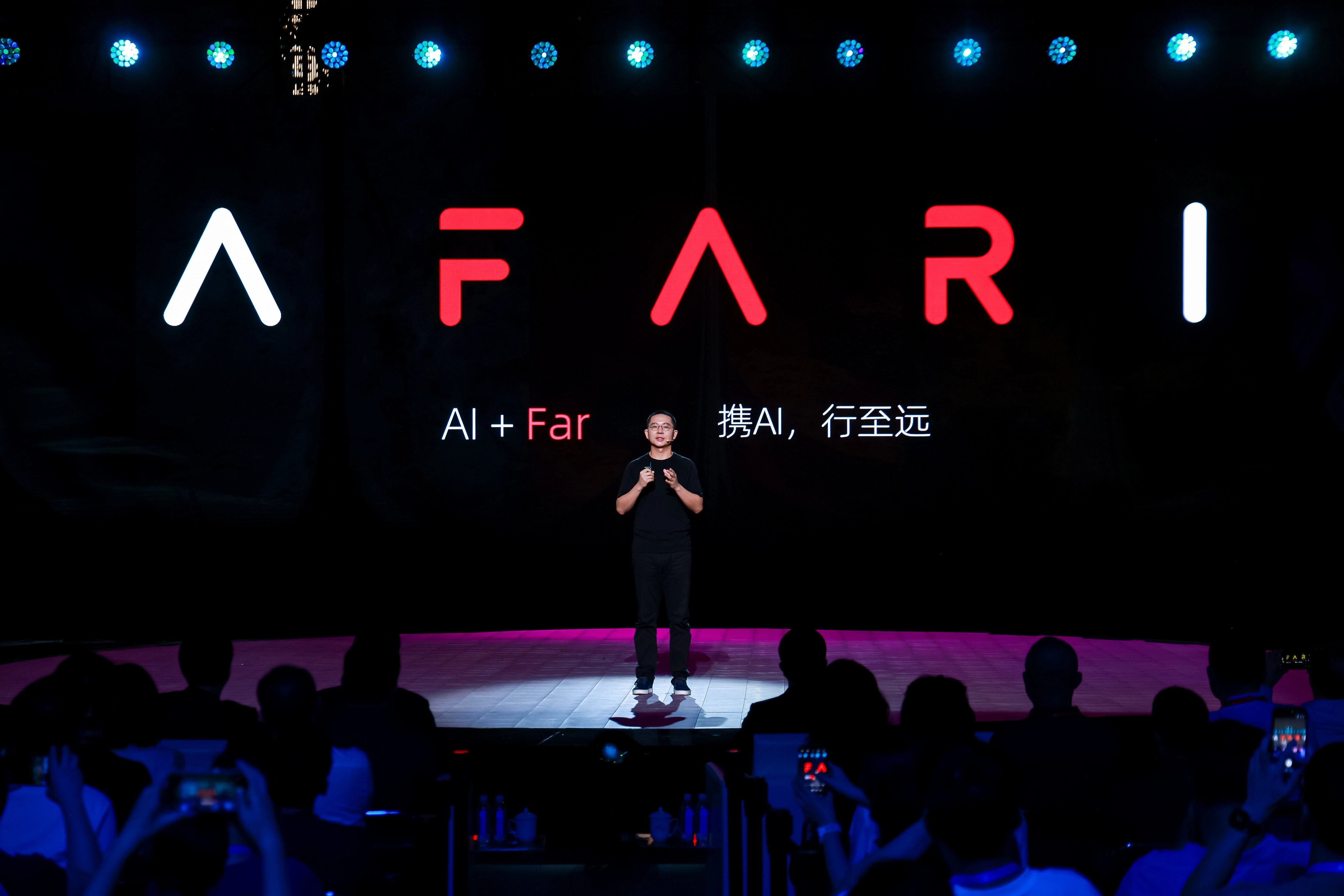
Headquartered in Chongqing, Afari started as a vehicle and motorcycle manufacturer. In recent years, the company shifted toward intelligent driving. Its business now spans passenger vehicles, motorcycle development, autonomous driving solutions; “AI + Automotive” is positioned as a core strategy.
In its 2025 annual report, the firm posted total revenue of RMB 9.999 billion (US$1.45 billion), representing a 42.13% rise YoY. Its net profit attributable to shareholders jumped 111% to RMB 84.41 million (US$12.24 million).
Smart driving revenue totaled RMB 350M ($50.75M), accounting for less than 5% of total revenue. Despite its current size, the segment has become one of the company’s primary investment priorities.
For Afari, the acquisition represents more than a financial transaction. It strengthens perception capabilities, fills a critical technology gap, supports the company’s broader full-stack autonomous driving strategy.
Under its roadmap, Afari aims to equip between 1M and 1.3M vehicles with its autonomous driving systems by 2026. Cumulative installations are targeted to reach 8M units by 2028, with smart driving revenue contributing 15% of total sales.
The company has already partnered with Geely Auto Group on the Qianli Haohan full-stack autonomous driving platform. It is also working with BAIC Group on the PALLADE AI vehicle brand (currently planned around five models), while jointly developing Robotaxi solutions with CaoCao Inc.

Beyond those partnerships, Afari has established cooperation with more than 60 domestic and international automakers. The company holds over 320 patents related to intelligent driving technologies and in-vehicle sensing systems.
Fvidar‘s expertise in sensor fusion appears to be a key attraction. Founded in 2023, the company focuses on visual perception and millimeter-wave radar fusion technologies. Its portfolio includes fusion sensors, environmental perception algorithms, intelligent cockpit sensing systems suitable for Level 2 to Level 4 autonomous driving applications.
From a business integration perspective, the acquisition could significantly expand Afari’s product portfolio. The company described the transaction as part of its “software-hardware integration, full-stack delivery” strategy. Afari already has exposure to domain controllers, large-scale vehicle sensors. Fvidar brings expertise in miniature sensing devices, fusion perception algorithms, cockpit sensing technologies.
The combination helps strengthen Afari’s perception layer, one of the most important building blocks in autonomous driving architectures. Afari currently covers autonomous driving systems, domain controllers, several core execution functions. Fvidar operates at the sensing layer. Following the acquisition, the company is expected to move closer to a complete “Perception–Decision–Execution” technology framework, enhancing its overall competitiveness.
The deal may also accelerate commercialization. While Fvidar has largely focused on research and development, Afari offers established supply-chain resources, manufacturing experience, automaker relationships. The integration could speed up mass production of fusion perception products, creating another growth avenue for the company.

Recent financial results suggest momentum is already building. Afari’s first-quarter 2026 earnings report shows revenue rose 30.69% YoY to RMB 2.361 billion (US$342.3 million). Net profit attributable to shareholders climbed 141.31% to RMB 48.37 million (US$7.01 million).
Smart driving has increasingly become one of the company’s most important growth contributors, highlighting why perception technologies are moving to the center of its expansion strategy.
Discover more from ChinaEVHome
Subscribe to get the latest posts sent to your email.