Driven by the global shift toward new energy vehicles (NEVs), China’s passenger car export market continued its steady growth in the first half of 2025, with particularly strong performance in the NEV segment.
Recently, Yiche, citing data from the China Passenger Car Association (CPCA), released the export rankings for Chinese passenger car manufacturers for the first half of 2025.

Chery Group topped the list with 544,937 vehicles exported, up 3.5% year-on-year. The company maintains a strong overseas presence with value-driven brands like JAECOO and Omega, covering 120 countries and regions and surpassing 5 million overseas users.
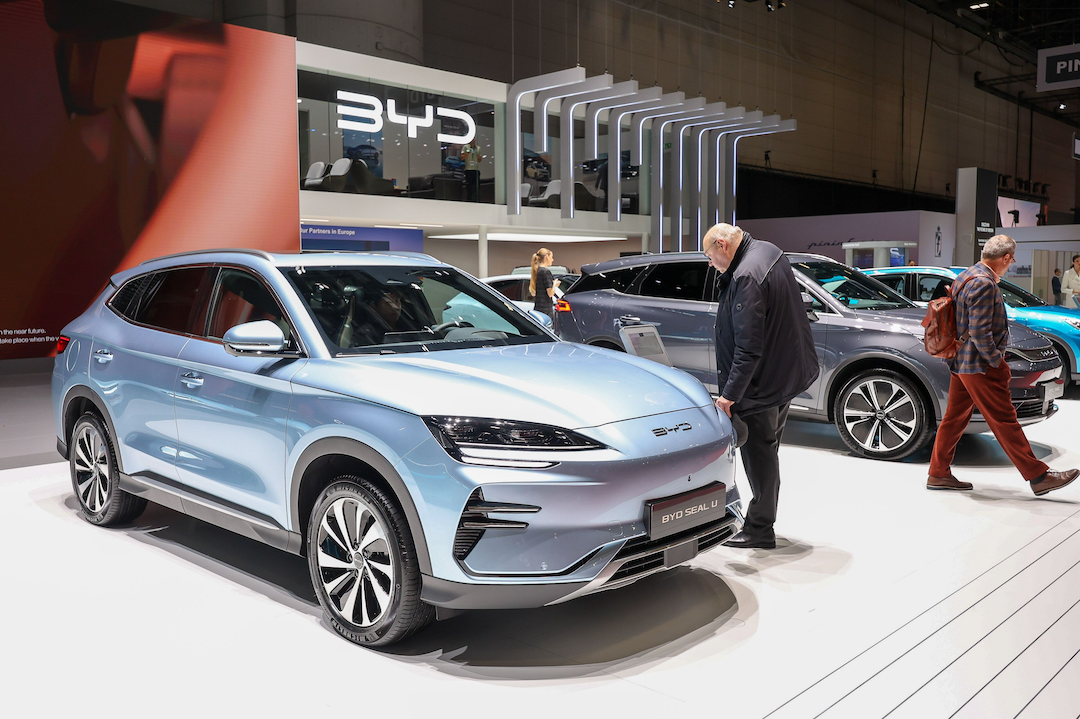
BYD rose to second place with 443,000 units, representing a sharp 118.2% year-on-year increase and an incremental growth of 240,000 units—the largest among all automakers. With its 7th ro-ro carrier entering service, BYD is on track to surpass 800,000 exports in 2025.
SAIC Motor, Geely Auto, and Great Wall Motor ranked third to fifth, respectively. These groups rely on multi-brand, localized strategies to expand abroad, though they experienced year-on-year declines despite slight increases in export regions.
Notably, emerging EV makers XPeng and Leapmotor entered the top 20 for the first time, exporting 18,700 and 20,400 vehicles, respectively, showing early success in European and other global markets.

The BYD Song PLUS NEV was the best-selling single export model in H1 2025 with 134,100 units exported, up 184% YoY. The newly launched BYD Sealion 07 EV and Changan Deepal Explore 06 C-DM also impressed with around 50,000 and 51,000 units exported, placing them in the top 10.
The Explore 06 C-DM saw an explosive increase from just 15 units in the same period last year—up over 342,000%. Models like the MG ZS, BYD Seagull, and Yuan PLUS maintained solid overseas sales thanks to their brand reputation and performance.

In June alone, Chery and BYD led with 105,552 and 85,957 vehicles exported, respectively. BYD’s YoY growth hit 218.4%, while Geely ranked fourth with 39,043 units, up 30.1% MoM.
Dongfeng Motor also delivered strong results in June with 15,061 vehicles exported—up 133% MoM and 150.7% YoY—thanks to models like Voyah, Dongfeng Nammi, and Dongfeng M-Hero. The group recently formed a joint export venture with Nissan, which could further boost H2 exports.
Geely, Great Wall, and SAIC-GM-Wuling maintained stable export performance. GAC Trumpchi and Volvo Asia Pacific achieved strong MoM growth but showed YoY declines.

In June’s single-model ranking, ICE vehicles still held a significant share. However, BYD’s Song PLUS and Seagull ranked first and second, with 17,960 and 15,983 units exported—both posting substantial YoY growth. Chery’s Tiggo 5x and the MG ZS also exceeded 10,000 units.
Geely models saw strong MoM growth: the Boyue L (up 109.2%), Emgrand (up 100.8%), and Binyue (up 18.9%), each exported over 9,000 units, showing strong potential in emerging markets.

NEVs drove most of the export growth for Chinese automakers. BYD led the growth chart, with the Song PLUS alone increasing by 86,882 units YoY. Other fast-growing BYD models included the Sealion 07 EV, Seagull, and Yuan UP.
Models like the Baojun Yunduo, Galaxy E5, MG HS, and MINI Aceman EV also performed well due to strong overseas brand perception and differentiated positioning.
BYD topped the manufacturer growth list with an increase of 240,061 units, significantly outpacing rivals. It’s on track to surpass long-time export leader Chery by year-end. Dongfeng, Beijing Hyundai, and SAIC-GM-Wuling all posted growth exceeding 15,000 units YoY.
Joint ventures like Jiangling Ford, Spotlight Auto, and Changan Mazda launched export plans this year. XPeng and Leapmotor also made their debut on the growth leaderboard with 12,653 and 20,375 new exports, respectively.
In H1 2025, driven by the global NEV trend, China’s passenger car exports continued to rise. Leading players like BYD, Chery, and SAIC expanded their presence overseas through rapid new model rollouts. At the same time, emerging EV makers began tapping into mature markets such as Europe and Southeast Asia with tech-packed offerings. While their volumes are still behind the traditional giants, their rapid growth signals a shift worth watching in China’s global auto push.
Discover more from ChinaEVHome
Subscribe to get the latest posts sent to your email.