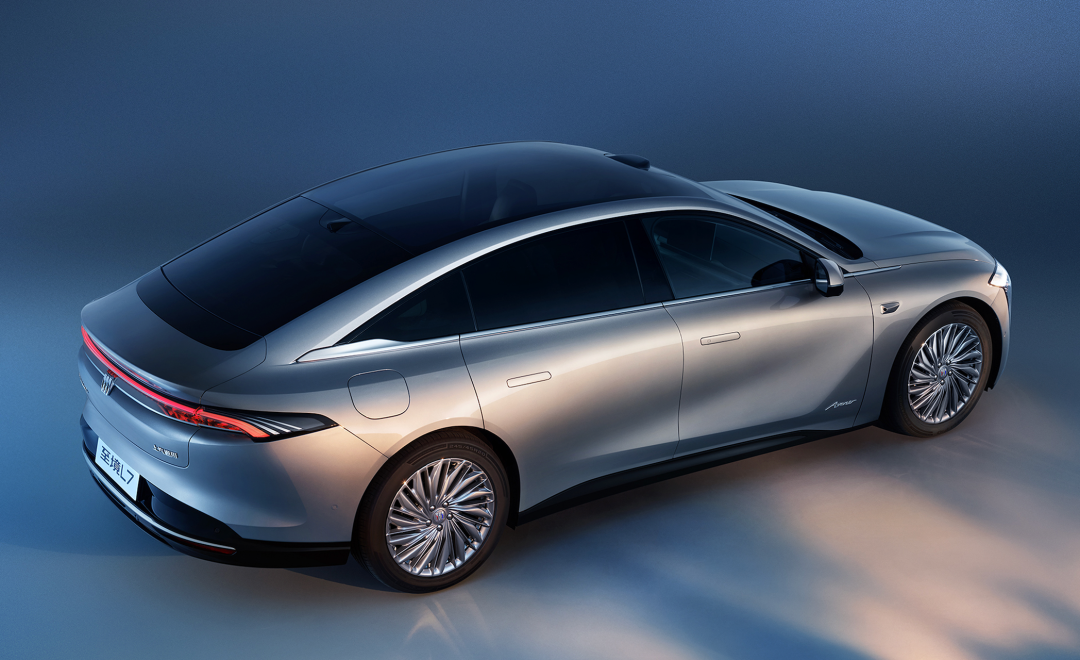
Buick Electra L7 debuts Zhenlong range-extender system with 302km EV range, 1400km total range, targeting under ¥300,000 ($42,000) market.
The extended-range technology race is about to heat up even more.
Following IM Motors’ launch of its “Stellar” range-extender system last week, SAIC-GM’s Buick officially unveiled its own “Zhenlong” range-extender system on the morning of August 7.

In simple terms, this is a system equipped with a relatively large-capacity battery pack, capable of delivering long all-electric range.
At the same time, Buick’s Zhenlong system also emphasizes consistent power output (minimal difference between fully charged and low battery states) and operational quietness. It claims to address “pain points” commonly seen in the industry.
According to the official preview, the Zhenlong system will first be featured on the Buick Electra L7, a model that is said to be “launching soon.”
Let’s take a closer look at what makes this Zhenlong system stand out.
“Directly Addressing the Pain Points”
As one of the earlier brands to launch extended-range powertrains, Buick believes there are still four major pain points in the current mainstream range-extender systems on the market:
- Severe power loss when battery is low;
- Short all-electric range, requiring frequent charging;
- Frequent charging and discharging shortens battery life and poses safety risks;
- Noticeable vibration and poor NVH when the range extender activates.
From a commercial logic perspective, addressing these pain points with technology creates an opportunity for Buick to gain a competitive edge. The technical highlights of the Zhenlong system directly correspond to these issues, giving it, at least on paper, an advantage over other commonly seen range-extender systems.
Let’s first look at the issue of power loss when the battery is depleted. Buick claims that with many systems, acceleration performance can drop by up to 50% when power is low, with 0–100km/h acceleration slowing by 0.5 to 3 seconds.

By contrast, the Zhenlong system achieves 0–100 km/h in 5.8 seconds with a full battery, and 5.9 seconds when the battery is depleted—a difference of only 0.1 seconds. This is achieved through three key aspects: a high-performance motor optimized for range-extending, a capable generator, and crucially, a battery with strong discharge capability.
The system uses the Ultium 2.0 range-extender-specific battery, with discharge power reaching 315kW/9C at full charge, and 260kW/7.8C when depleted. This meets the demands of the 252kW drive motor.

The generator itself outputs 115kW and is paired with a 100kW motor, efficiently recharging the battery when depleted and avoiding performance bottlenecks.
Having covered the performance highlights of the Zhenlong system, it’s necessary to mention its range parameters.
With a 40kWh battery pack, the Zhenlong system delivers 302km of CLTC all-electric range and over 1400km of combined range. For charging, the system supports 130kW fast charging, approximately 3C rate, enabling 30–80% charging in just 18 minutes.

At present, Buick’s Zhenlong bears some resemblance to IM’s Stellar system: both extend all-electric range via larger battery packs, are based on an 800V platform, and aim to bring charging capability closer to that of pure EVs.
As for fuel efficiency, official figures show 5.9L/100km when the battery is depleted, and just 0.5L/100km with a full battery.
Another key feature is NVH performance when the generator kicks in. Zhenlong incorporates “Silentium” noise reduction technology, ensuring the noise increase is under 0.5 decibels—virtually imperceptible.
Lastly, regarding safety and battery longevity: the Ultium battery can withstand temperatures over 1,000°C and is rated for over 3,700 full charge-discharge cycles. In theory, assuming 15,000km of annual mileage, the Electra L7’s battery could remain in “low degradation” condition even after 43 years of use.
A Battle to Redefine the Extended-Range Sedan?
The Buick Electra L7, the first model to carry the Zhenlong system, has yet to reveal a specific price range, but the official guidance is “under ¥300,000” ($42,000).

In the sub-¥300,000 ($42,000) range, current popular extended-range sedans include the Leapmotor C01, Deepal SL03, and Avatr 06 and 12. Among joint-venture brands, only the Mazda EZ-6 offers such a powertrain.
If the Electra L7 is to compete with these models, “range” will be a major selling point.
Among competitors, the Leapmotor C01 316 Premium Edition offers a 316km CLTC all-electric range. The Exeed Sterra ES range-extender boasts over 1600km of total range.
That said, few extended-range sedans—even those above ¥300,000 ($42,000)—can match the Electra L7’s 302km all-electric range and 1400+km total range. Even the more expensive STELATO GT S9 range-extender falls short.
In addition, the L7’s Zhenlong system offers faster energy replenishment. Competing models typically have a maximum 2C charging rate and take 20–30 minutes to charge from 30% to 80%.

Combined with features like consistent power across battery states and exceptional quietness, the Electra L7 could stand out among extended-range sedans priced under ¥300,000 ($42,000). Moreover, the Electra L7 will come equipped with the Momenta 6R intelligent driving system, potentially rivaling Avatr’s QianKun ADS in smart driving capability.
Still, the NEV sedan market is fiercely competitive, and the L7 will face significant challenges.
One key issue: extended-range sedans are far less popular in China than extended-range SUVs. According to June sales data, not a single sedan made the top 10 list of range-extender sales.

Specifically, in the sub-¥300,000 ($42,000) sedan segment, the market is divided evenly among pure electric, plug-in hybrid, and fuel vehicles. The Avatr 06, a relatively successful extended-range sedan, sold just 5,842 units in one month, ranking 41st among sedans in that price range.

In short, no extended-range sedan priced under ¥300,000 ($42,000) has yet become a breakout hit in the Chinese market. So, while the Electra L7’s Zhenlong system strengthens range and performance, it also faces entrenched market inertia.
For Buick to break through in sales, the Zhenlong system must exceed expectations and deliver a superior experience to both EVs and PHEVs. The L7 itself must also stand out in design, space, and comfort to compete effectively in its segment.
Most crucially, of course, will be whether Buick can offer an attractive enough price.
As the Electra L7 officially enters the market in Q4, we can look forward to seeing whether SAIC-GM Buick can deliver a product that truly stands out.
Discover more from ChinaEVHome
Subscribe to get the latest posts sent to your email.