Two chargers for every five cars—China’s EV charging enters a new stage.
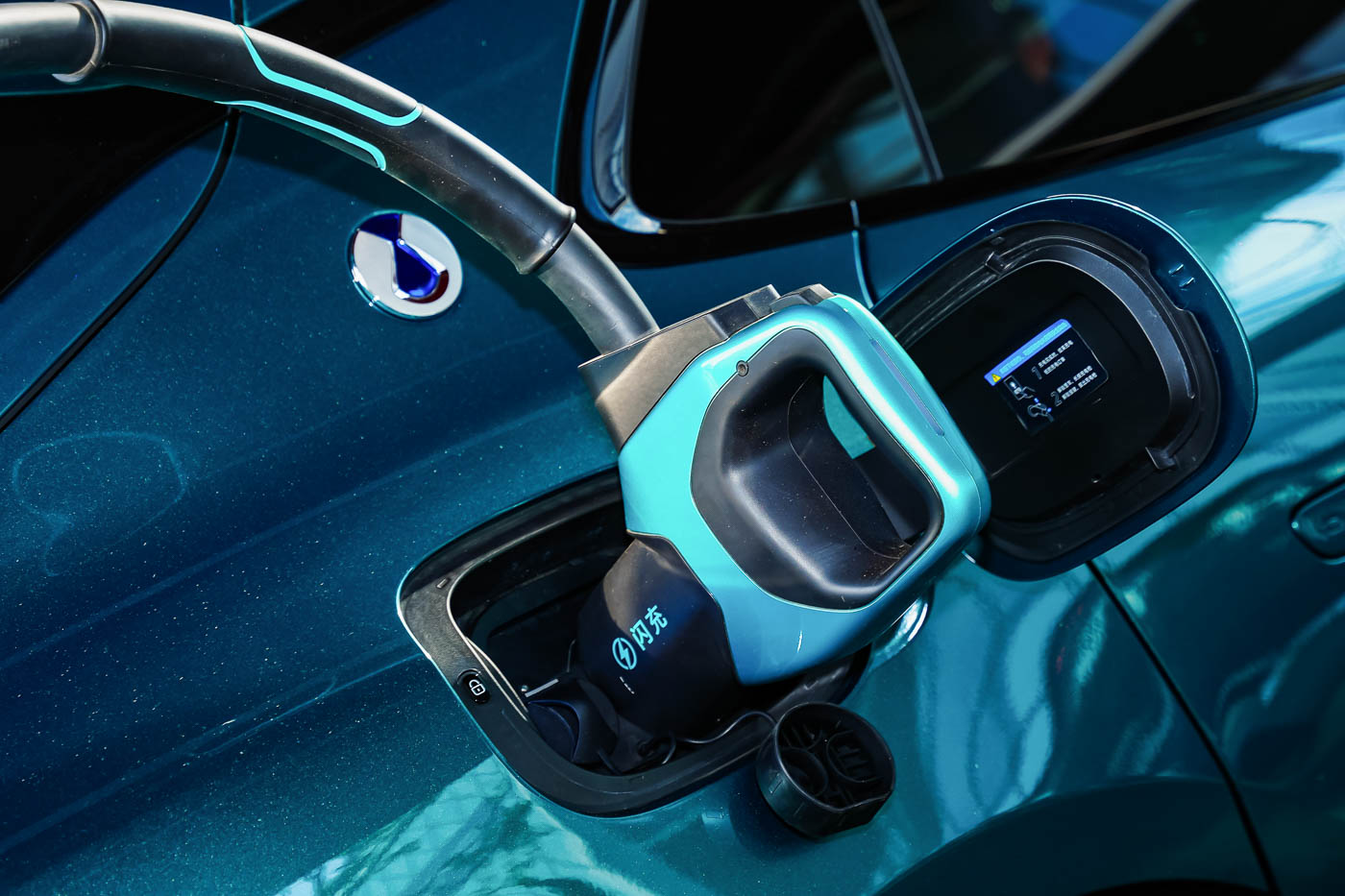
At a State Council press briefing, Wang Hongzhi, Director of the National Energy Administration, announced that during the 14th Five-Year Plan period, China has built the world’s largest electric vehicle (EV) charging network—with the ratio now reaching two chargers for every five cars.

According to the latest data from the China Electric Vehicle Charging Infrastructure Alliance, as of the end of July 2025, the country’s EV charging infrastructure reached 16.696 million units (connectors), up 53% year-on-year. Of these, 4.202 million are public chargers (up 38% YoY), while 12.494 million are private chargers (up 58.8% YoY).

From January to July alone, 3.878 million new chargers were added nationwide, with the charger-to-vehicle growth ratio at 1:1.8—essentially keeping pace with NEV sales.
Regionally, ten provinces and cities—Guangdong, Zhejiang, Jiangsu, Shanghai, Shandong, Henan, Anhui, Hubei, Sichuan, and Beijing—account for two-thirds of the country’s public chargers.
Meanwhile, the public charging operator landscape is becoming more consolidated. Teld ranks first with 807,000 chargers, followed by Star Charge with 703,000 and Cloud Quick Charge with 656,000. Together with State Grid, China Southern Power Grid, and Xiaoju Charge, these players control more than 80% of the market.

Automakers are also taking different approaches to building their own energy-supplement networks:
- NIO focuses on battery swapping, with 3,466 swap stations and around 27,000 self-built chargers nationwide.
- Li Auto prioritizes ultra-fast charging, now operating 3,143 supercharging stations.
- Tesla continues to expand its Supercharger network, with about 11,600 chargers across 2,100 stations in China.
- XPeng has deployed over 12,600 chargers, Zeekr more than 8,400, and GAC Aion 16,800 — together filling in high-demand urban and highway corridors.

As NEV penetration continues to rise, the charging network is becoming denser and more refined. The question of “whether chargers exist” has largely been solved. The next step is ensuring “how well they work”: improving interoperability, enabling cross-brand charging, and elevating the overall user experience.
Discover more from ChinaEVHome
Subscribe to get the latest posts sent to your email.