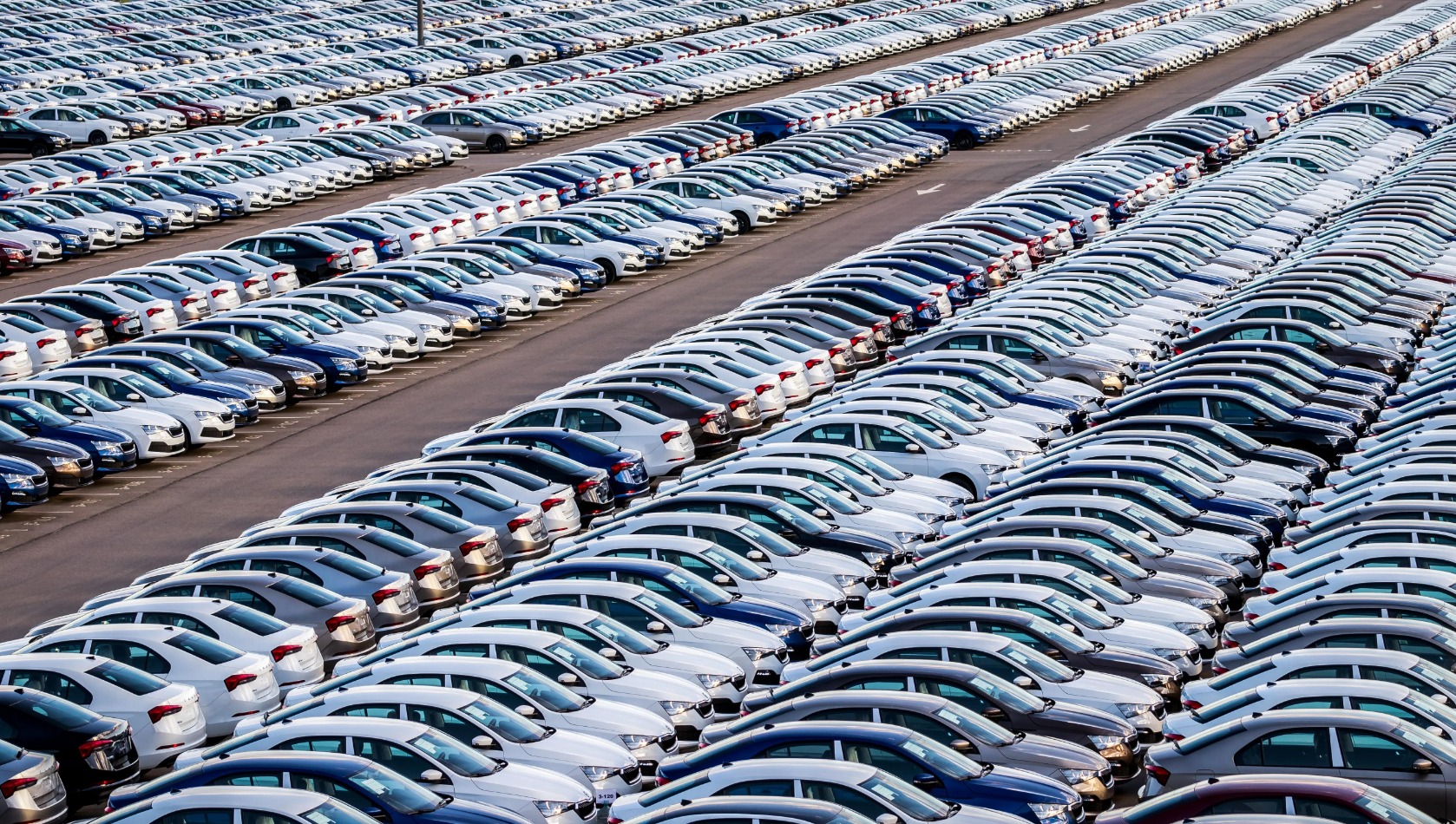
The global auto market will come under greater pressure in the next few years. As destocking gradually concludes, production and sales are expected to reach equilibrium around 2027–2028.
At the “2025 Mobility Intelligence Dialogue” on September 11, Tao Gao, Co-Director of Automotive Analysis for S&P Global Mobility in Greater China, said the global auto industry has been undergoing inventory destocking since 2023 and could face negative growth in production and sales starting in 2026.
According to Tao, supply and demand dynamics suggest growing pressure on the market in the coming years. Once destocking is largely complete, global auto production and sales are expected to stabilize around 2027–2028.
Global vehicle production in 2024 is projected at 92.5 million units, a slight decline from the previous year. S&P Global forecasts that the industry’s growth momentum will continue to weaken in the medium term, with annual global output unlikely to recover to around 98 million units until 2031.
S&P Global also projects global battery electric vehicle (BEV) sales at 15.1 million units in 2025, up 30% from 2024. While electrification is accelerating, weaker demand growth and regional disparities will pose significant challenges for automakers worldwide.

In contrast to the global cooling trend, China’s auto market continues to expand at a record pace.
Data from the China Association of Automobile Manufacturers (CAAM) show that in 2024, domestic production and sales reached 31.28 million and 31.44 million units respectively, both historic highs.

Of these, new energy vehicles (NEVs) accounted for 12.89 million in production and 12.87 million in sales, marking year-on-year increases of 34.4% and 35.5%. NEVs represented 40.9% of all new vehicle sales in China.
The momentum carried into 2025. Data from the China Passenger Car Association (CPCA) show that in August, retail sales of NEV passenger cars reached 1.101 million units, up 7.5% year-on-year and 11.6% month-on-month, lifting market penetration to 55.2%.

China’s auto exports are also gaining speed. In 2024, exports totaled 5.86 million units, up 19.3% year-on-year, including 1.28 million NEVs. BYD, Changan, and Chery were among the leading exporters, with some automakers recording growth rates above 70%.
Domestic policy remains a critical driver. Earlier this year, the National Development and Reform Commission and the Ministry of Finance launched a nationwide vehicle trade-in program expected to unlock more than RMB 200 billion ($28 billion) in consumption potential.
The CPCA forecasts retail sales of 23.4 million passenger vehicles in China in 2025, including 13.3 million NEVs, representing 20% year-on-year growth and a further increase in NEV penetration to 57%.
Overall, while the global auto industry enters a correction cycle, the sustained growth of NEVs and the rapid expansion of exports are becoming key engines powering Chinese automakers.
Discover more from ChinaEVHome
Subscribe to get the latest posts sent to your email.


