After the news of Buffett’s complete exit broke, BYD’s Hong Kong shares fell by 1.2% that day, while its A-shares dropped by only 0.8%.
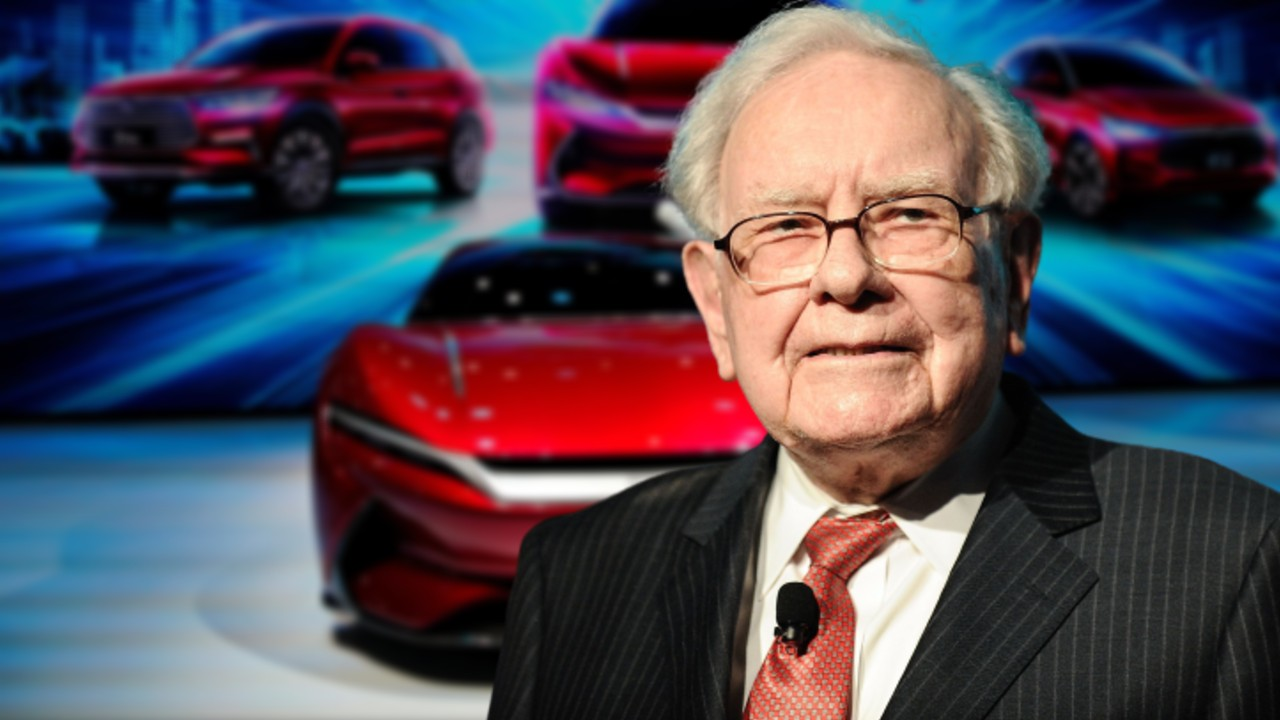
On September 21, foreign media reported that Warren Buffett’s Berkshire Hathaway had completely exited its investment in BYD.
A Berkshire spokesperson confirmed the news: “BYD shares have indeed been fully sold.” According to statistics, during the years Buffett held BYD stock, BYD’s share price increased by approximately 3,890%.

Looking back to September 2008, encouraged by his close friend Charlie Munger, Buffett, through Berkshire-owned MidAmerican Energy, subscribed to 225 million BYD H-shares at HK$8 per share. The total investment amounted to approximately HK$1.8 billion (about $230 million), representing 10% of BYD’s shares at that time.
At that time, BYD’s price-to-earnings (P/E) ratio was 10.2 times, and its price-to-book (P/B) ratio was 1.53 times. For about the next 14 years, Buffett continued to hold a significant position in BYD.

Buffett’s complete exit this time did not come suddenly.
Starting from August 2022, Berkshire began gradually reducing its holdings of BYD stock. By July 2024, Berkshire’s stake in BYD had decreased to 4.94%. Since the Hong Kong Exchange regulations do not require shareholders holding less than 5% to disclose reductions, the final exit operation was not made public.
During the years Berkshire held BYD stock, BYD’s share price rose by approximately 3,890%. This investment became one of the highest-returning assets in Berkshire’s portfolio, with an annualized return of about 22%.

Just this morning, Li Yunfei, General Manager of BYD Group’s Public Relations Department, responded to the matter in a post:
In August 2022, Berkshire began gradually reducing the company shares it had purchased in 2008. By June of last year, its stake had already fallen below 5%. In stock investments, buying and selling are normal activities. We thank Munger and Buffett for their recognition of BYD, as well as for their investment, assistance, and companionship over the past 17 years. Here’s to all long-termists!
Market analysts believe that Buffett’s complete exit may stem from multiple factors. On one hand, BYD’s current dynamic P/E ratio is about 25 times, which is higher than Berkshire’s typical strategy of targeting undervalued assets. On the other hand, Sino-U.S. trade friction and the policy risks posed by the EU’s imposition of additional tariffs on Chinese electric vehicles have increased uncertainties regarding overseas expansion.
It is worth noting that recently, five BYD executives and 32 core personnel increased their holdings of the company’s A-shares by a total of 488,200 shares, with a total value of approximately 52.3278 million yuan. This indicates insiders’ confidence in BYD’s future development.
After the news of Buffett’s complete exit broke, BYD’s Hong Kong shares fell by 1.2% that day, while its A-shares dropped by only 0.8%.
Discover more from ChinaEVHome
Subscribe to get the latest posts sent to your email.