In Q3, BMW outperformed rivals with 8.8% growth, while Mercedes and Audi faced declines. Concerns focus on EV competitiveness and pricing power as the market evolves.
The transition at BMW, Mercedes-Benz and Audi—collectively known as BBA in China—is still in flux.
In the third quarter of the year, BMW, Mercedes and Audi sold 514,600, 441,500 and 392,200 vehicles respectively. Only BMW achieved year-on-year growth with an 8.8% increase, while Mercedes and Audi posted declines of 12% and 2.6%.
However, in battery-electric vehicle (BEV) sales, the picture looks markedly different. Despite being the only brand to post overall growth in Q3, BMW delivered 102,900 BEVs—down 0.6% from a year earlier.

Mercedes saw a marginal increase to 42,600 BEVs (compared with 42,500 in Q3 2024), while Audi surged 58.6% to 62,000 units.
With 2025 drawing to a close and new-generation platforms from BBA being unveiled, the narrative around the trio is shifting. Concerns have moved from “what technology will they use to compete” to “how will they compete.”
Pricing power for BBA’s next wave of EVs due in 2026 has now become a central point of debate.
So what did BBA win or lose in the third quarter?
Ongoing Strain
Among the three, BMW has shown the greatest resilience this year.
According to BMW Group data, its 8.8% growth to 588,300 units in Q3 was largely supported by strong performance in Europe and the Americas.
BMW sold 239,600 vehicles in Europe (up 9.3%) and 125,900 in the Americas (up 24.4%). In its two core markets—Germany and the U.S.—deliveries reached 72,900 and 104,200, up 12.3% and 24.9%.

In contrast, Mercedes posted only 2% growth in Europe, selling 160,800 vehicles, while North America and the U.S. saw declines of 17%. U.S. sales fell to 70,800 units, accounting for 88.5% of its North American total.

Yet even BMW, which recorded notable growth across most key markets, chose to cut its fiscal 2025 outlook on the same day it announced Q3 sales.
BMW noted that weak comparatives in Q3 2024 provided an easy baseline for growth, while sales in China came in below expectations.
Meanwhile, delayed customs duty refunds in the U.S. and Germany prevented the company from achieving planned tariff savings. As a result, its automotive return on capital employed (RoCE) forecast was lowered from 9%-13% to 8%-10%, and pre-tax profit is now expected to be “slightly lower” than 2024.

Mercedes did not provide detailed Q3 financials but had already cut its full-year guidance in July.
China remains the main drag on both BMW and Mercedes.
BMW’s China sales dipped 0.4% in Q3—a notable improvement from the 13.7% decline in Q2—but still failed to return to growth, contributing to an 11.2% drop in Chinese deliveries for January to September.
Mercedes saw a 27% decline in China sales in Q3, steeper than its 18% decline year-to-date.
Audi did not disclose China figures, but joint venture data offers some indication.

FAW-Audi sold 104,100 vehicles in August-September, up 16.09%, and 141,100 units in Q3—flat at +0.07% year-on-year. SAIC-Audi delivered 5,700 retail units in September, up 90%, but Q3 sales fell 1% to 9,538 due to weakness in July-August.
Overall, Audi appears to have merely stabilised its China performance.
BBA’s China trajectory is now closely tied to competitiveness in EVs.
Audi’s 58.6% BEV growth in Q3 was supported by several factors: the rollout of the Q6L e-tron and E5 Sportback, and a rush in the U.S. ahead of EV subsidy phase-outs.

As of Q3, Audi’s cumulative 1.186 million sales trail BMW’s 1.796 million by 610,000 units—placing Audi at the edge of the first tier of legacy premium brands and facing a crisis of relevance. Its new PPE platform is central to its attempt to regain ground in China and globally.
BMW and Mercedes, both in the midst of platform transitions, saw little momentum in BEVs—with BMW down 0.6% and Mercedes up by just 100 units in Q3.
BBA, having already slowed their electrification roadmaps earlier this year, are still in the process of reshaping their product portfolios.
How Much Pricing Power Remains?
One bright spot for BMW and Mercedes is their high-margin performance divisions. BMW M and Mercedes’ Top-End luxury series both recorded double-digit growth in Q3, remaining key profit drivers.

The bigger concern is pressure in their mid- and entry-level segments, increasingly eroded by Tesla and Chinese EV manufacturers.
Challenges to models such as the BMW 3 Series, Mercedes C-Class and E-Class—once distant benchmarks on presentation slides—are now material.
Chinese consumers have grown accustomed to 3 Series and C-Class models selling for around RMB 200,000 ($28,100) after incentives, and E-Class models with six-figure discounts.
Yet even with aggressive markdowns, BBA has not seen significant volume recovery in China. Their “price-for-volume” strategy is breaking down in the face of EV competition, eroding both profit and brand equity.
Core models in the RMB 200,000–400,000 ($28,100–$56,300) range are being challenged on performance, software features and user experience. The “luxury” aura is fading among a new generation of EV-first buyers.
BBA has been responding for years: Mercedes’ partnerships with Momenta and Qianli Technology; the capabilities showcased in BMW’s Neue Klasse platform; Audi’s collaborations with Huawei and SAIC.
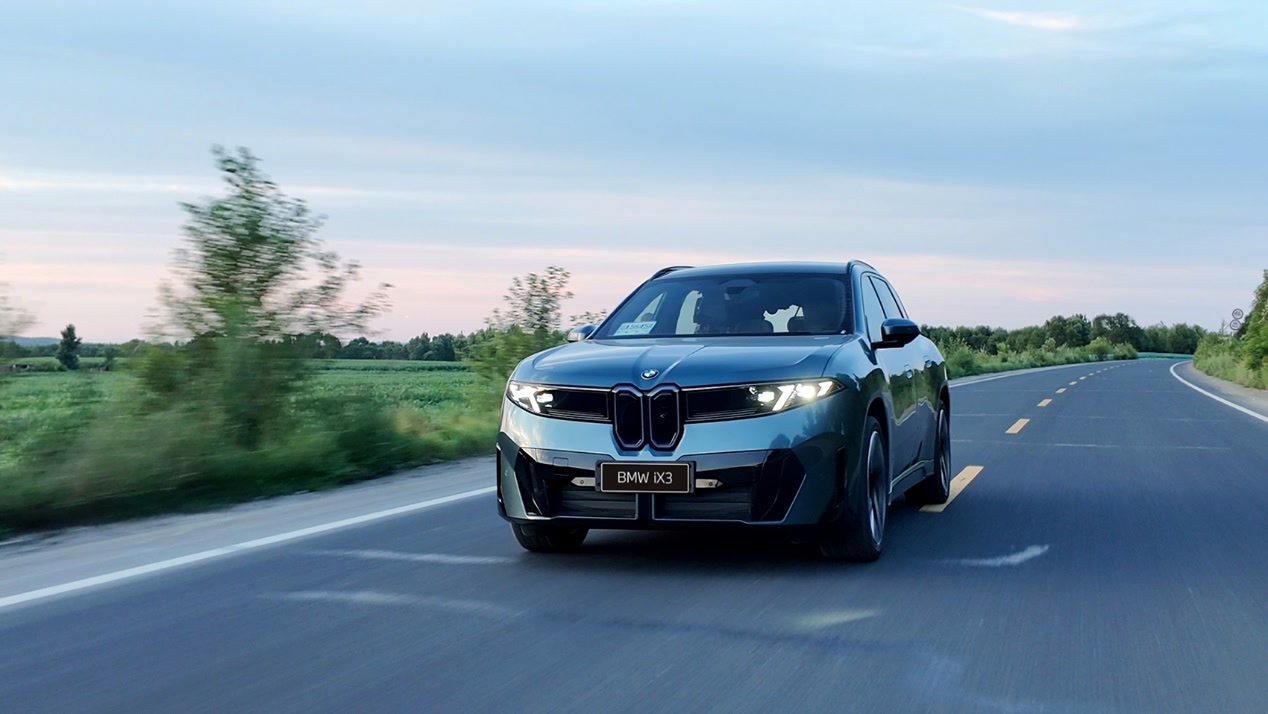
Product manifestations of this include the upcoming BMW iX3 with 900 km CLTC range, the Mercedes CLA EV with Momenta’s advanced driver assist, and Audi’s Q6L e-tron based on the PPE platform.

Yet pricing remains pivotal. The Audi Q6L e-tron starts at RMB 369,800 ($52,000). The Mercedes CLA EV is priced at RMB 259,000 ($36,400) and RMB 299,000 ($42,100). While more competitive than previous EV offerings, market response is yet to be proven.
The Q6L e-tron, launched in August, sold 1,200 units in its debut month and 1,000 in September—far from disruptive.
It costs roughly RMB 100,000 ($14,100) more than the similarly sized XPeng G9, and trails rivals such as the Tesla Model Y, Xiaomi YU7, Li Auto i8 and AITO M8 in configuration and software sophistication.
Meanwhile, ultra-luxury models such as the Maextro S800 have begun to challenge BBA’s flagship territory.
Following BMW’s guidance downgrade, UBS and JPMorgan both highlighted China-related uncertainty. JPMorgan commented: “More important than tariffs is the company’s ability to stabilise volume momentum and pricing power in China by FY26, which will ultimately determine long-term competitiveness.”
As 2026’s new product wave approaches, the question remains: can BBA still dictate pricing in China?
Discover more from ChinaEVHome
Subscribe to get the latest posts sent to your email.