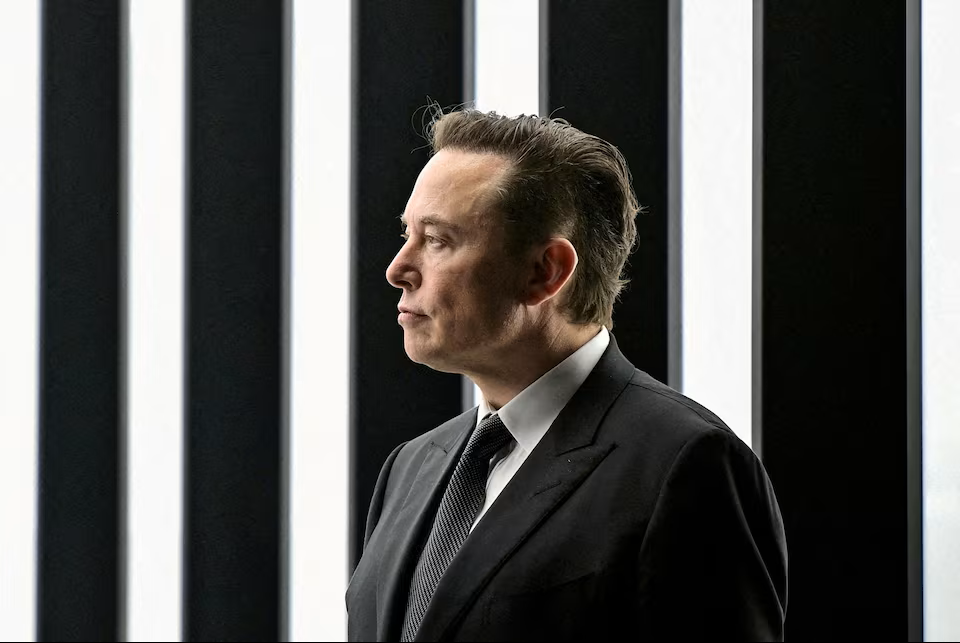
With Tesla’s annual shareholder meeting approaching next week, debate continues to intensify over CEO Elon Musk’s nearly $1 trillion compensation package.
Bloomberg reported yesterday that Tesla Chair Robyn Denholm said the company is considering internal candidates to succeed Musk should shareholders reject his roughly $1 trillion pay proposal, potentially prompting his departure.
Denholm stated that “the most likely outcome is an internal successor,” though the board is not ruling out external options. She added that several senior executives, including Tom Zhu, Senior Vice President for Automotive, have been groomed as part of Tesla’s long-term leadership development strategy.

Denholm also disclosed that Tesla has prepared “multiple contingency plans,” including the possibility of splitting executive duties among several leaders.
Last month, Tesla unveiled a new compensation framework with 12 performance milestones tied to company valuation, autonomous driving, and humanoid robotics.
If fully achieved, Musk would receive stock options equivalent to a 12% equity stake, raising his ownership from the current 12.8% to 25%.
Musk has said in X that this level of ownership is enough to be “influential, but not so much that I can’t be overturned.” He added that unless that is the case, he would “prefer to build products outside Tesla.”

The proposal, however, has sparked significant controversy. Two major proxy advisory firms—ISS and Glass Lewis—have both recommended that shareholders vote against it, citing excessive compensation, shareholder dilution, and concerns over board independence.
By contrast, Egan-Jones Proxy Services became the first major firm to back Tesla’s board last week, arguing that the package aligns with a “pay-for-performance” principle. Still, the firm acknowledged that if all targets are met, Musk’s stake could rise to 28.8%, further weakening shareholder influence.
Denholm has repeatedly urged shareholders in recent letters to support the plan, warning that rejection could cost Tesla “Musk’s vision and execution power,” potentially eroding the company’s market premium.

She said the board is prepared for any outcome but admitted uncertainty remains, as many passive investors may follow proxy advisors’ recommendations.
At midday trading in New York, Tesla shares rose 2.9%. The stock is up 12% so far this year, compared with a 17% gain in the S&P 500 index. Shareholder voting closes at 11:59 p.m. Eastern Time on November 5, with the annual meeting scheduled for the following day.
Another agenda item for the upcoming meeting involves a nonbinding vote on whether Tesla should invest in Musk’s AI company, xAI. Denholm said Tesla has not yet invested in xAI, as its technical focus differs from Tesla’s core operations.
However, she added that if shareholders support the idea, the company will begin evaluating the proposal and conduct a related-party transaction review before making any investment decision.
Discover more from ChinaEVHome
Subscribe to get the latest posts sent to your email.