Pony.ai’s seventh-gen Robotaxi, fully electric and cost-efficient, aims for profitability with 1,000 vehicles by year-end.
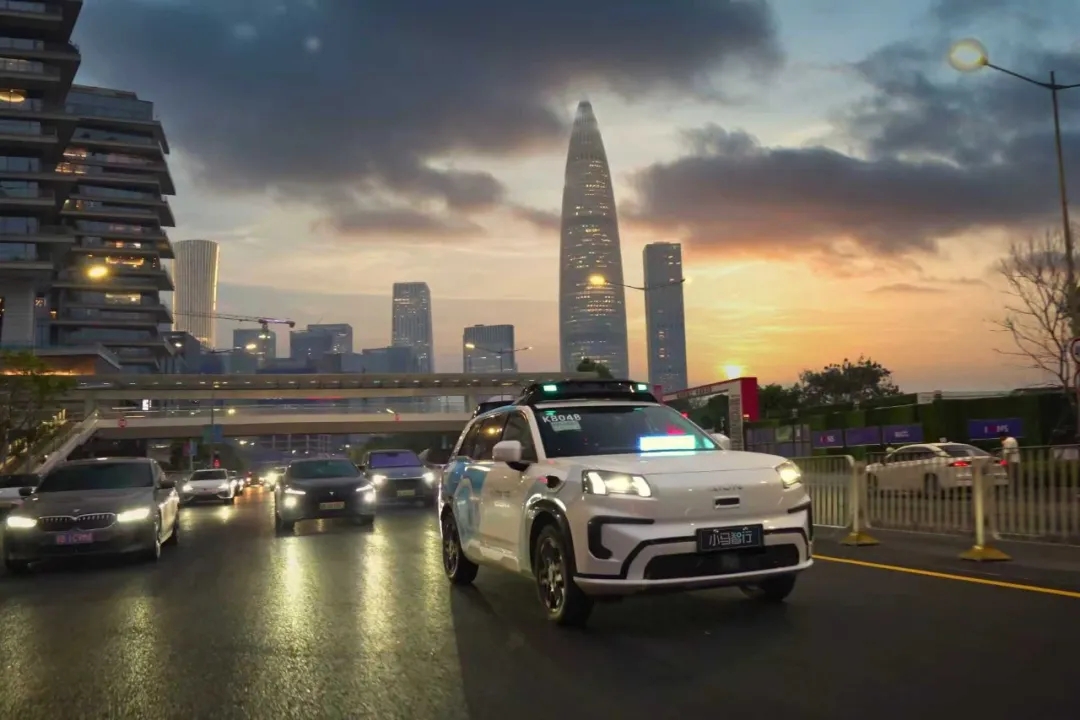
Last week, ChinaEV Home had the first-hand opportunity to experience Pony.ai’s seventh-generation Robotaxi in the Nansha district, Guangzhou, China.
The new Robotaxi generation is built entirely on pure-electric vehicles, including cost-efficient SUVs such as the GAC Aion Bawanglong and BAIC Arcfox Alpha T5.
This marks a sharp contrast with previous versions, which were retrofitted from gasoline luxury vehicles, giving the seventh-generation Robotaxi a significant cost advantage.
According to official figures, the new model cuts overall vehicle costs by 70% compared with the previous generation — less than a third of the former cost.
This also accelerates Pony.ai’s path to profitability. The company indicated to ChinaEV Home that the goal is to reach break-even for the seventh-generation fleet between the end of this year and early next year.

Last week, Pony.ai also successfully went public on the Hong Kong Stock Exchange, becoming the first autonomous-driving company listed simultaneously in both Chinese and U.S. markets, continuing Pony.ai and Robotaxi’s record-setting trajectory.
Meanwhile, the seventh-generation Robotaxi has officially entered operations, with a fleet expected to exceed 1,000 vehicles by year-end.
Competition in the L4 segment is intensifying, with automakers like Xpeng also announcing Robotaxi programs in Guangzhou this week.
What, then, gives Pony.ai a commercial edge? Based on our first-hand ride of the seventh-generation model, a few observations stand out.
A Smoother Robotaxi Experience
The conclusion comes first: the shift to a pure-electric platform makes the new Robotaxi feel markedly smoother.

Native electric drive and the optimized EV platform allow Pony.ai’s L4 system to operate with a more seamless communication channel.
Our experience was in a Robotaxi built on the GAC Aion Bawanglong, 2024 MSRP RMB 139,800–193,600 ($19,600–$27,200).

The vehicle has undergone extensive modifications, including domain controllers, LiDAR systems, and interior elements specific to Robotaxi operations. The exterior features new livery with Pony.ai’s mascot POPO highly visible.

Thanks to the optimized EV communication, seventh-generation models support seamless Bluetooth entry. After booking via the Pony.ai app, users can unlock the vehicle automatically when Bluetooth is active.
Currently, commercial Robotaxi operations in Guangzhou are limited to Huangpu and Nansha districts. Our ride was across central Nansha, covering less than 20 km in 40 minutes.

The multi-LiDAR setup provides higher redundancy than standard OEM-assisted driving solutions, allowing the Robotaxi to execute maneuvers more decisively.
We drove through numerous narrow roads in Nansha’s older neighborhoods. Pony.ai’s system managed mixed traffic conditions with minimal latency; cost reductions did not compromise the ride, while acceleration and braking feel were further refined thanks to the EV platform.

Overall, compared with prior-generation Toyota Sienna, Volvo, or Lexus-based solutions, the seventh-generation Robotaxi preserves and even improves the passenger experience while moving to a much lower-cost EV platform — a clear boost to both profitability and user perception.
In addition to the ride experience, we interviewed Zhang Ning, head of Pony.ai’s Robotaxi business, and Mo Luyi, head of the Guangzhou-Shenzhen R&D center, to learn more about the seventh-generation Robotaxi and Pony.ai’s strategic considerations.
Confidence in Profitability
“Pony.ai can realistically achieve operational break-even with this next-generation product,” said Mo Luyi regarding the seventh-generation Robotaxi.
The fleet will begin commercial deployment in the Guangzhou-Shenzhen region in Q4, demonstrating Pony.ai’s speed.
From the global debut in April to road tests in Turpan in June, Pony.ai completed the production rollout of the new generation in just six months.
This deployment brings the company closer to its year-end goal of a fleet exceeding 1,000 vehicles.

Profitability remains the industry’s top question for the seventh-generation model.
Zhang Ning noted that Pony.ai calculates BOM costs based on the national 600,000 km operational standard.
The cost-reduction efforts began three years ago, during a period of vehicle-grade technology iteration. The seventh-generation Robotaxi is claimed to be the first in the industry fully vehicle-grade from sensors to domain controllers.
For example, LiDAR costs have dropped by nearly 70% while maintaining or even improving performance.
Zhang emphasized that even Waymo’s components are still industrial-grade in some cases, which differs significantly from vehicle-grade standards.
The compute unit in the seventh-generation model uses a familiar vehicle-grade architecture: four NVIDIA Orin X chips providing 1016 TOPS of deep-learning inference.

Mo Luyi added that the four-Orin-X configuration primarily reduces costs, even as compute capacity is slightly scaled down.
Engineering optimizations across the vehicle allow the seventh-generation model to match the scene-handling capabilities of prior generations, similar to how DeepSeek compares to GPT.
Zhang further explained that as fleet size grows, production and operational efficiencies, along with autonomous dispatching, will further increase post-1,000 vehicles.
After major cost reductions, Pony.ai now needs a clear market-facing target.
Zhang said that from the project’s inception, the team set the goal:
“At a fleet scale of over 1,000 vehicles, the fleet can reach break-even; from that point, each additional vehicle can sustain itself.”
Starting in November, the seventh-generation Robotaxi will gradually roll out to commercial zones.
Mo Luyi concluded: “We aim to reach break-even for the seventh-generation fleet between year-end and early next year — a target that remains unchanged.”
Discover more from ChinaEVHome
Subscribe to get the latest posts sent to your email.