- China’s agencies set a 2030 goal for initial mass deployment of all-solid-state batteries, nudging automakers and industrial electrification toward next-gen cells amid cost pressures.
- All-solid-state cells now cost about RMB 1.6–2.2/Wh (about $0.24–$0.33/Wh) versus LFP at RMB 0.39–0.50/Wh, and target demonstration vehicle installs in 2027–2028 by BYD, CATL and GAC.
- Targets confront practical risks from a three- to fivefold cost gap, multi-year standards timelines, tax incentives that expire end-2028, and scaling challenges for volume production.
China’s Ministry of Industry and Information Technology and six other government departments jointly issued the “15th Five-Year Plan for the Development of the New Battery Industry” on Sept. 28.
This sets a target for all-solid-state batteries to achieve initial large-scale application by 2030.
The plan also calls for long-life lithium batteries to reach a cycle life of 15,000 cycles, while leading companies are expected to bring product defect rates down to the parts-per-billion (PPB) level.
In terms of applications, the plan calls for new battery technologies to support electrification across automobiles, ships, aviation, intelligent robots, construction machinery and agricultural equipment.

The plan would therefore broaden the role of new battery technologies beyond serving primarily as power sources for new-energy vehicles, extending them into a wider range of electrification and energy-storage applications.
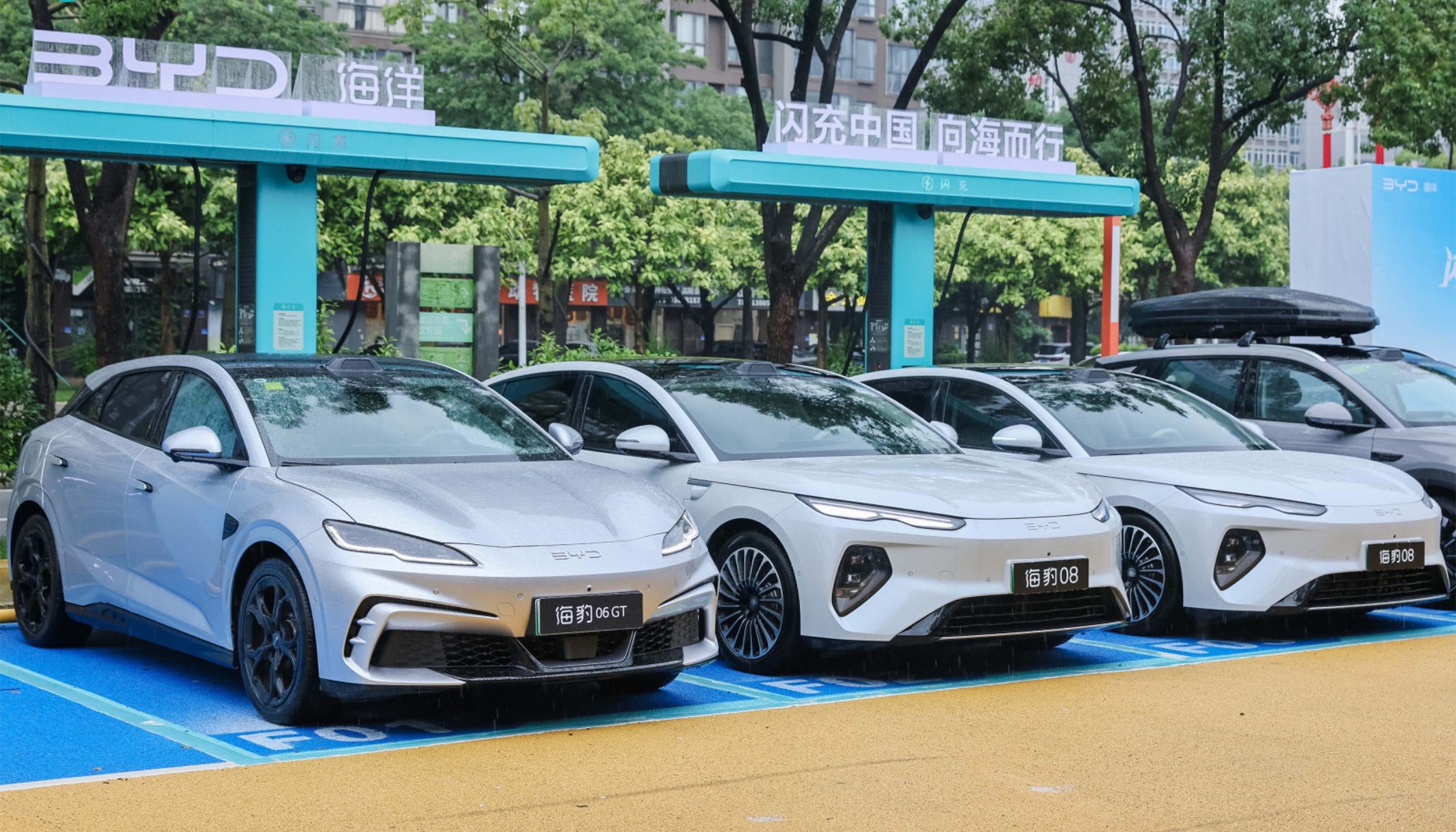
Based on the current pace of development in China, major domestic players including BYD, CATL and GAC are generally targeting 2027-2028 for small-batch demonstration installations of solid-state batteries in vehicles, with broader adoption expected after 2030.
Cost remains a key constraint on the commercialization of solid-state batteries.
All-solid-state battery cells currently cost approximately RMB 1.6-2.2 per Wh ($0.24-$0.33 per Wh), compared with just RMB 0.39-0.50 per Wh ($0.06-$0.07 per Wh) for LFP cells, leaving a cost gap of roughly three to five times.
Policy changes this year have also begun to create room for next-generation battery technologies.
A battery consumption tax adjustment plan released by the Ministry of Finance and other departments in July sets a 2% consumption tax rate for lithium-ion batteries from Sept. 1, 2026, rising to 4% from Sept. 1, 2027.
At the same time, sodium-ion batteries, solid-state batteries and fuel cells will be exempt from the tax through the end of 2028.

This creates a distinction in tax costs between established battery technologies and emerging technologies that are still at an early stage of industrialization.
For solid-state battery companies, the exemption does not address manufacturing costs themselves, but it can reduce some of the additional cost pressure during the early commercialization phase.
Standards are also advancing in parallel. In August, the first global standard project for solid-state batteries led by China was approved by the International Electrotechnical Commission (IEC).
However, the process from launching an international standards project to final publication typically takes two to three years.
This broadly overlaps with the current timeline pursued by battery companies for demonstration vehicle deployments in 2027-2028.
In terms of market size, EVTank forecasts global solid-state battery shipments will reach 607.2 GWh by 2030, representing a compound annual growth rate of more than 130%.
Discover more from ChinaEVHome
Subscribe to get the latest posts sent to your email.