- NIO renewed its UNDP Clean Parks partnership to expand electrified management of national parks and protected areas, reflecting broader industry pressure to localize low-carbon solutions and showcase sustainability credentials.
- NIO reported renewables supplied 56% of factory electricity in 2025, cumulative BEV deliveries of 1.33 million, 9,800+ charging and swap stations worldwide, and over 130 million battery swaps.
- The initiative targets park patrol EVs and green mobility standards against competitors in green fleet and conservation tech, but risks include scaling deployments, supply-chain alignment, and measurable biodiversity outcomes.
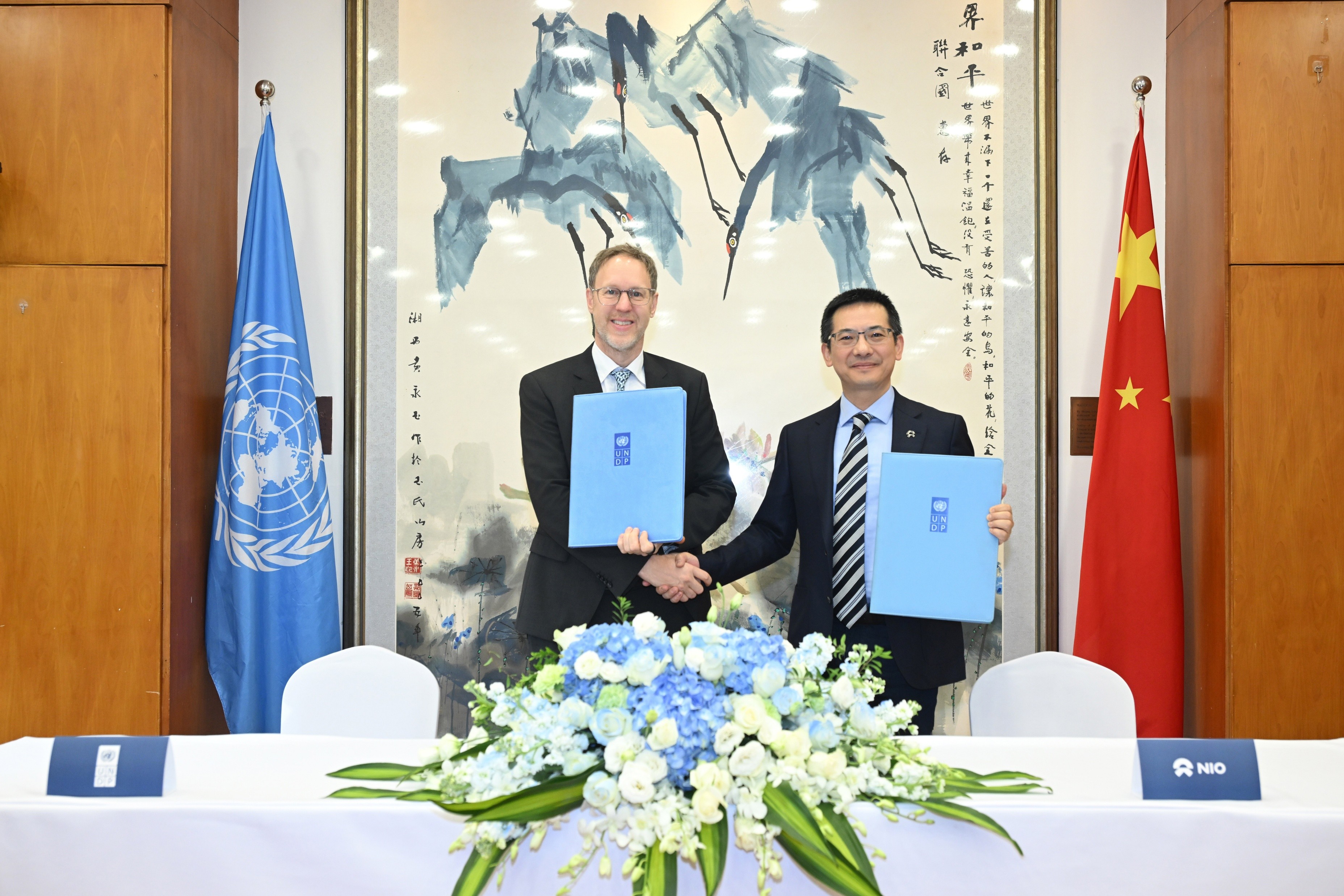
NIO and the United Nations Development Programme (UNDP) signed an agreement in Beijing on November 13 to renew their partnership and launch the second phase of the Clean Parks initiative.
Building on their first phase of cooperation, the two sides will deepen collaboration on biodiversity conservation in national parks and other protected areas, low-carbon energy infrastructure development, and sustainable development.
Stefan Liller, UNDP Resident Representative in China, and Qin Lihong, NIO co-founder and president, signed the agreement on behalf of their respective organizations.

Clean Parks is a global ecological conservation initiative jointly launched by NIO, UNDP, and World Wildlife Fund (WWF).
It is the world’s first automaker-led open platform for collaborative conservation in national parks and other protected areas.
It is designed as an open, collaborative platform for conservation efforts in national parks and other protected areas.
The first phase of the partnership expired in September 2026. The renewed agreement will take the collaboration into a second phase.
After nearly four years of implementation, the initiative has supported 19 projects in protected areas worldwide.
These cover China’s five national parks: Sanjiangyuan, Giant Panda, Northeast China Tiger and Leopard, Hainan Tropical Rainforest, and Wuyishan.

One of the key outcomes of the first phase was the introduction of electrification technologies into routine management activities in nature reserves.
The two organizations contributed to the development of guidelines for biodiversity-friendly supply chain management in the electric vehicle manufacturing industry and supported the deployment of electric patrol vehicles in multiple locations.
At Chongming Dongtan, for example, replacing conventional fuel-powered patrol vehicles with electric vehicles has cut carbon dioxide emissions by approximately 28.4 tonnes a year.
The partnership also established a multi-stakeholder platform for collaborative ecosystem management.
Capacity-building activities conducted under the initiative have reached more than 7,000 participants in total.
In the second phase, the partners plan to expand the initiative’s reach, with a focus on low-carbon operations in protected areas, the development of green mobility standards, and stronger capacity for biodiversity conservation.

The partners will also work together to strengthen biodiversity conservation capability, support women- and youth-led ecological innovation, and share China’s experience in public-private partnerships for protected areas.
These efforts will contribute to the implementation of the UN Sustainable Development Goals, the Kunming-Montreal Global Biodiversity Framework, and the Paris Agreement.
NIO’s renewed partnership with UNDP is also linked to the company’s broader low-carbon transition.
On the production side, NIO’s factories have been recognized by the World Economic Forum as Global Lighthouse factories and have received China’s national-level Green Factory designation.
At its manufacturing operations, renewables made up 56% of electricity used for NIO production in 2025, with cumulative deliveries of BEVs topping 1.33 million units.
In its energy network, NIO has established more than 9,800 charging and battery-swap stations worldwide.
The network includes over 4,300 battery-swap stations and has handled more than 130 million battery swaps to date.

More than 860 battery-swapping stations and 26,000 charging piles also participate in grid-interactive dispatch, supporting peak-load regulation and the integration of renewable energy into the power grid.
In battery lifecycle management, NIO’s battery-as-a-service (BaaS) model separates vehicle ownership from battery ownership.
It can cut battery raw material consumption by 17%–30%, with the company reporting a 96% battery recycling rate.
Against the backdrop of global emissions trends, the latest Global Carbon Budget report estimates that global carbon dioxide emissions from fossil fuels will fall by 0.4% to 38.2 billion tonnes in 2026.
The report also says that China accounts for approximately half of the carbon dioxide emissions avoided worldwide through the use of renewable energy and electric vehicles.
By extending its cooperation with UNDP to national parks and other protected areas, NIO is exploring applications for clean energy technologies in ecological conservation, beyond their use in transport electrification.
Discover more from ChinaEVHome
Subscribe to get the latest posts sent to your email.