
This time at the auto show, the three major brands of NIO gathered together.
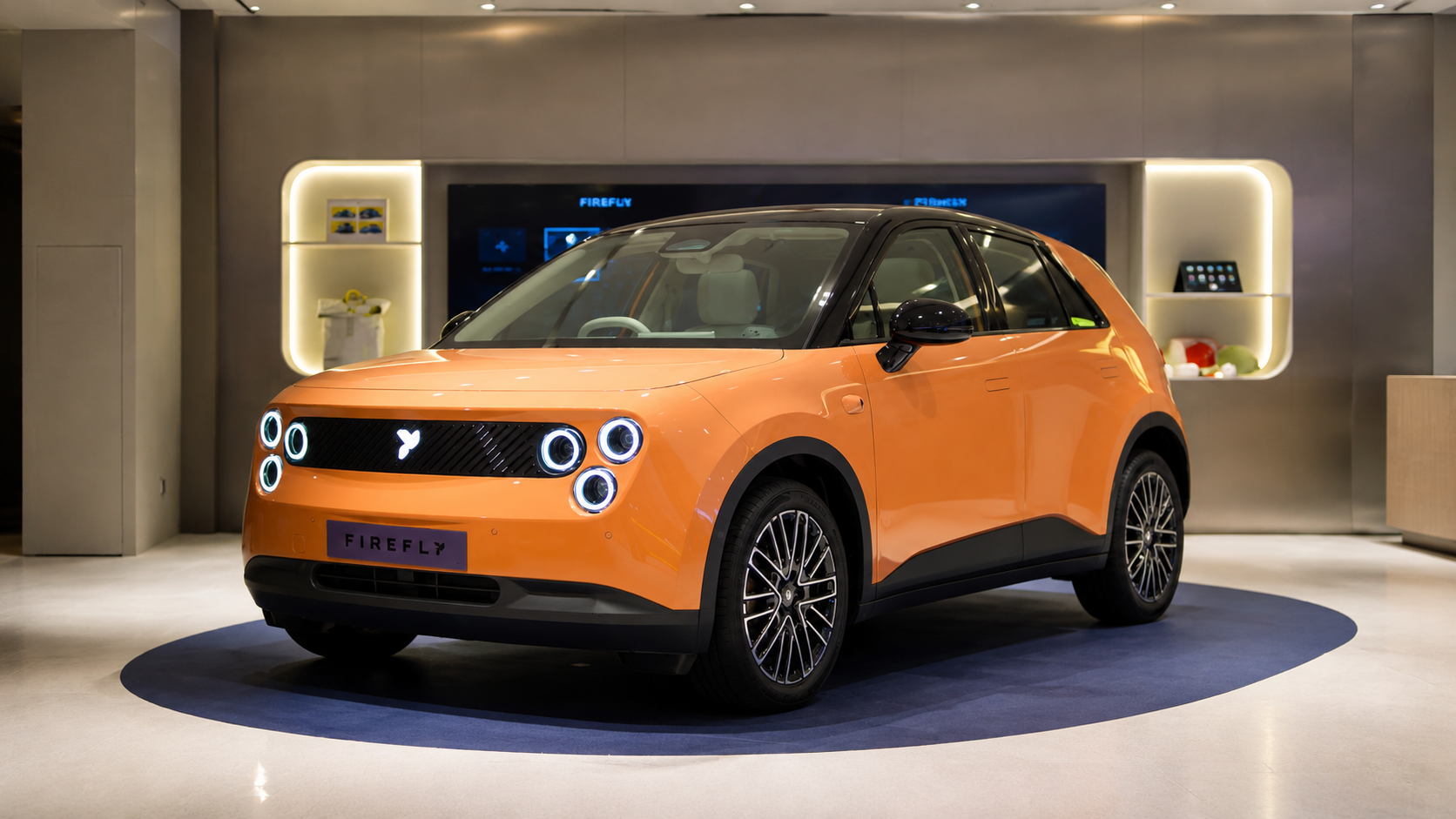
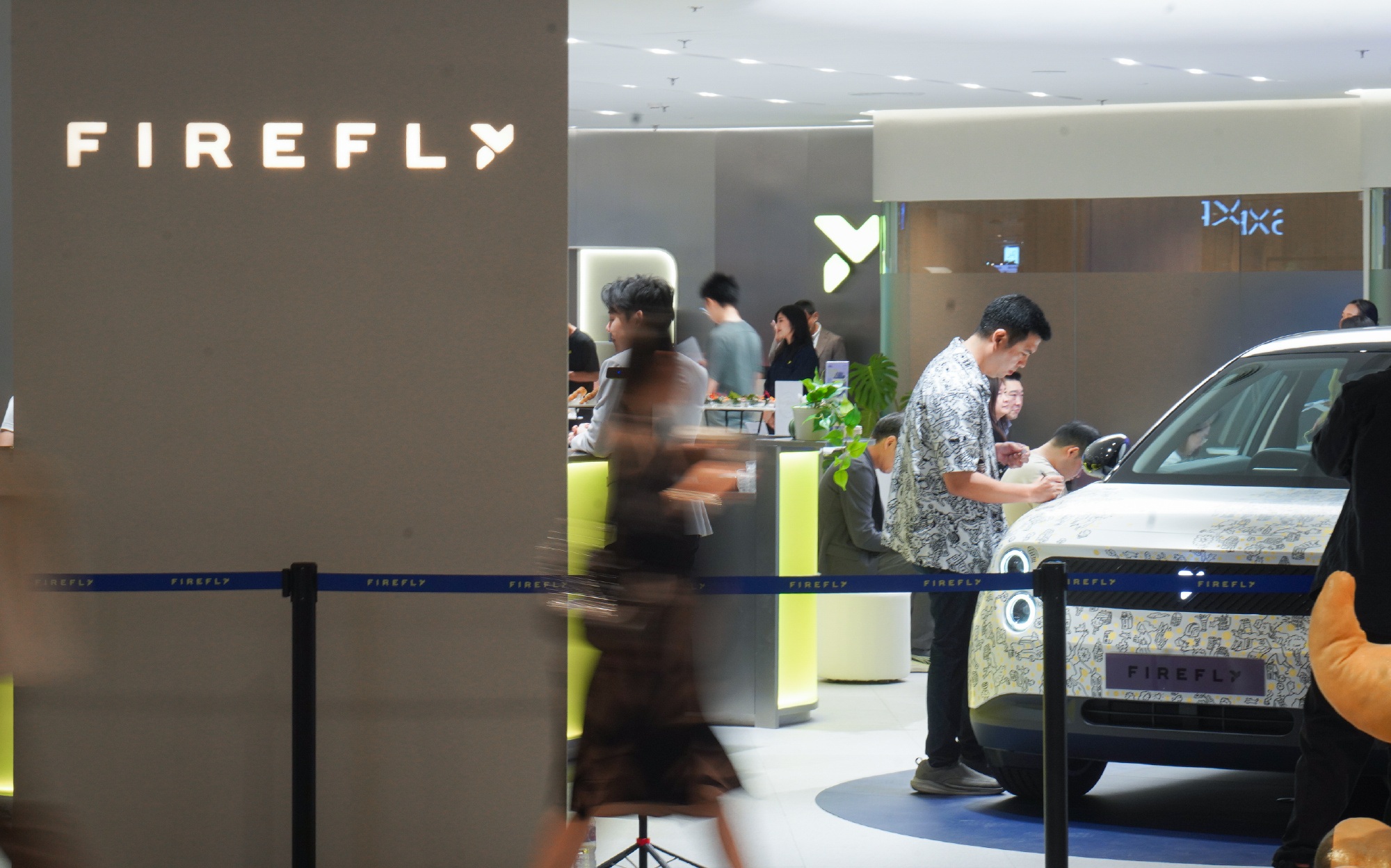
Moreover, the models of NIO and Firefly were placed on the same exhibition stand, creating an interesting display with “youthful vitality on the left and calm seriousness on the right.”

The message conveyed through the exhibition stand is that NIO has placed all its “chess pieces” on the brand board, and the future of NIO will be determined by them.
Naturally, the media did not miss this opportunity. During the group interview session at noon, every aspect of the three major brands, NIO, ONVO, and Firefly, became one of the most concerned issues.
If expanded, the energy and resources NIO allocates to the three brands correspond to various aspects such as product philosophy, technological orientation, and market choices.
Ultimately, achieving balance in multiple considerations is a great test of William Li’s comprehensive judgment.
How did William Li answer the aforementioned questions?
Resource Sharing: Enhancing Performance, Reducing Costs
“Everything is shared,” this was almost the unanimous answer from William Li and Qin Lihong.
This refers not only to the sharing of underlying technology but also to the sharing of leadership – for example, William Li will be more deeply involved in ONVO’s supply chain and R&D system, while ONVO’s sales service system will be jointly built by Qin Lihong and Shen Fei.
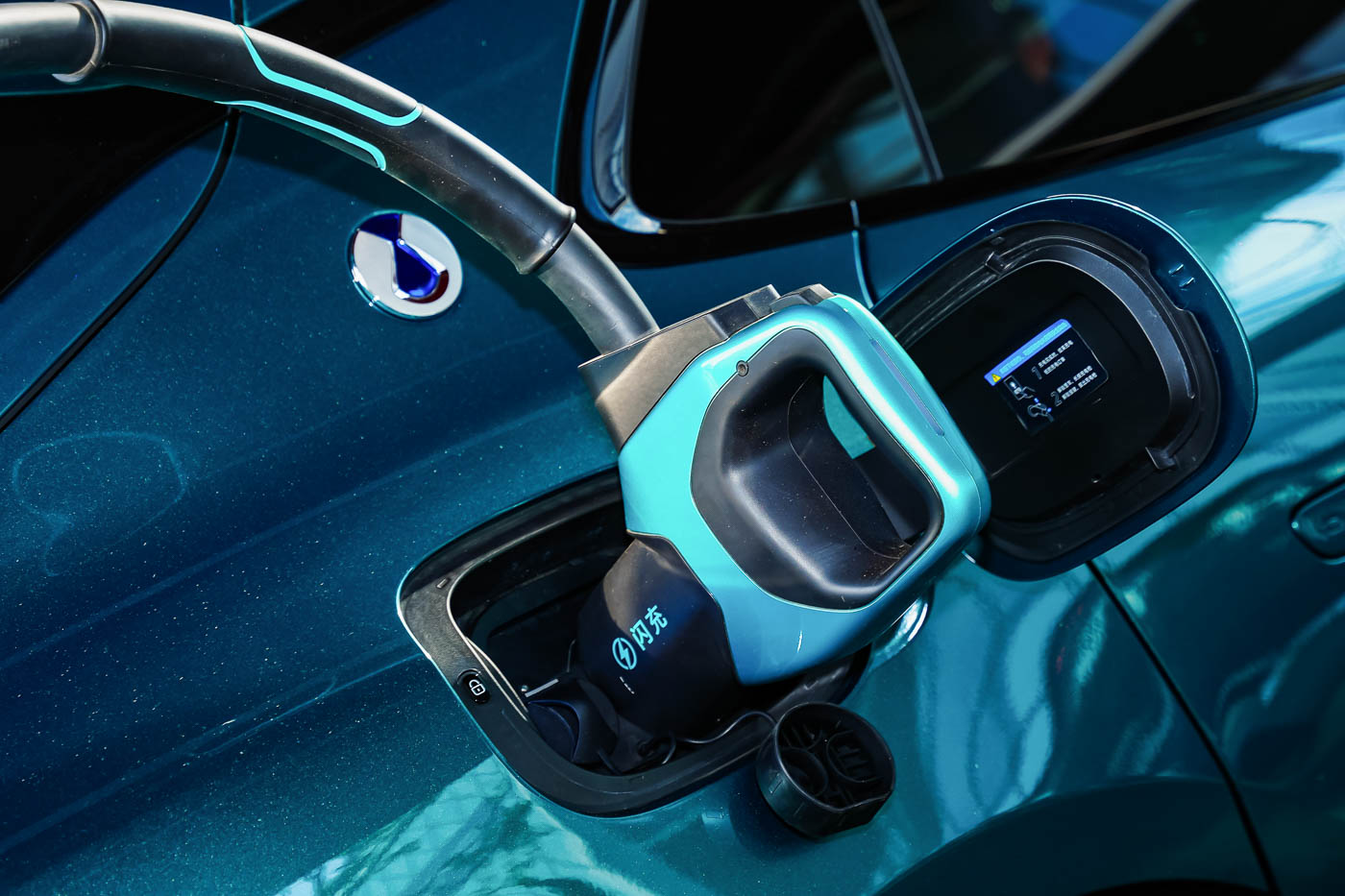
Resource sharing is also reflected in battery swap stations. At present, ONVO has more than 2,000 available battery swap stations, “NIO’s battery swap stations are about 3,000, and ONVO’s proportion has exceeded 60%,” William Li added.

According to previously announced news at the press conference, Firefly will access NIO’s fifth-generation battery swap station in 2026, which is also a manifestation of “resource sharing.”
In terms of service systems, the “sharing” between the three brands is in a state of “interlocking.” The service teams and systems of NIO and ONVO “have always been shared,” and now regional teams are also sharing; Firefly’s sharing with NIO is even more thorough because Firefly is sold through NIO’s channels.
Based on this understanding, Qin Lihong also introduced an interesting fact: why this auto show is “three brands in the same hall,” but NIO and Firefly are together, while ONVO has its own separate stand?
“Initially, our plan was for each brand to have an independent stand, but in the end, we found that it would be more cost-effective to put Firefly together with NIO.” Li Bin said that the final effect was not bad, which surprised him a bit.
Qin Lihong added that the relationship between NIO and ONVO is similar to that between Volkswagen and Audi. ONVO is an independent brand with its own display and brand image, so it is more suitable for independent exhibition.
This also shows from the side that resource sharing between the three brands is interlocking, especially in terms of brand and service channels.
Sharing of underlying technology does not have so much thought and will be more thorough.
The example William Li gave is that the rear electric drive used by ONVO L90 is actually the same as NIO ET9. Sharing of architectural platforms, vehicle operating systems, and even automotive-grade intelligent driving chips has long been an open secret. Using technology sharing to improve product performance and reduce production and R&D costs is the original intention of NIO’s long-term investment.
No Big Moves: ONVO Steady Progress
When delving deeper into future technology and product planning, such as whether ONVO still has any “big moves,” William Li gave an unexpected answer.
William Li has never liked the term “big move” and does not believe that any successful car company has achieved a turnaround through “big moves.” Therefore, he clearly answered, “ONVO does not have any so-called big moves in the future.”
However, after a while, William Li made up for himself.
He believes that the spacious space of ONVO L90 and the innovative front trunk design can bring a differentiated experience to the market and meet the needs of some users, so it can be considered a “big move.”

Overall, William Li still does not believe that NIO is a company that relies on “big moves” to gain market attention. They are more focused on walking well on the road and doing things well.
As Qin Lihong said, there is still no sales target set for ONVO. The only thing that can be called a “goal” is to “do better every week than the last week,” starting from small things.
Around this topic, William Li also revealed the reason for Shen Fei to take over ONVO. He believes that Shen Fei is a person who “builds a strong base and fights hard battles,” “will put in hard work,” and believes that under Shen Fei’s leadership, ONVO can continue to make progress steadily.
Speaking of this, William Li also talked about the sales performance of the ONVO brand.
He believes that as a “new brand,” ONVO itself has the problem of low popularity and insufficient audience, and sales performance cannot be achieved overnight. Objectively speaking, the sales performance of ONVO L60 since its launch, which is about 6,000 units per month, is not bad and is acceptable.
Perhaps, for a while, “steady progress” will become the key word for ONVO. The key to the continuous progress of NIO’s three major brands is still back to the iteration and upgrading of technology.
The Cards in Hand: “New Three Big Items,” Underlying Technology, and Battery Swapping
Regarding products, William Li joked at the beginning of the group interview that he has already “listened to advice” a lot, and the front trunk design of ONVO L90 is one of the features.
Adjusting product definition is only one aspect. In William Li’s view, the most critical “cards” in NIO’s hands in 2025 can be summarized into three: the formation of the “new three big items” concept, the iteration and upgrading of NIO’s underlying technology, and the advantage of the battery swap network.
The “new three big items” are the “intelligent driving chip,” “full-vehicle operating system,” and “intelligent chassis.” William Li said at the morning auto show press conference that they will determine the “upper limit of experience” and “lower limit of safety” of intelligent vehicles.
In the group interview, William Li further expanded and interpreted, saying that although the capabilities of the “new three big items” are hidden in places where users “cannot see,” they are not as conspicuous as “color TVs, refrigerators, and large sofas,” but they are the key to distinguishing the grades of intelligent vehicles.
William Li cited his own ET9 as an example.
At the auto show, ET9 combined the capabilities of the full-vehicle operating system and intelligent chassis (Tianxing chassis) to demonstrate the “Tianxing Dance” using the independent adjustment of the suspension. Although making electric vehicles “dance” has a certain show-off nature, William Li believes that it well demonstrates the upper limit of the vehicle capabilities brought by the “new three big items” and is a reflection of the gap between ET9 and other models.
Furthermore, what the “new three big items” reflect is actually the gap in underlying technology of intelligent electric vehicles.
Regarding this topic, William Li used the upcoming “5566” new car to explain.
The 2025 models of ET5, ET5T, ES6, and EC6, although not “fully equipped” with SkyOS, can also achieve intelligent chassis control similar to ET9 after a high-speed tire burst, thanks to the empowerment of some capabilities.
In other words, through the upgrading and decentralization of underlying technology, the new “5566” has obtained flagship functions similar to ET9.
Underlying technology is also an important way for NIO to achieve cost reduction. William Li cited the example of the Shenji NX9031 chip “one top two” to illustrate that after the new generation of models is equipped with self-developed intelligent driving chips, the chip gross profit can belong to NIO, which will significantly increase the profit per car.

“Last year, we spent a total of 300 million US dollars on purchasing Orin chips from NVIDIA,” William Li’s implication is that they can save this money in the future.
The last topic is also a topic that excited William Li to “stand up” and even “bang on the table” – battery swapping.
William Li shared two points, first responding to the impact of “10C fast charging on battery swapping,” he responded with three points.
First, NIO has always adhered to “chargeable, swappable, and upgradable,” and has never opposed charging and swapping;
Second, “no matter how fast the supercharging speed is, it cannot be faster than battery swapping, and the experience of the entire energy replenishment process, supercharging cannot compare with battery swapping”;
Third, “other car companies, dare they provide a 15-year, 12-year, or 10-year warranty for supercharged batteries?”
William Li’s implication is that battery swapping remains NIO’s strongest and most towering moat, the greatest competitive advantage.
Speaking of this, William Li mentioned something he had once reflected on, his “biggest regret.”
“One of my biggest regrets is that around the years 2020 and 2021, I didn’t increase investment to build more battery swap stations.”
The reason is that the number of battery swap stations in Jiangsu, Zhejiang, and Shanghai accounts for 1/3 of the national total, but the number of NIO car owners accounts for 1/2 of the national total. This means that the construction of the battery swap network has an absolutely positive value in attracting new customers. If NIO could speed up the improvement of the battery swap energy replenishment network, the current user base would probably be much larger.
Regarding the layout of battery swapping, William Li also brought good news.
“By the end of April, Guangdong will achieve county-wide battery swapping access.” At the same time, William Li continued to emphasize that this year the goal of “county-wide battery swapping access” in 27 provincial administrative regions will be completed, and this goal will not change.
Everything is developing in an orderly manner, and for NIO, this is the best signal. nal.
Discover more from ChinaEVHome
Subscribe to get the latest posts sent to your email.
[…] Exclusive:On June 11, William Li, CEO of NIO, sent a welcome letter internally announcing that Bagrin Angelov will assume the role of Vice […]