
On June 9th, the China Passenger Car Association (CPCA) released its market analysis report for new energy passenger vehicles in May 2025. The data shows:
- Production reached 1.167 million units, up 30.2% year-on-year (y/y) and up 1.1% month-on-month (m/m).
- Wholesales reached 1.216 million units, up 33.0% y/y and up 7.0% m/m.
- Retail sales reached 1.021 million units, up 28.2% y/y and up 12.1% m/m.
- Manufacturer exports reached 200,000 units, up 80.9% y/y and up 5.8% m/m.

In May, the wholesale penetration rate of new energy vehicles (NEVs) among manufacturers was 52.6%, an increase of 8.0 percentage points compared to May 2024.
- The NEV penetration rate for Chinese domestic brands was 68.7%.
- The NEV penetration rate within the luxury vehicle segment was 37.5%.
- The NEV penetration rate for mainstream joint-venture brands was only 4.3%.
Simultaneously, the retail penetration rate of NEVs in the overall domestic passenger vehicle market reached 52.9% in May, an increase of 6.2 percentage points compared to the same period last year.
Regarding exports, in May, exports of new energy passenger vehicles reached 200,000 units, representing a year-on-year increase of 80.9%. This accounted for 44.6% of total passenger vehicle exports. Within NEV exports, pure electric vehicles constituted 66%.
The top three manufacturers by NEV exports in May were:
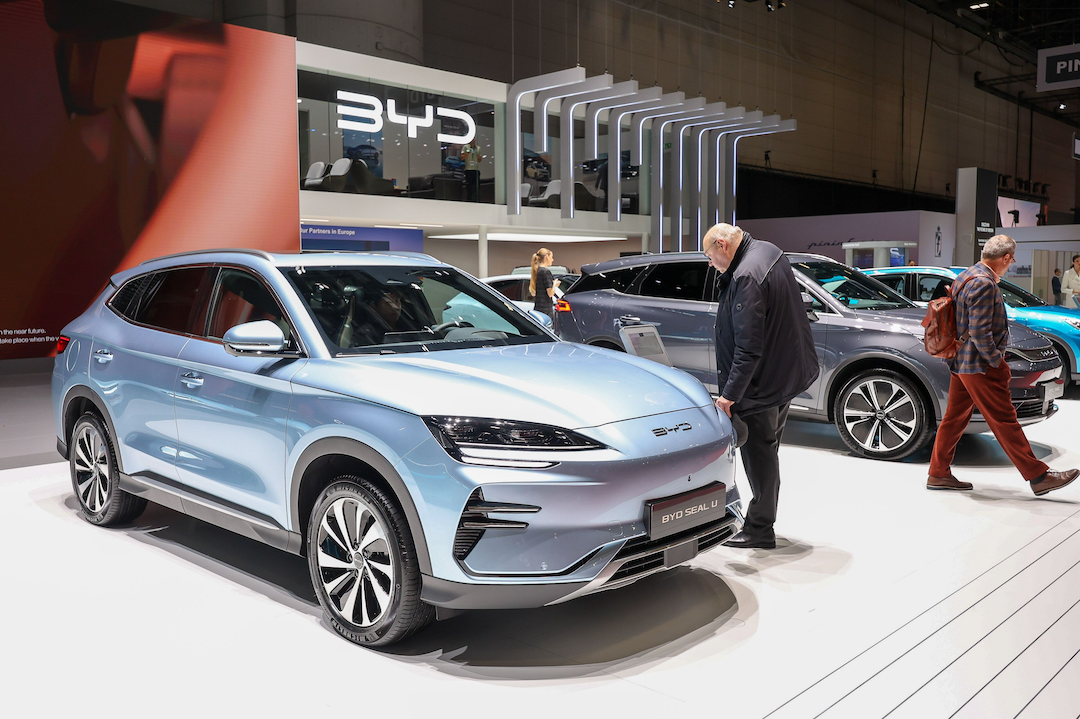
- BYD (84,068 units)
- Chery (25,748 units)
- Tesla China (23,074 units)

With the implementation of the “multi-pronged strategy” on new energy pathways by domestic automakers, the number of manufacturers exceeding 10,000 units in monthly NEV wholesale sales reached 18. These manufacturers accounted for 91.3% of the total NEV passenger vehicle volume. The top ten manufacturers were:
- BYD (376,930 units)
- Geely (138,021 units)
- Changan (80,909 units)
- SAIC-GM-Wuling (62,686 units)
- Tesla China (61,662 units)
- Chery (56,974 units)
- Leapmotor (45,067 units)
- LiAuto (40,856 units)
- SERES (36,372 units)
- XPeng (33,525 units)
Among the new energy vehicle startups, they maintained a 20.5% share of the retail market in May, representing a 4.5 percentage point increase year-on-year. Performance varied among the startups, with companies like Xiaomi Auto, XPeng Motors, Leapmotor, and HarmonyOS Smart Mobility contributing a 5.8 percentage point increase in share. The independent NEV brands launched by established automakers (acting as strong “second-generation” brands) performed well, holding a 12.5% share, flat compared to the same period last year.
Discover more from ChinaEVHome
Subscribe to get the latest posts sent to your email.



[…] “dramas” seem like unrelated incidents. Yet beneath lies a reflection of intensifying market competition, where open and covert rivalries among automakers have reached a fever […]