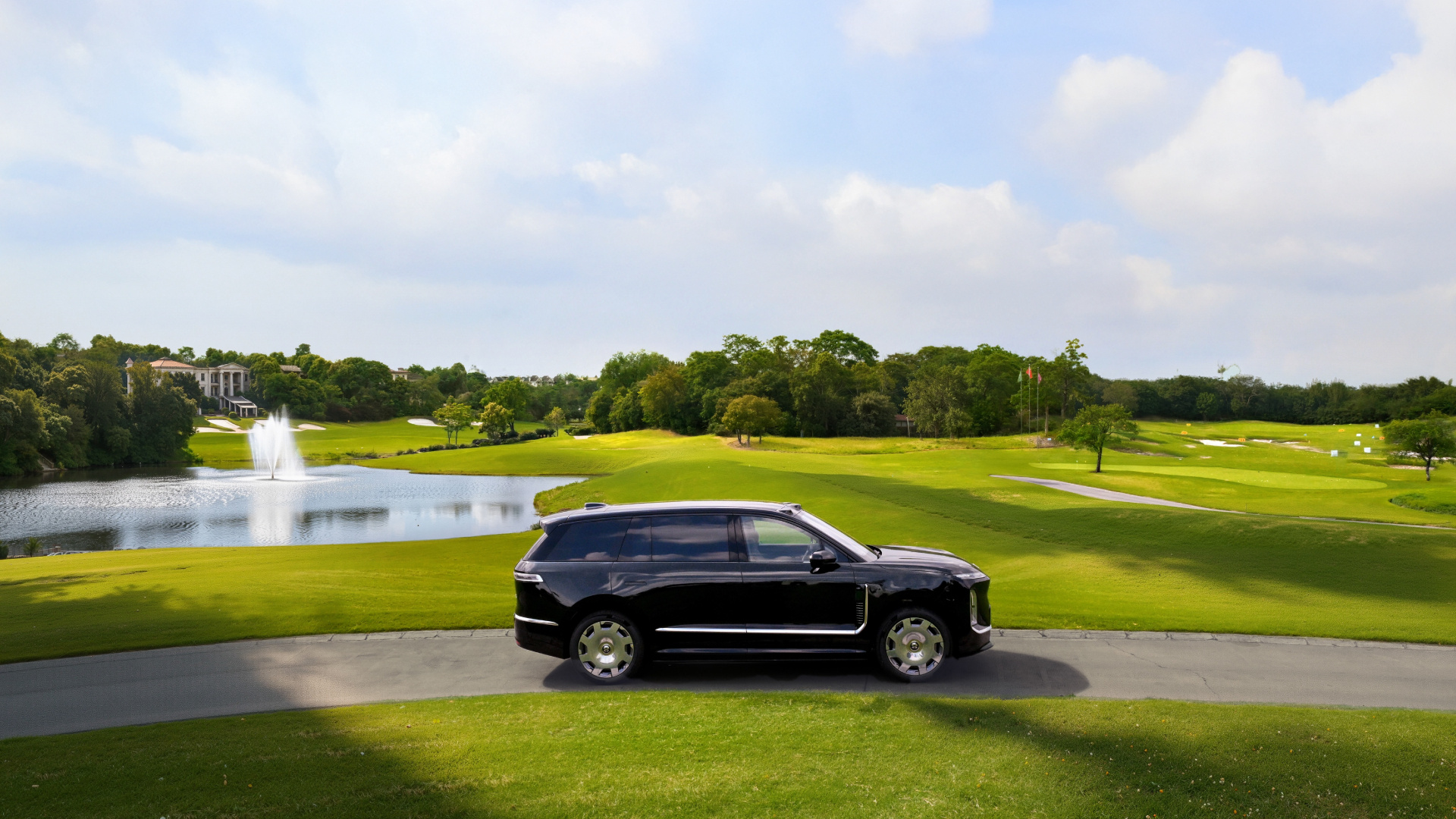
Last week, NIO officially unveiled the all-new generation of the ES8, built on the NT3 platform.
Over the past eight years, this is the fourth version and the third complete redesign of the ES8. In many ways, the ES8 has come to represent NIO as a brand.
Now, as NIO enters its new decade and the ET9 has already been delivered, what new mission will the ES8 shoulder?
One thing is certain: the ES8 remains a flagship-level full-size electric SUV, still carrying NIO’s core technologies and maintaining best-in-class product competitiveness.

In addition to competing with rivals like the AITO M9, the new ES8 must also balance its subtle relationship with the Onvo L90. How to position itself in both pricing and volume will be a core challenge for NIO’s main brand in the second half of the year.
Following the ES8’s inclusion in the Ministry of Industry and Information Technology (MIIT) directory and the official release of its design, we now have a clearer view of its positioning.
How much will it cost? How does it compare to the ET9? And can we use the new ES8 to predict the form of the next NT3-based model?
Today, we dive in with bold assumptions and cautious verification.
Pushing New Limits
Entering the NT3 era, the ES8’s ceiling has been raised significantly. But at the same time, its upper limits are now somewhat constrained by the presence of the ET9—though only to a degree.

This time, NIO went all in, extending the ES8’s dimensions to just 40mm shorter than the ET9 (5285mm vs. 5325mm).
Considering the ET9’s fastback design (a sedan necessity), the new ES8 may even offer more usable interior space. In fact, the Onvo L90, built on the same platform, is likely to pleasantly surprise customers with its cabin space.
The new ES8 measures 5285 x 2010 x 1800 mm, with a 3130 mm wheelbase.
Thanks to the natural height advantage of the SUV form, the ES8 is clearly taller than the ET9. Its length and width are almost identical, suggesting comparable “space efficiency.”

Now super-sized, the new ES8 steps into a whole new playing field.
Compared to its NT2 predecessor, the NT3 ES8 is 186mm longer—an increase greater than the difference between the BMW X5 and the X5L. This puts the ES8 firmly in the full-size SUV category.
For comparison, the Li Auto L9 is 5218mm long, and the AITO M9 is 5230mm—making the ES8 a clear leader in its class in terms of size. Considering NT3’s superior space optimization over NT2, the ES8 is poised to redefine what a large SUV feels like when it launches in September.
Take the front trunk, for instance.

Like the L90, the ES8 has a visible dividing line on the hood—clearly marking the front trunk lid.
However, the ES8’s opening is smaller and positioned higher than the L90’s, meaning it likely won’t support use cases like the “fishing seat” feature the L90 offers. It may also lack the wide range of official accessories that make the L90’s front trunk more versatile.
Also, the ES8’s front isn’t especially long (especially compared to Cadillac EVs). Visually, most of the extended length has been added to the rear of the vehicle.

From what we’ve seen with the ET9 and 5566 models, we can roughly infer the ES8’s interior layout. The key difference, of course, is that the ES8 is a three-row SUV.
With a length of 5285mm, NT3 underpinnings, and an extended rear, all signs point toward the new ES8 offering a significantly upgraded second and third-row experience.
To offer some context, the NT2 ES8’s third-row luggage space was 235L, and 871L with the third row folded. Based on a 2020 electric architecture, the NT2 model could not offer “one suitcase per passenger” for six people.
Will the new ES8 deliver more cargo volume? Will the third row be more versatile? These are the questions left by its size upgrade.
A New Strategy
Starting with NT3, the ES8 is no longer NIO’s top flagship.
This aligns with our previous point: NT3 opens the door for NIO to target the million-yuan ($139,300) market. The ES8, which holds down the ~500,000 yuan (~$69,600) base, must adapt accordingly.

Still, judging by official exterior photos, the new ES8 retains much of the ET9’s high-end configuration.
First, the triple LiDAR layout. Given NIO’s consistent approach to hardware standardization, NT3-based flagship models will likely all come with triple LiDAR and dual Shenji chips.
So far, only the ET9 has been confirmed with dual Shenji, partly because early NT3 models have yet to scale production costs, and the NT2-based 5566 series can’t handle that data bandwidth.
But the ES8, also equipped with three LiDAR units, is expected to initiate the standardization of dual Shenji chips.
One disappointment: the high-end ES8 still comes with 265/45 R22 wheels, same as the NT2 ES8. From the rear, this lacks the imposing look of the ET9’s optional 275-width tires and 23-inch wheels.

The wheels and tires will likely remain a visible distinction between the ES8 and the ET9.
While the interior hasn’t been revealed yet, we can reasonably speculate where the ES8 might cut back.
The display setup, including the remote display, will likely match the ET9. NIO typically doesn’t cut corners on screens. Instead, the only major uncertainties lie in audio and suspension.
The ET9 features the LYRA sound system with an 8.4.8 channel layout, 35 speakers, and a peak power output of 2800W—including two 600W subwoofers.
In-car audio has always been a key differentiator between flagship and sub-flagship models, from Mercedes’ Burmester systems to Huawei Sound in AITO and MAEXTRO.

Another difference may lie in NIO’s “SkyRide” intelligent chassis system.
SkyRide includes steer-by-wire, rear-wheel steering, and a fully active suspension system.
Given the ES8’s taller body and its crucial role in driving volume, it’s uncertain whether these features will be carried over. But it’s a key question for the model.
What’s more certain is that the ES8 and the Onvo L90 will adopt clearly differentiated roles—more “premium family” vs. “versatile executive.”
From triple LiDARs on the exterior to OLED remote displays inside, and differences in chips, audio, and second-row amenities, NT3’s two three-row SUV types will illustrate their divergence through the two brands.
Perhaps the biggest mystery about the ES8 is its battery—and the pricing that follows.
NT3 will almost certainly support a standard battery pack. But will the ES8 be the first to debut a “small battery” under the NT3?

Our guess: if NIO wants volume, then a 100kWh battery as standard seems more likely.
The NT2 ES8’s standard battery offers 465km CLTC range. Convincing customers in 2025 to accept a sub-500km EV would be tough—unless it’s under 100,000 yuan ($13,900). Yet even NT2 ES8 models using BaaS start above 400,000 yuan ($55,700).
The 100kWh ES8, on the other hand, delivers a 605km CLTC base range. With NT3’s improved efficiency, it may even approach the ET9’s aerodynamically superior 650km (with 100kWh + 22-inch wheels).
One More Thing
That about wraps up the new ES8—so what about other models?
Traditionally, NIO unveils new cars at NIO Day. The recently updated 5566 series in May won’t be redesigned again so soon.
So the question remains: will we see new ES7 or EC7 models?
In fact, William Li himself has confirmed in user groups that the ES7 is still coming—jokingly referring to himself as “stubborn” about it.
As mid-size SUVs positioned closer to the ES8 than to the ES6/EC6, the dual 7-series has struggled to carve out a niche in the premium five-seat EV space.
The reality is that the high-end EV market is still not very diversified. Most buyers want practicality and premium versatility.
That said, a switch to NT3 could greatly enhance the dual 7-series.
Take the EC7 as an example: it’s the most efficient NT2-based NIO SUV, offering 490km CLTC with the standard pack and 635km with the extended pack. On NT3, that would likely exceed 650km easily.

Meanwhile, the 2025 ET7 still hasn’t launched—another interesting piece of the puzzle. As a true “mini ET9,” will NIO unveil three “7” series models at this year’s NIO Day?
Though the new ES8 hasn’t been officially released, the speculation and excitement it has stirred underscores NIO’s renewed push as it transitions fully into the NT3 era.
Discover more from ChinaEVHome
Subscribe to get the latest posts sent to your email.