- Li Auto's L9 outperformed NIO ES9 on roll suppression, fueling claims its 800V split-system offers superior body control.
- NIO's integrated 48V setup showed calmer ride comfort, prompting defenders to stress faster response and road-filtering benefits.
- Public takedown and rebuttals turned into a broader tech clash over comfort versus extreme dynamic control in premium EVs.
A suspension comparison video featuring the all-new Li Auto L9 and NIO ES9 has triggered heated discussion across China’s automotive industry, quickly evolving from a product comparison into a broader debate over competing chassis technology paths.
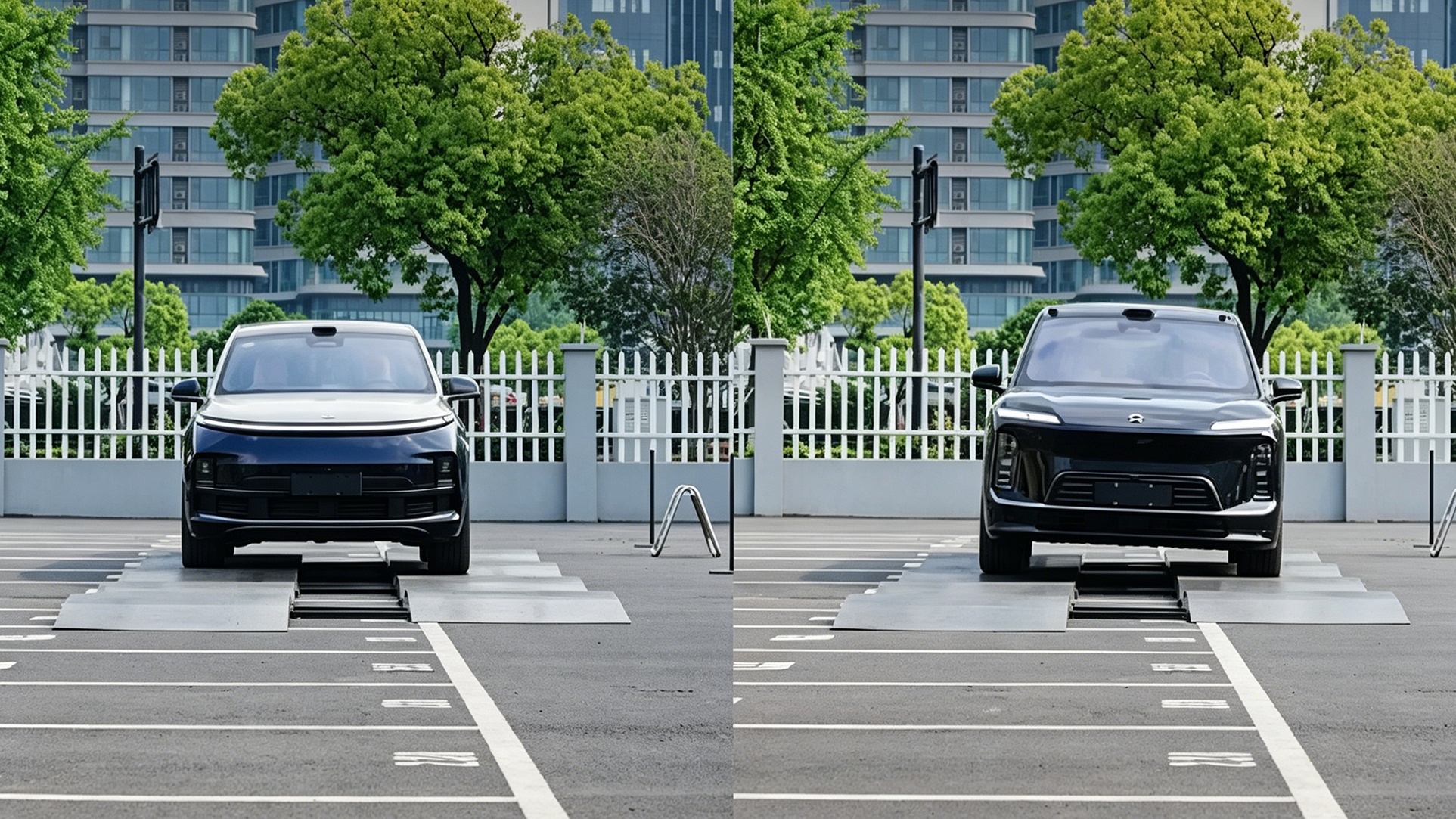
The video, published on the Li Auto app, showed both flagship SUVs driving over a wave-shaped test road at 20 km/h.
The test aimed to highlight differences in active suspension performance. Footage from multiple angles showed the ES9 exhibiting larger body movements, while the L9 maintained a comparatively flatter posture throughout the run.
The results immediately sparked debate on Chinese social media.
Many users questioned the effectiveness of NIO’s 48V active suspension system. Some argued the vehicle failed to demonstrate the advantages previously highlighted by NIO founder William Li, who had publicly stated that NIO’s 48V architecture surpassed conventional 400V or 800V active suspension solutions.
As the controversy gained momentum, the video was removed from the Li Auto app.
The deletion itself generated another wave of criticism. Some NIO supporters argued the footage did not accurately reflect the vehicle’s optimal chassis settings.
Some automotive bloggers claimed NIO’s SkyRide chassis delivers its strongest body-control capability under its most aggressive Sport mode. They argued the setting shown in the video differed from the “hardest suspension” mode described in the captions, raising questions about the validity of the comparison.
NIO Vice President and Brand Head Ma Lin subsequently issued a public response.

He called on Li Auto to disclose detailed testing information, including the video’s source, test location, vehicle conditions, speed settings, and suspension configurations. He also stated that the dynamic behavior shown in the footage did not match the intended performance characteristics of the ES9.
Li Auto Product Line Head Tango later responded.

Rather than providing detailed test parameters, he redirected attention to earlier remarks made by William Li. Tango questioned why NIO’s founder had declared during a product launch event that 48V active suspension technology was inherently more advanced than 800V solutions.
The response indirectly confirmed the video’s official connection to Li Auto.
Behind the public exchange lies a deeper engineering dispute.
Since the launch of the Li Auto L9 and NIO ES9 in May, both flagship SUVs have entered the market equipped with proprietary fully active suspension systems.
Li Auto has chosen an 800V split-architecture active suspension design.

The system relies on a centralized high-voltage hydraulic unit capable of generating greater physical actuation force. During high-speed lane changes, hard acceleration, and emergency braking, the architecture delivers strong body support and vehicle control.
NIO has taken a different path with its integrated 48V system.

Its motor, hydraulic pump, and control unit are packaged within a single damper assembly. The compact structure enables extremely fast response rates and operates independently from the vehicle’s high-voltage architecture. The setup places greater emphasis on filtering continuous road imperfections while maintaining tire contact.
Independent testing conducted during a May 31 live broadcast by Chinese automotive media outlet Dongchedi highlighted these differences.
In ride-comfort evaluations over rough surfaces, the ES9 demonstrated a calmer body posture, delivering stronger comfort performance.
During moose-test evaluations, however, the L9 showed superior roll suppression and more stable body control near handling limits.

The significance of this controversy extends far beyond a dispute between two vehicles.
It reflects one of the most representative technology-route debates in China’s premium EV sector.
The 48V integrated architecture represents a development philosophy centered on comfort and rapid response. The 800V split architecture prioritizes maximum body support and dynamic control under extreme conditions.
Unlike traditional battles over specifications or equipment levels, the core issue involves fundamentally different interpretations of user scenarios, chassis engineering priorities, and vehicle-development philosophy.
As China’s premium new-energy vehicle market matures, competition is moving beyond hardware accumulation.

The next phase centers on underlying technology choices, suspension tuning philosophies, and engineering trade-offs. Chassis architecture is increasingly becoming a defining battleground among premium EV manufacturers.
Discover more from ChinaEVHome
Subscribe to get the latest posts sent to your email.