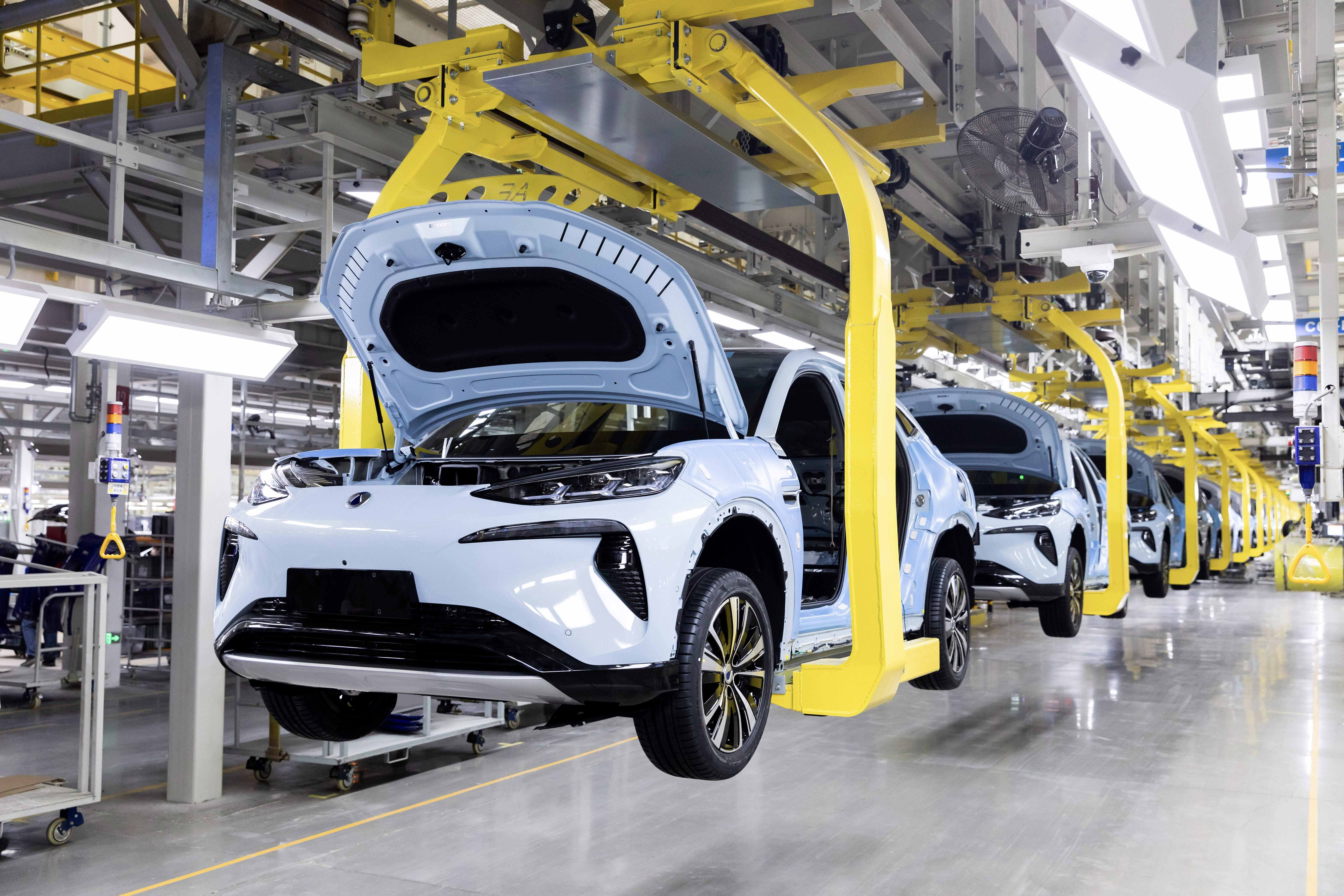
BYD has recently slowed production and expansion at its Chinese factories to address inventory pressure.
t least four vehicle assembly plants have implemented output reduction measures, including canceling night shifts and cutting production on some lines by at least one-third.
According to a Reuters report, BYD has recently slowed down production and expansion plans at its Chinese factories. At least four of its vehicle assembly plants have implemented production reduction measures, including canceling night shifts, cutting output on some production lines by at least one-third, and postponing plans for new production lines, in response to inventory pressure.

Data from the China Association of Automobile Manufacturers shows that BYD’s production growth rate has significantly slowed. In April 2025, year-on-year growth was only 13%, and in May it dropped further to just 0.2%, marking the lowest growth rate since the Spring Festival period in 2024. Compared with the strong expansion seen during the same periods in 2023 and 2024, the average monthly output in the first two months of this year fell by approximately 29% compared to the fourth quarter of last year, indicating a significant contraction in production capacity.

Analysts from Citigroup estimate that BYD’s domestic inventory reached approximately 609,000 units by the end of May. A May survey by the China Automobile Dealers Association further revealed that BYD’s dealer inventory depth reached 3.21 months, the highest among all brands and far exceeding the industry average of 1.38 months. A large dealer in Shandong province even closed at least 20 outlets as a result.
Official BYD data shows that in May, the company achieved sales of 377,000 vehicles, a year-on-year increase of 14.1%, with cumulative sales exceeding 1 million units in the first quarter. Despite continued sales growth, an imbalance has emerged between sales volume and actual production capacity. To reduce inventory, BYD launched a “618’ sales event with 10-billion-yuan subsidies” in May, cutting prices on 22 models across its Dynasty and Ocean networks by up to 53,000 yuan. This has also gradually shifted pressure onto the sales side.

Notably, the China Automobile Dealers Association publicly called on automakers in early June to “stop forcing inventory onto dealers,” pointing out that the price war has led to tight terminal cash flow and declining profits. They also demanded that automakers pay rebate funds within 30 days to alleviate the pressure.
Facing inventory pressure, BYD’s overseas expansion may provide a breakthrough. In the first five months of this year, exports accounted for approximately 20% of BYD’s total sales volume, with a year-on-year growth rate of 83%. The overseas market may offer a new path for resolving the inventory issue.
As of the time of writing, BYD has not commented on the production reduction reports.
Discover more from ChinaEVHome
Subscribe to get the latest posts sent to your email.