Leapmotor’s new C11 balances affordability and innovation, maintaining leadership despite market price wars and aiming for broader electrification growth.
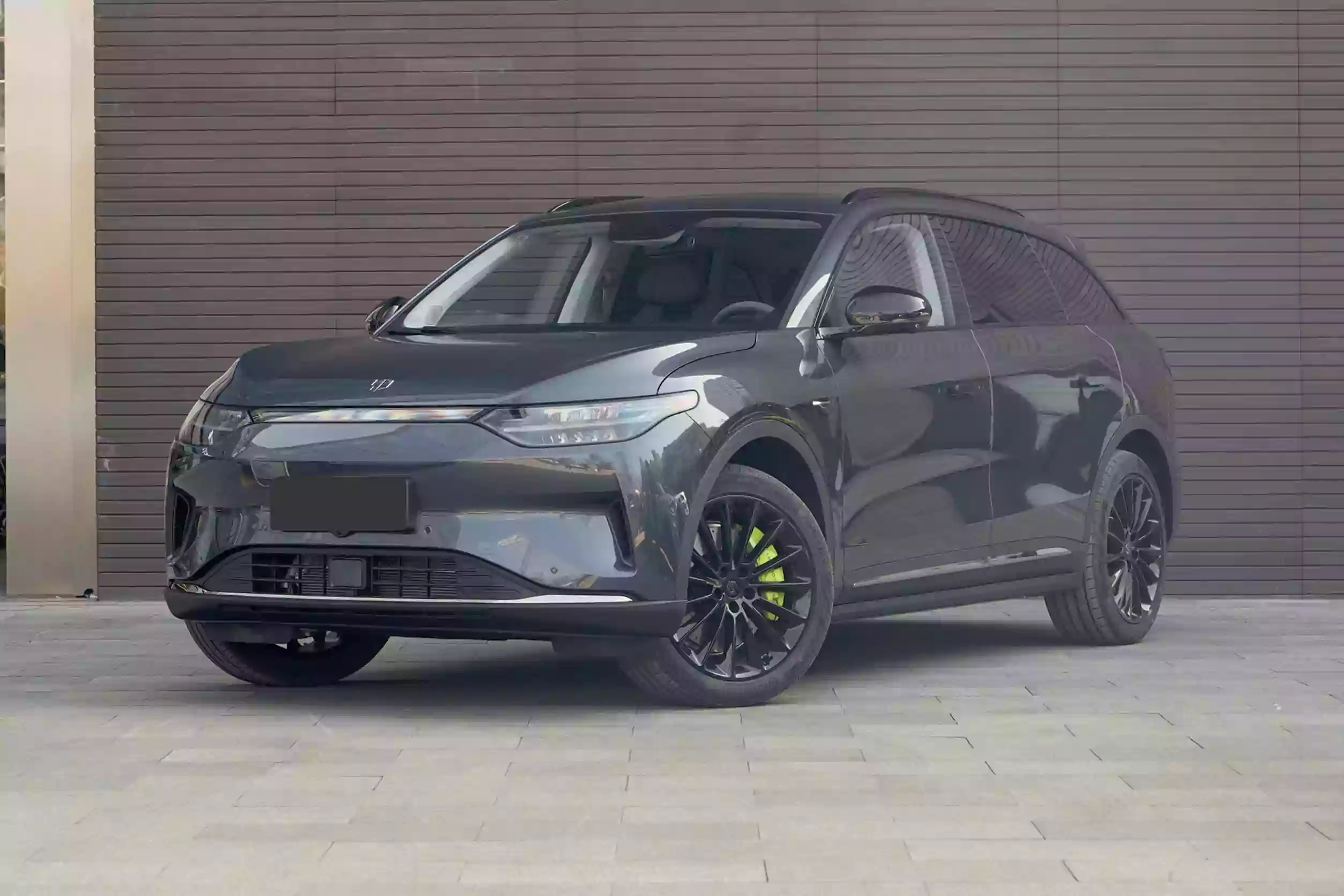
Last night, Leapmotor officially launched the new C11, priced at RMB 149,800–165,800 ($20,972–$23,212).
In a rare move, Leapmotor CEO Zhu Jiangming spent nearly half an hour sharing the backstory of the C11, expressing both pride and reflection—a rare moment for a brand often labeled as “tech-driven.”
On one hand, the story of the C11—from 1,500 units sold monthly after its 2021 debut to surpassing 10,000 units per month in 2025—is inspiring enough to fill Leapmotor with pride.
On the other hand, Leapmotor sees itself in the C11’s journey: once underestimated, it broke even in Q4 2024 and topped new energy startup sales for four consecutive months, outperforming many more prominent rivals.
As one of Leapmotor’s core sales pillars, the new C11 falls into what some call a “bold” price range. Some say it’s priced too high, while others insist Leapmotor remains true to its high value-for-money strategy.
Why did the new C11 adopt this pricing strategy? After completing its model year updates and mid-cycle facelift, what’s Leapmotor’s roadmap for 2025 and even 2026?
Confidence Behind the New C11
Because Leapmotor has long been associated with value, the new C11’s pricing surprised some, leading to claims that Leapmotor was “losing its edge.”
But compared to previous models, the price increase isn’t drastic.
The 2024 Leapmotor C11 was priced at RMB 148,800–185,800 ($20,832–$26,012). Excluding the extended-range 300 LiDAR version, the price range was RMB 148,800–165,800 ($20,832–$23,212).
The 2025 version’s starting price is only RMB 1,000 ($140) higher, yet it brings several feature upgrades.
Against competitors like the XPeng G6 and BYD Song PLUS, the new C11 offers similar range and configurations at a lower price point.
Some critics question why Leapmotor didn’t follow the industry trend of cutting prices—many 2025 models saw significant drops due to downgraded specs.
For instance, XPeng’s G9 saw its starting price cut by about RMB 30,000 ($4,200) and its top trim by RMB 81,100 ($11,354), repositioning it from RMB 280,000–350,000 ($39,200–$49,000) to RMB 250,000–280,000 ($35,000–$39,200).
In a market racing to slash prices, maintaining price or even increasing it is bound to draw attention.
Leapmotor justifies the C11’s pricing with tangible upgrades: AR-HUD and standard genuine leather seats, along with other formerly optional features now included as standard.
Among these upgrades, the AR-HUD stands out as the main selling point driving buyers to choose the top trim over the base version, despite less than RMB 20,000 ($2,800) separating them.

Developed in-house, Leapmotor’s AR-HUD integrates navigation, driver assistance, and safety alerts, boasting over 95% color depth, <2mrad binocular disparity, and <1% distortion for natural, comfortable viewing.
Though only 60 inches in size, Leapmotor claims its AR-HUD surpasses the 80-inch unit on the XPeng G7 in brightness and clarity.
Zhu Jiangming said the AR-HUD left him “deeply impressed,” believing it will convert some budget-minded buyers into top-trim customers.
With China’s car-buying population still growing, Leapmotor aims to deliver an “upgraded consumer experience” in the RMB 150,000 ($21,000) segment—offering features typically found in RMB 250,000 ($35,000) cars.

Beyond product appeal, Leapmotor’s confidence is rooted in its growing user base—over 250,000 C11 owners—and its continued sales growth.
As Zhu Jiangming put it, “In China’s new energy mid-size SUV segment, only Tesla’s Model Y and our C11 have been strong sellers for four years.” He also noted that the C11 maintains high resale values in both primary and secondary markets.
Leapmotor expects the new C11 to reach an 80% BEV (battery electric vehicle) and 20% EREV (range-extended electric vehicle) order mix, further growing its pure electric portfolio.
These years of user insight and product development leave Leapmotor highly optimistic about the new C11’s future.
A Persistent Sense of Crisis
Despite topping startup sales for four consecutive months, Leapmotor is still far from safe.
The brand’s product lineup has long centered around sub-RMB 150,000 ($21,000) models, where survival depends on volume sales and razor-thin cost control—like walking a tightrope to profitability.
Zhu Jiangming knows this well.
He pointed out that past sales champions like WM Motor, Neta Auto, NIO, XPeeng and Li Auto all faced hardships despite leading the charts at times.
“So what if we’re No.1? Our sales are still only one-tenth of BYD’s,” he said, emphasizing that Leapmotor is far from declaring victory.

Staying in the game means continuous progress.
Leapmotor’s full-stack R&D helps it cut costs and boost efficiency, and its ability to “get on board at the right moment” reflects sharp judgment of user needs and market timing.
In smart driving, this translates into a clear focus on practical use cases.
Cao Li questioned, “So many brands are pushing advanced smart driving, but how many truly offer citywide autonomy?”
He believes highway NOA is the real high-frequency use case, and after the latest upgrades, Leapmotor’s highway performance now matches mainstream levels.
Leapmotor’s insistence on full-stack development is also why it achieved profitability ahead of many rivals.
Zhu Jiangming likens the future of smart driving to smartphone cameras—eventually, everyone’s tech will converge.
Leapmotor’s hardware integration capabilities give it an edge, allowing it to optimize smart driving costs industry-wide and achieve a rare cockpit-driving system integration.

Beyond smart driving, Leapmotor has started in-house production of key components like seats and compressors, targeting self-developed manufacturing for core parts costing over RMB 500 ($70).
This level of control and commitment allows Cao Li to estimate that if another company tried to build the same C11, their costs would be RMB 20,000 ($2,800) higher. Similar competing models with the same size and configuration are all RMB 200,000 ($28,000)-class products.
Seeing themselves as the tortoise in the fable, they believe only steady progress leads to success.
Having recently completed its model year updates and mid-cycle refreshes, Leapmotor is preparing to launch the B01 sedan—said to rival the Tesla Model 3 and Toyota Camry—on July 23, and will unveil its flagship D-series by year’s end.
With 220,000 vehicles delivered in the first half of the year, Leapmotor is now running hard. Will it achieve its 500,000-unit annual sales goal?
Discover more from ChinaEVHome
Subscribe to get the latest posts sent to your email.