Nearly 400 stores across the country are already displaying the all-new ES8, and mass production has begun.
The number of pre-sale orders for the all-new ES8 has surpassed that of the ONVO L90 during the same period, indicating a positive market response.
On August 21, NIO unveiled the all-new ES8 at a technical launch event and opened presales. Pricing starts at RMB 308,800 ($43,000) under the BaaS program, or RMB 416,800 ($58,050) for outright purchase.
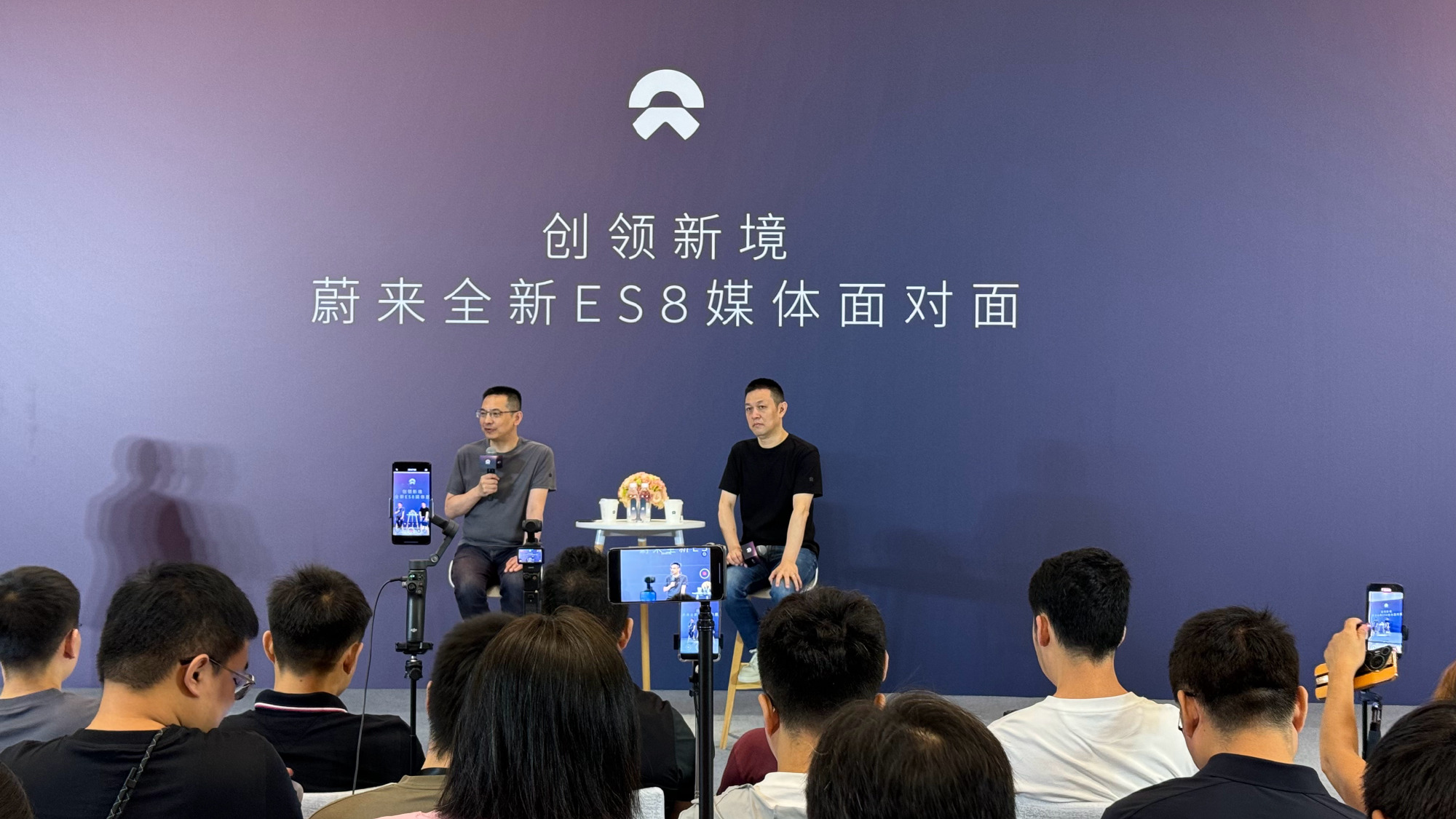
The following day, NIO officially held a small-scale media group interview in Chengdu. William Li, CEO of NIO, and Qin Lihong, President of NIO, attended the session. Representing the brand’s executive team, they responded to questions of high interest, such as the new car’s pricing, product differentiation, and cost control measures.
Below is a summary of the key points from this group interview. The full Q&A record from the communication session is also attached in the latter part of the article.
Pricing Strategy
Regarding the pricing strategy for NIO’s third-generation ES8, William Li admitted that the pre-sale price of the all-new ES8 is “explosive” and does have some impact on existing users. However, he explained that this decision was inevitable given the intense competition in the electric vehicle market and changes in cost structures. He pointed out that during the second-generation platform phase, costs were high due to limited scale and expensive components like the Orin-X chip. In contrast, the third-generation platform, through the use of technologies such as the 9031 chip, has achieved better cost control.
He emphasized that NIO must prioritize the bigger picture, stating that “survival is the most important thing.” Although the new pricing may hurt the feelings of some existing users in the short term, the company has received considerable understanding and support from its user community. In the long run, this pricing strategy will help NIO maintain its competitiveness in the fierce market.
Product Positioning
When asked about the differences between the all-new ES8 and the Ledo L90, Qin Lihong clearly stated that the Ledo brand targets family users, while the NIO brand focuses more on a “joyful lifestyle,” emphasizing luxury, technology, and emotional value.
The ES8 stands out in terms of materials, design, and social attributes, offering certain business value. He recommended that users choose based on their actual needs: family users may opt for the ONVO L90, while those seeking a high-end experience and social attributes would be more suited to the ES8.
Cost Control
“Where exactly were the costs saved?” This was a topic of great interest.
William Li revealed that the all-new ES8 underwent certain material adjustments, with a reduction in aluminum content. However, its strength and safety still adhere to a “super five-star standard”. The cost reductions primarily came from three aspects:
- Economies of scale: Increased sales volume led to lower costs.
- Supplier negotiations: Procurement costs were reduced through bargaining.
- R&D cost reductions: Reusing and sharing core technologies such as the 900V rear motor and in-house developed chips.
William Li particularly emphasized that in-house developed chips “really save a lot of money.” At the same time, he firmly denied the notion of a “battery swap premium,” stating that the value of battery swap services far exceeds RMB 100,000 ($13,930). From a full lifecycle perspective, battery swapping saves users significant time and alleviates range anxiety, reflecting NIO’s core competitiveness.
The price adjustment is not a short-term move but rather a result of NIO’s overall enhanced capabilities, demonstrating its “ability to adjust.”
Technical Configuration
Why wasn’t the all-new ES8 equipped with rear-wheel steering and active suspension? Li Bin explained that the trade-offs in technical configurations were based on product positioning and cost considerations. Adding rear-wheel steering would affect the third-row space, while including active suspension would make it impossible to achieve the current pricing.
He stated that “bringing the ES8’s price back to where it should be” also means ensuring a high-end experience while maintaining reasonable pricing.
Production Capacity and Delivery
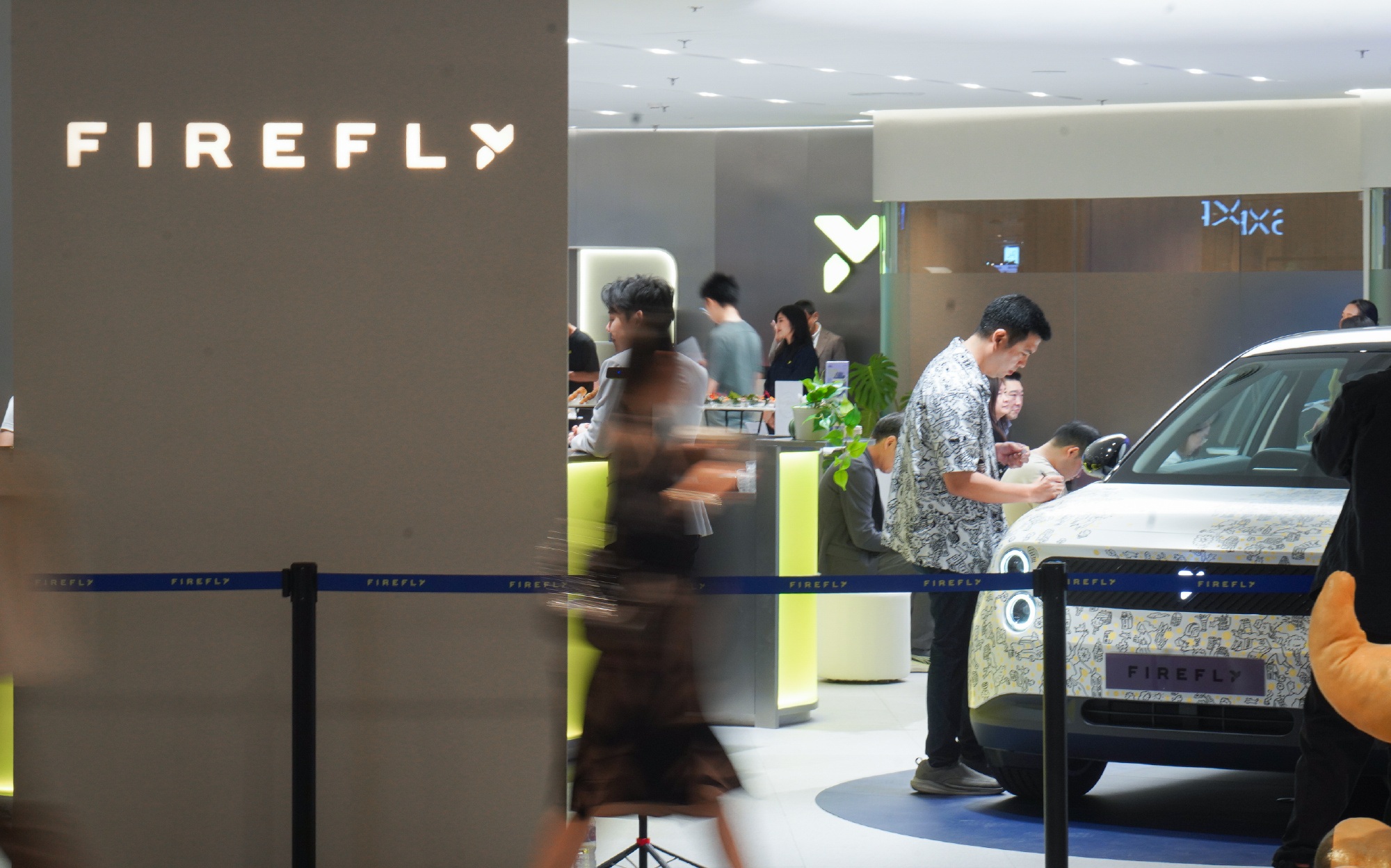
Qin Lihong revealed that nearly 400 stores across the country are already displaying the all-new ES8, and mass production has begun. Although the new factory and new product require running-in, the company is prepared and expects to deliver on time.
Regarding market orders after the pre-sale launch of the all-new ES8, Qin Lihong stated that NIO does not disclose specific order data. However, the number of pre-sale orders for the all-new ES8 has surpassed that of the ONVO L90 during the same period, indicating positive market feedback.

Full Q&A Transcript
Q1: The price of the new ES8 is quite shocking, but existing users are unhappy (feeling betrayed), and other models might be affected. How does NIO view this?
William Li: The iteration of electric vehicles is extremely fast now, with significant changes in cost and competition. Looking back at our first generation, economies of scale were not very evident, and costs were relatively high. By the second generation, costs remained high, for example, with the use of four Orin-X chips. But now, with the 9031 chip, we have the ability to offer more competitive pricing from a cost perspective.
From a competition standpoint, a lower price is also necessary. Our pre-sale pricing is based on comprehensive considerations, and our gross margin can still be guaranteed (referring to the third-generation ES8).
Secondly, while the impact on existing users is inevitable and puts pressure on us, many of their responses have been touching. Some even advised me that NIO’s survival is the most important thing. So, although we know there will be some negative impact, we must make decisions that benefit NIO’s long-term development from a overall perspective.
Our pricing strategy has been carefully structured, and this was fully considered during the pricing process.
Q2: How do you explain the differences between these two models at the retail level? What is the focus of the ES8?
Qin Lihong: Ledo is aimed at families, committed to creating “the best family life.” The NIO brand, on the other hand, is dedicated to a joyful lifestyle for users. The launch timing of these two models is relatively close, and there are some similarities between the products.
In terms of focus, NIO goes beyond meeting physical needs and pursues more high-end values, such as materials, design, and emotional appeal. It offers a stronger sense of “luxury” and “technology.”
Qin Lihong suggested that users choose between the two models based on their needs: the L90 is more family-oriented, while the ES8 carries certain business and social value attributes.
Q3: Will the all-new ES8 have a five-seater version?
William Li: Let’s keep that a suspense for now.
Q4: Is there any information about production capacity?
Qin Lihong: Nearly 400 stores across the country already have display vehicles, which is a signal that mass production of the ES8 has begun. The ES8 is produced in a new factory, and the combination of a new product and a new factory may present some challenges in the running-in process. However, there is still over a month until delivery begins at launch, and we are prepared. We believe there is no need for excessive concern.
The most direct example is the L90—what ONVO can achieve, the ES8 can also achieve.
Q5: Where were the costs saved for the all-new ES8? For example, is the body still all-aluminum?
William Li: First, the aluminum content is indeed lower than before. However, this does not mean that strength and safety have been compromised. We still design according to super five-star standards.
On the other hand, for example, the 900V rear motor is a drive system at the entire NIO corporate level, and its costs can be shared across brands under the company.
Then there are the chips. I cannot emphasize this enough—in-house developed chips really save a lot of money.
As for cost reduction methods, the first is negotiations with suppliers; the second is achieving economies of scale; and the third is R&D cost reduction. For instance, lightweighting requires significant upfront investment in R&D but has a longer cycle.
Q6: Does the premium brought by battery swapping need correction at this stage? Is the price adjustment a response to short-term competition or a fundamental strategic shift?
William Li: Battery swapping is definitely worth more than “RMB 100,000 ($13,930).” From a full lifecycle perspective, it also saves time and other factors, so there is no so-called “battery swap premium.”
As for the second question, the price adjustment is essentially a reflection of NIO’s overall enhanced capabilities. It is not done for short-term competition but because NIO has reached a stage where it “has the ability” to adjust prices.
The challenge is not making a cheap car but creating a product that balances price and innovation. Looking back, the R&D and product definition of the second-generation ES8 might be considered a “mistake” by today’s standards, leading to inflated costs and a price gap between the ES6 and ES8.
Therefore, when the all-new ES8 was approved, it was decided to correct the previous “mistake” and return it to its proper position.
Q7: How do you view your online reputation as a “hardworking model”? What are the key focuses for future work?
William Li: Even after ten years of entrepreneurship, NIO is still a newcomer. For us, this is still the beginning stage of entrepreneurship, and there is no reason or qualification to slack off. Including companies like BYD, Great Wall, and many state-owned enterprises, the “first-generation entrepreneurs” are still striving—it’s just that each company focuses on different areas.
The road ahead is very long—it cannot even be described as a marathon but rather a competition with no finish line.
Q8: NIO has already invested RMB 60 billion ($8.36 billion) in R&D. Will the pace of investment adjust in the future?
William Li: I cannot claim that every penny of the RMB 60 billion ($8.36 billion) investment was highly efficient. Although there is still room for improvement, the investment can generally be divided into three levels: first, the development of underlying capabilities and core components; second, vehicle R&D; and third, application-layer software R&D.
For these three levels, we will set evaluation models based on different short-term and long-term expectations. For example, some investments may yield returns in 3 months, 1 year, or 2 years. Ultimately, we will evaluate based on financial returns.
In summary, NIO will not reduce the scale or scope of investment but will more accurately assess the outcomes of product R&D to improve efficiency.
Q9: Is there any information you can share about orders? Will there be no new mid-range models? The technology trickle-down from the ET9 is less than expected. Will the ES9 bring surprises?
Qin Lihong: As always, there will be no official order numbers. However, we can sense strong recognition of the ES8’s product strength. From 10 PM last night to now, the number of orders for the all-new ES8 has exceeded that of the L90 during the same period.
William Li: Product iteration is related to market rhythm and R&D pace. Everyone will need to be patient. As for technology trickle-down, the reuse of platforms like the 900V and Cedar is quite high. I know everyone is concerned about features like fully active suspension, but ultimately, it is a trade-off. If we included rear-wheel steering, the third-row space would not perform as well.
Moreover, the decision not to include active suspension was due to cost considerations. If these technologies were added, the ES8 could not be priced as it is today.
Q10: Will the price adjustment of the ES8 affect its product positioning? What is the plan for moving the brand upward?
William Li: The fact that “NIO is a premium brand” has become a market consensus. However, a brand should also have a reasonable price range, and NIO is anchored in the same price range as BBA (BMW, Mercedes-Benz, Audi).
Taking the all-new ES8 as an example, both its product definition and pricing are positioned slightly higher than BBA’s comparable models. The all-new ES8 is also about “returning to its proper position.” Of course, NIO is not an “ultra-luxury” brand.
Regarding the second question, rather than “moving upward,” it is more about maintaining stability. Our direction remains unchanged.
Q11: Will the ET9 feature a small blue light?
Li Tianshu: Feasibility analysis and project approval have been completed. The final step is pricing. The feature is confirmed and will not be delayed.
Q12: Has the “decisive battle” begun?
William Li: Recently, the popularity of “large three-row pure electric vehicles” has been very high. Even automakers that previously sold extended-range vehicles very well have launched large three-row pure electric models.
During a previous trip to Mount Everest, I noticed that charging stations from extended-range vehicle companies have been built at the Everest Base Camp. What does this imply? Does it mean that even when going to Mount Everest, extended-range vehicles no longer need to refuel? Does it mean that pure electric vehicles can now travel freely?
Taking the ES8 as an example, its 777L storage space far exceeds that of comparable extended-range SUVs. This fully demonstrates that, with today’s technological advancements, the benefits brought by pure electric technology to users have surpassed the benefits of choosing extended-range vehicles due to “charging inconveniences.”
“The golden age of large three-row pure electric vehicles is coming” has become an industry consensus, and this is not self-praise for ONVO or NIO’s own products.
Q13: When will a pure electric MPV be launched?
William Li: If launching an MPV could generate significant profits, we would certainly do it. However, after thorough consideration, we do not yet believe that large families need an MPV.
In my mind, I don’t think in terms of MPV or SUV categories. Instead, I focus on user needs. If the form factor resembles an SUV, then it is an SUV; if it resembles an MPV, then it is what everyone understands as an MPV.
Q14: The stock performance is improving. Are investors optimistic about NIO’s profitability in the fourth quarter? What capabilities does the ES8 aim to demonstrate for NIO?
William Li: This shows that investors still recognize NIO’s fundamentals. In terms of where NIO’s management and team can give investors confidence, there are two aspects:
First, the ability to understand user needs and launch competitive products.
Second, systematic innovation. More importantly, how to integrate systematic innovation with user needs.
Another aspect is operational efficiency. Everyone is watching whether NIO can accomplish more with greater efficiency. If all aspects are done well, profitability will follow naturally.
Q15: When was the decision made to include the final statement in the launch event? Second question, about emotional value.
William Li: I’ve wanted to say this for a long time and formed this view early on. (Repeats previous points, no new information.)
Qin Lihong: We believe emotional value has no hierarchy. Every product has both physical and emotional attributes, but their proportions differ.
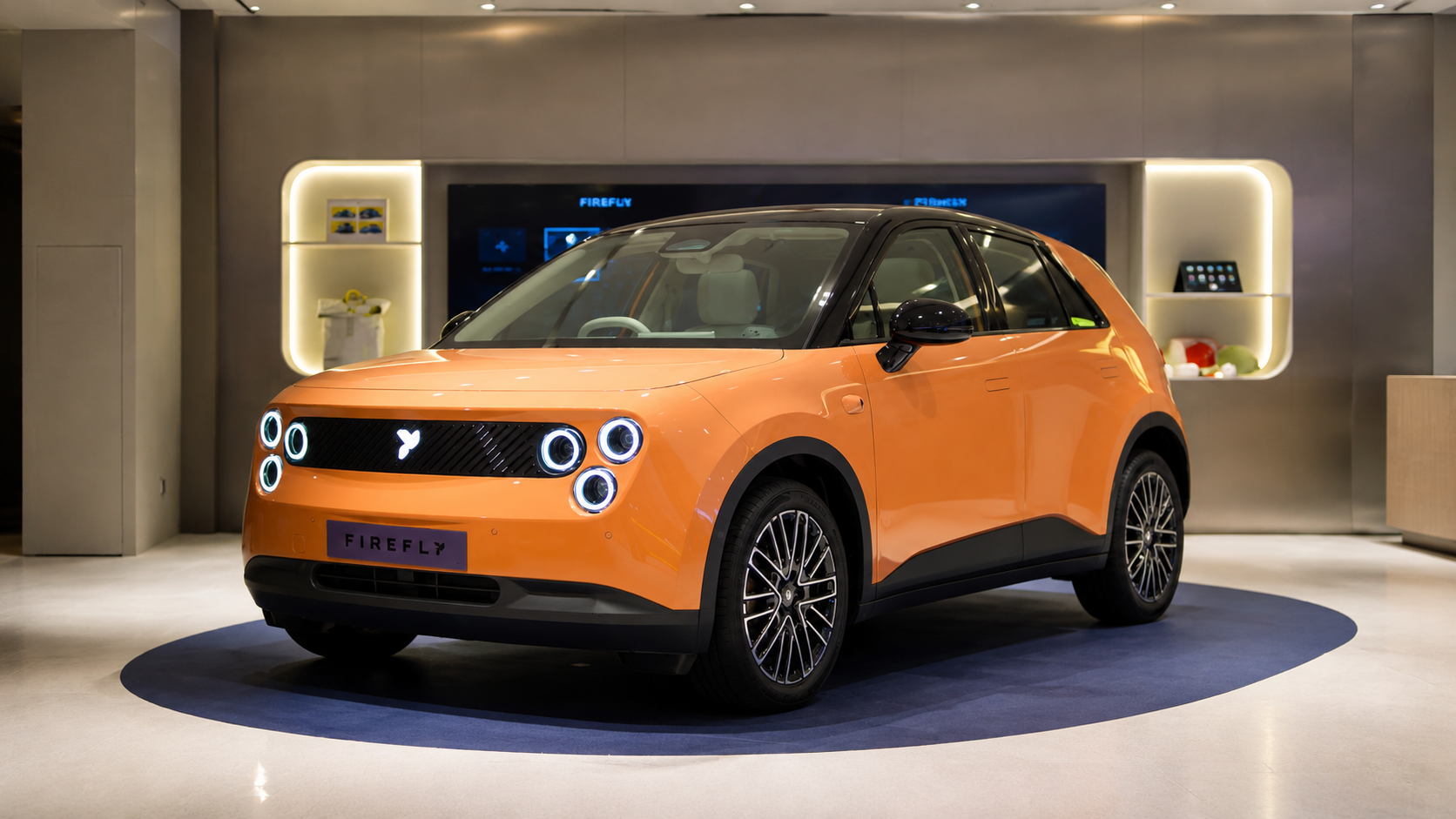
I think Ledo and Firefly, especially Firefly, which is the lowest-priced product, have a very high concentration of emotional value. Of course, their physical value is also high.
William Li: Let me use the Sky Screen as an example. It evolved from first and second-generation technologies. Compared to traditional large screens, the Sky Screen is actually three times more expensive. When we defined it, the main value of the Sky Screen was to create an ambiance and a sense of atmosphere.
Within the NIO brand, this is supported internally because we believe it is what users need. In other automotive companies, this might become a passenger screen.
Q16: What can we expect from the ES9?
William Li: Stay tuned. One thing I can reveal is that the ES9’s frunk will definitely not be as large as the ES8’s.
Q17: What are the new product plans for Q4 and next year? Will there be collaboration between Ledo and the NIO brand?
William Li: There will be new products in the future (no specific timeline), such as the ES9 and L80, which will be launched at the appropriate time.
Q18: Could you both share your interpretations of the design philosophy?
William Li: The ET9 is positioned as a technology flagship and executive flagship. Its product spirit is “daring to imagine and capable of achieving,” which also represents NIO’s core values.
As for the ES8, it has been explained quite clearly in the video.
Li Tianshu: Unlike before, the third-generation ES8 is “designed with purpose”—what should be highlighted is highlighted, what should be explicit is explicit. It can be understood that the third-generation ES8 aligns with the evolution of NIO’s design system and is a more complete interpretation of NIO’s original design.
Q19: How soon will imitators of the Ledo L90 and ES8 appear? This year feels like a year of concentrated technological breakthroughs for NIO. Can you maintain continuous technological output in the future?
William Li: From 2017-2018 to now, this is already the third-generation ES8. What can be seen is that NIO has achieved systematic innovation rather than focusing on individual points. NIO will not stop progressing, nor will our peers. Maintaining competitiveness, keeping up with leaders, and even accelerating is what NIO must consider.
Additionally, the company must become leaner and more agile to avoid falling behind.
Q20: Existing users are concerned about residual value,resale value, and battery warranty. How will these be addressed? What is the cost for existing users to upgrade to a new vehicle? Second question: As a premium brand, the price seems a bit low. Will this affect brand premium?
Qin Lihong: With the launch of the all-new ES8, there have been extensive internal discussions about the rights and benefits of existing users. On one hand, time is progressing, and technological iteration is extremely fast. Continuously updating technology and launching products is a major trend.
In this process, NIO will strive to balance the interests of existing users. For example, yesterday we offered some benefits for upgrading to new vehicles. NIO has already made significant efforts.
As for battery warranty, it is the least of NIO users’ concerns. Because of the battery swap system, as long as users utilize battery swapping, battery lifespan anxiety can be resolved.
William Li: As mentioned earlier, the average selling price is still positioned slightly higher than BBA’s. I do not believe the ES8 will cause any change in NIO’s brand baseline.
Q21: What advantages do the L90 and ES8 have when competing with other energy forms? What does 2025 mean for NIO? How far are you from achieving the Q4 target?
Qin Lihong: We have set a high benchmark with a “double-pronged approach.” With strong offerings in both the RMB 100,000+ ($13,930+) and RMB 400,000+ ($55,720+) segments, we are well-positioned for the market. Ultimately, however, the outcome will depend on actual market performance.
William Li: Recently, some media outlets compiled a list of large six-seater pure electric models. Only the L90 made it into the top ten. However, as more extended-range vehicle companies launch large six-seater pure electric products, this list may change.
Q22: Are you interested in participating in a 24-hour extreme endurance challenge?
William Li: Setting up battery swap stations in closed venues does not yield sufficient returns. We previously conducted a 10,000-kilometer relay test, which has already sufficiently proven its endurance capabilities.
Discover more from ChinaEVHome
Subscribe to get the latest posts sent to your email.