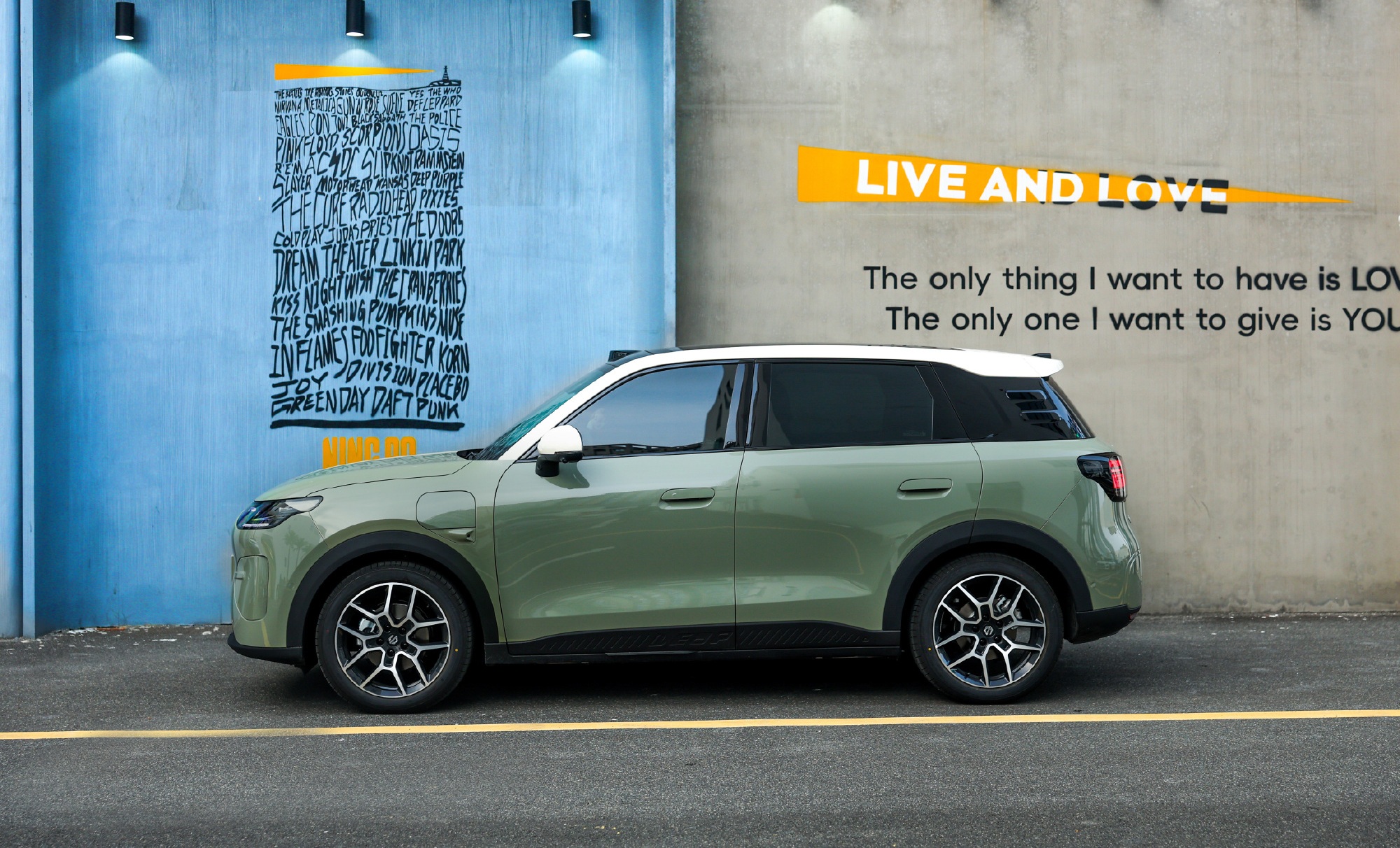
Smart is shifting its focus in the new energy vehicle market, and has addressed the questions people care about—like “why its cars are getting bigger and bigger” and “why it’s starting to make hybrid models”—with its own answers.
Since entering the new energy era, smart has always struggled to shake off two questions: Why doesn’t smart make small cars anymore? And why are smart’s vehicles getting bigger and bigger?
Despite Smart offering certain explanations on various occasions, doubts still linger in people’s minds.
After the morning of August 28, there may be one more question to add: Why has smart started developing hybrid vehicles?
At the Chengdu Auto Show, which opened on August 28, smart officially launched its EHD Super Electric Hybrid technology brand. The smart #5, equipped with this technology, will go on sale in the fourth quarter of 2025.
At the same time, smart announced that based on this technology platform, it will launch a plug-in hybrid model with a small battery in the second half of this year, further strengthening its technical identity in the hybrid market.
During the group interview after the event, we heard what might be the most compelling answer to the three questions above: smart exists in many forms.
This is the theme smart has set for itself at the 2025 Munich Motor Show, which is scheduled to open on September 8. Prior to that, on September 2, smart will also unveil a new product.
With this two-pronged approach, Smart aims to explain its consistent pursuit of change. Yet, amid this “change”, Smart is also nurturing a “return”.

What are smart’s plans for the future? And how will it tell the story of its distinctive brand?
Let’s take a closer look.
Hoping to Make the Cut
Smart has been keeping pace with the trends of China’s new energy vehicle market.
This is evident from the growing sizes of the #1, #3, and #5 models, as well as their product features. Earlier, when the smart
At the same time, smart has not abandoned its “personalization” label. It has integrated more elements of “new luxury”, “warm technology”, and insights into the trendy lifestyles of the younger generation into its product positioning.
To summarize the smart team’s remarks during the group interview: They aim to create products that are “not defined by conventions” while still meeting mainstream needs.
However, achieving this goal is no easy feat, as reflected in the sales performance of smart’s current odd-numbered models.
Product positioning is one obstacle, and powertrain type is another. Even today, pure electric vehicles still struggle to ease people’s anxiety about range and charging. Therefore, like many new energy brands currently, smart has launched the EHD Super Electric Hybrid technology.

Although the technology is based on a shared group platform, smart emphasizes that it will develop unique features in terms of vehicle integration and calibration.
“Different models are calibrated by different teams, which will result in differences,” said Yang Jun, CTO of smart Global. “Everyone can test-drive our cars, and you will feel the strength of our team.”
He had just completed a long-distance test drive from Turpan to the Pamir Mountains and has full confidence in the team’s calibration and chassis tuning.
In addition, designs that reflect smart’s understanding of new luxury—such as its interior/exterior styling and Sennheiser audio system—will continue to be retained.
For existing products, this technology will be fitted in the smart #5.
Smart’s core focus remains urban mobility, but with the addition of EHD technology, its models will also cater to the long-distance travel needs of urban users, delivering more comprehensive product capabilities.
Furthermore, the cost reduction brought by EHD technology will enable smart to actively expand its sales network to second-tier, third-tier, and lower-tier cities, widening its distribution channels.
In China’s increasingly competitive automotive market, we are witnessing not only the withdrawal of once-familiar brands but also the rise of previously less prominent brands that enter the mainstream with a successful model. Crisis and opportunity coexist here.
Smart’s expectation is: “We hope that when Chinese users are choosing a midsize SUV—whether it’s a plug-in hybrid or a high-quality SUV—our smart #5 EHD can make the cut.”
Even-Numbered Series
Beyond the EHD technology, the even-numbered series revealed by smart during the group interview is equally worthy of anticipation.
In 2026, smart will launch 2 even-numbered models.
One of these two even-numbered models will be based on the EHD Super Electric Hybrid technology and is expected to make a breakthrough in its market segment; “the other even-numbered model will play a more strategic role in brand building and stabilizing the user base.”
Smart is keeping details about the next even-numbered model under wraps, stating that “the next even-numbered model will differ from SUVs and will deliver an ‘undefined return’ in another dimension.”
The mention of “return” inevitably evokes memories of Smart’s classic even-numbered series, such as the smart forfour.
Smart has maintained strict secrecy around the even-numbered models. More information came from Zhang Mingxia, CMO of Smart Global, who said, “The even-numbered models will also embody inheritance, but not in the fixed way the outside world imagines. The overall goal is to strike a delicate balance between inheritance and breakthrough.”
Will smart’s classic small cars make a comeback? And in what “undefined” form will this “return” take? Smart is staying tight-lipped, only revealing that it will release partial information about the even-numbered model on September 2, which will be synchronized with its European event at the Munich Motor Show on September 8.

It is clear from the group interview that smart has high expectations for the even-numbered series.
During the interview, smart mentioned that its even-numbered series was once a pioneer in urban mobility but later gradually slipped into a follower role.
Now, smart hopes to reemerge as a pioneer with the return of the even-numbered series.
If the “return” mentioned by smart truly means the comeback of models similar to the smart forfour in a new energy form, its competitiveness in China’s fiercely competitive new energy premium small car market remains uncertain.
As Mandy Zhang and Yang Jun noted: “Frankly speaking, it’s easier to make large cars” and “From an R&D perspective, I’d rather make large cars… The smaller the car, the harder it is to develop.” Small cars face greater challenges in realizing the design concept of “compact on the outside, spacious on the inside” and also have higher requirements in terms of safety and cost.
More importantly, how will the “undefined” positioning—something Smart has emphasized repeatedly—be accepted by the market?
The information release on September 2 and the appearance at the Munich Motor Show on September 8 will provide us with more answers about Smart’s even-numbered series.
Regardless, smart—with its commitment to a differentiated development path—stands out as particularly unique in the current highly homogeneous new energy vehicle market.
(End)
Discover more from ChinaEVHome
Subscribe to get the latest posts sent to your email.