Porsche’s first locally developed infotainment solution—designed specifically for Chinese users—will be the Center’s initial technology deliverable, planned for installation in Porsche vehicles in 2026.
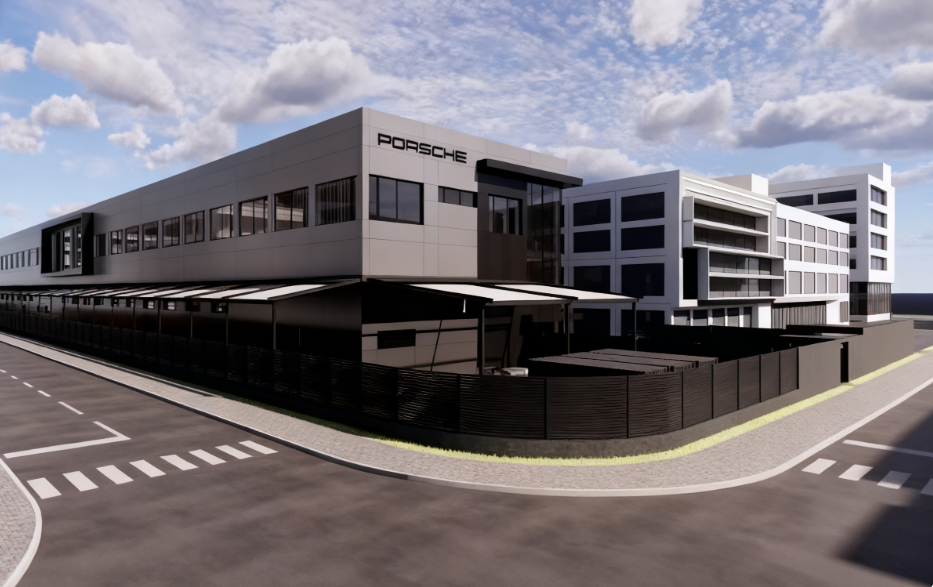
On Nov. 5, Porsche inaugurated its new China R&D Center in Jiading District, Shanghai. Volkswagen Group and Porsche global CEO Oliver Blume attended the event.

Blume noted that China has become a core hub for electrification and digital-innovation, and that the pace of change in the local market has outstripped what traditional development models can support. As a result, the company needs to shift development authority to local teams.
The Center is Porsche’s first strategic-level R&D institution outside Germany, integrating R&D, procurement, and quality control with independent decision-making.
The center will focus on developing integrated hardware-software infotainment systems and driver-assistance solutions tailored for China.
Its first locally developed infotainment solution—designed specifically for Chinese users—will be the Center’s initial technology deliverable, planned for installation in Porsche vehicles in 2026.

Located near the Hongqiao transportation hub, the site covers more than 10,000 sq. m and includes specialized workshops and an HMI (human-machine interface) lab. It can host more than 300 engineers.
Three major entities—Porsche R&D China, Porsche Digital Technology China, and Porsche Engineering China—along with local procurement and quality teams, will be integrated into the Center, forming a complete “local R&D—local procurement—local quality control” value chain.
The organizational restructuring is driven by China’s market dynamics. In the first three quarters of this year, Porsche delivered 213,000 vehicles globally, down 6% year-on-year; deliveries in China fell 26% to 32,000 units, becoming the largest drag on overall performance.

The weaker China performance has pushed Porsche to move faster toward a localized development system, aiming to shorten development cycles, improve responsiveness, and close gaps in intelligent-experience capabilities.
Porsche China CEO Michael Kirsch previously said that 2025 will be a year of recalibration for the brand, while 2026 will mark its renewed push to regain market momentum in China.

The launch of the R&D center is seen as a vital step in this strategy: developing in China for China (“local for local”), integrating digital experiences, cabin ecosystems, and Chinese user needs directly into product planning rather than relying fully on teams in Germany.
From a competitive standpoint, Porsche faces headwinds in China as it trails in EV and smart-vehicle transitions, while domestic brands gain ground.
For a luxury automaker long reliant on mechanical excellence and brand premium, delegating development authority to local teams represents a key attempt to reposition itself amid a new competitive landscape.
Discover more from ChinaEVHome
Subscribe to get the latest posts sent to your email.