NIO’s 11th anniversary highlights its resilience, challenges, and evolving brand perception amid the competitive EV market landscape.
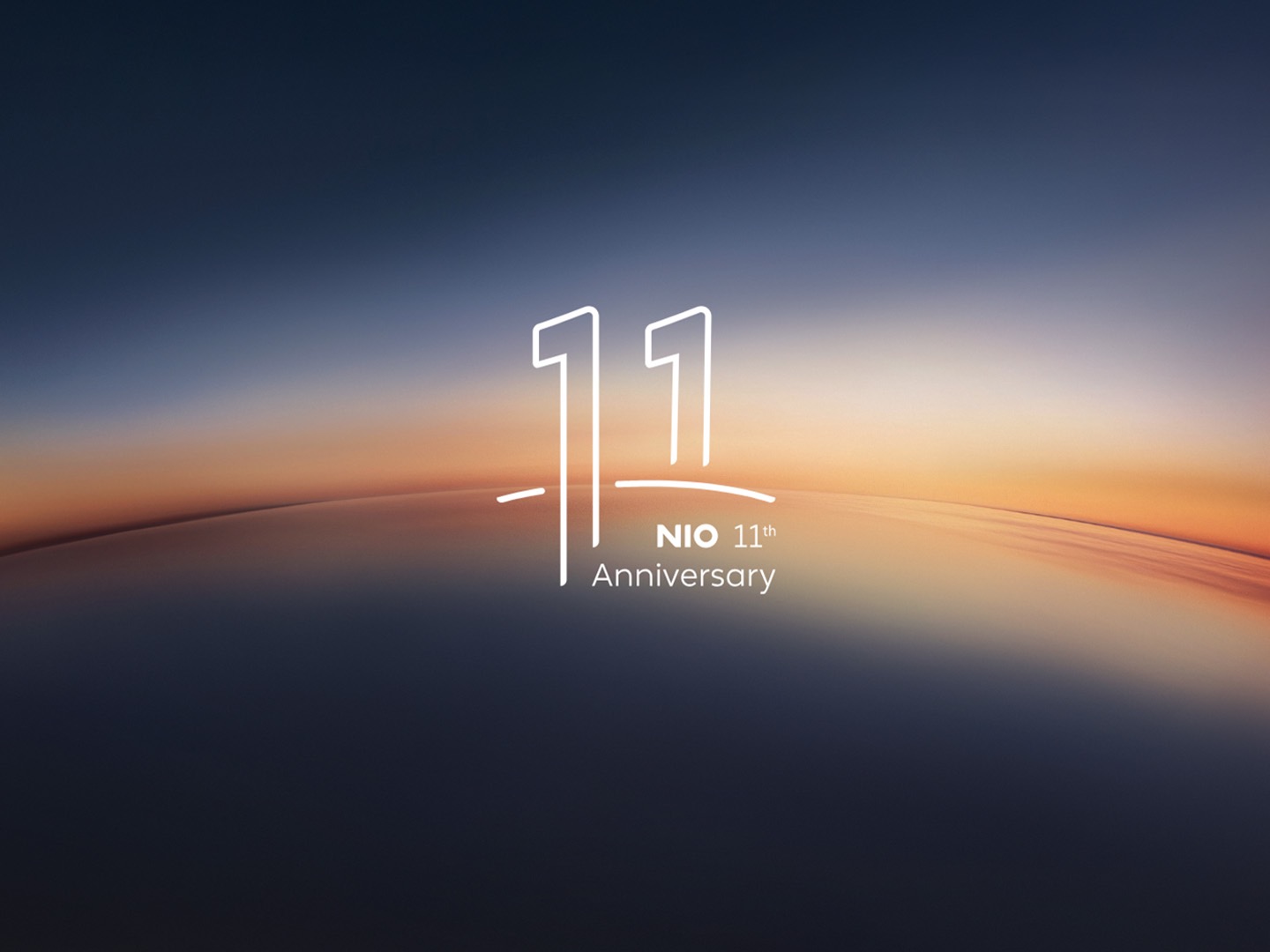
Yesterday marks the 11th anniversary of NIO Inc., and NIO released its Q3 financial results “ahead of schedule.”
ChinaEV Home came across Shen Fei’s piece comparing “Yang Guo” and “Guo Jing.” That prompted the thought: at this precise moment, it’s better to publish this long-form interview first.
On the very day of NIO’s 11th anniversary, we commence with the background.
At the beginning of the month, I interviewed Jin Ge from Firefly. When asked about Firefly’s development, he gave a striking description: From a catastrophic start to rewriting destiny.
Around the same time, Auto media Huxiu published a widely-shared article titled: The Fatal Strike — How NIO Delivered a “Back-from-the-dead” Blow.
Whether described as resurrection or rewriting destiny, I keep thinking: none of it was handed to them.
In many ways, this is why, just before NIO’s 11th anniversary, I was determined to speak in depth with 11 interviewees and complete this story.
These 11 individuals include veteran media professionals I trust, current and former NIO employees I know well, NIO owners I’ve known for years, and one particularly special person — a former colleague who swore never to buy an EV, but this year decisively purchased the all-new ES8.
Each interview generated roughly 10,000 characters of notes. After reviewing them all, two impressions were particularly strong.
First, those who chose NIO — or believe NIO has a future — base their conviction foremost on values. This is due to William Li’s personal influence and the “righteous” principles NIO has adhered to in the past, which have built a foundation of trust.
Second, when judging NIO today, the harshest conclusion was only neutral. Among responses ranging from extremely optimistic, optimistic, mildly optimistic, neutral, mildly pessimistic, pessimistic, to extremely pessimistic, most selected mildly optimistic.
Naturally, the long-character interview record can’t be published. Therefore, although 11 people were interviewed, the story will be structured around six core questions.
However, it will still be quite lengthy as I want to retain some of the details from that time.
Dangerous moments?

Let’s start with this past year — conversations with those still inside NIO and those who have left.
In the past year, as mentioned at the start, NIO’s trajectory resembled a steep downward plunge then a rapid rebound — a deep V.
“Back in February and March, based on what I heard from them, it really felt like the darkest moment.”
That is how Chen Jia (alias), now a store manager at a competing brand, described it. Chen has always been in automotive sales — joining NIO as a management trainee, shifting to Cadillac, and later returning to his hometown to manage another brand.
He told ChinaEV Home: he actually joined NIO’s sales system during the hardest period in 2019.
At that time, many inside NIO considered it the darkest year.
But in the first half of this year, feedback from friends still in NIO’s sales network suggested some people were closing only one or two deals a month. Sales performance in the market was weak, and many long-time employees left. It truly felt difficult.
This sentiment was shared by Xia Xiaobo, administrator of the NIO Carbon Powder community. In his words: it really felt like the company almost died.
Because of where he lives and works, he knows many suppliers, and some had already… because NIO’s sales underperformed and contracted capacity commitments were not met.
But regarding the widespread belief that NIO would “inevitably collapse,” Xia said he was never worried.
Because, in his perception, as long as William Li remains, NIO will not die. Li always manages to find money at the most crucial moment, reviving NIO in the most dangerous hours.
“And the facts prove it — not once, but at least three times, right?”
That sentiment was echoed by Wang Yi, former president of the NIO Hefei Owner Club. More precisely, Wang believes NIO will not collapse because it has Anhui — specifically Hefei.
Still, the fear early in the year did affect consumers.
Lu Chu, an old friend of the author for more than 20 years, placed an order for the all-new ES8 after launch. When asked whether he considered buying NIO in March, he replied that the price felt high, and many people were saying NIO would go bankrupt — so he was worried.
Yumaoge, founder of EV Brothers (auto media), said bluntly: outsiders believed NIO was doomed — plainly speaking, going to die.
Social sentiment was even more chaotic than in 2019. “Looking back, 2019 was only a cash crisis. But by March this year, the question became philosophical — is the story itself correct? Was ONVO right? Was Firefly right? That evolved into questioning whether every major decision by William Li was correct.”
Yu said this was the most severe issue. From product-level doubts came broader questions: Is battery-swapping the right path? Is organizational capability sound? And eventually: is William Li’s personality right?
“Too kind to command troops, right? Surrounded by bad actors, anti-corruption campaigns, a complete denial of NIO.”
But as Yu noted, in the end, everything returns to product.
Yet when interviewing those who built NIO’s products, the answers were entirely different. Whether still inside or already outside, none felt NIO fundamentally had a product problem.
Jian’er, previously responsible for product experience and a core member of NIO’s diamond user group, now works in product at another automaker.
“I didn’t feel that way. Maybe we just needed to wait until year-end.” He said, because he knew NIO still had cards left. And when ONVO L90 launched, he knew they were safe.
Meanwhile, another product manager still at NIO, nicknamed Fuzha, said that since the second half of last year, they had already begun testing the all-new ES8 — so even in March–April, confidence was strong.
From a product view, he said, every company has its blockbuster cycles. NIO’s second-generation models were affected by global expansion strategies, creating misalignment with Chinese market needs.
“Europeans simply don’t like big cars; they are extremely restrained on size, right?”
Thus, in the NT2 period, those 2–3 years were difficult. “But we made it through.”
Problems had already been identified, he said, and the corrective speed was extremely fast.
So in March–April, he believed the NT3 product definition aligned strongly with Chinese needs — create something one would truly want to buy.
However, he admitted that after ONVO L90 and the all-new ES8 regained momentum and orders rebounded, “morale clearly returned.
Then there was heated discussion about the CBU system — not spending money unnecessarily, but increasing investment in some long-term endeavors.
But after tightening through the most difficult months, some long-term R&D investments will resume.
NIO People

In the most dangerous moments, the impact on people is enormous. For example, the value behind the label of being a “NIO people”.
“I can only say that the NIO label does not score extra points here.” said Wang Peng (alias, senior management), who now serves in a key role at another automaker.
When asked by ChinaEV Home how he views NIO’s current state and the meaning of the label “NIO people”, he gave that answer.
Why?
Wang Peng said that many executives at other automakers do not believe NIO is right, and see little to learn from it.
On expectations for NIO’s development, his view was this—many believe NIO can survive Q4, but do not expect it to sustain leadership. They only “expect survival”.
ChinaEV Home posed the same question to Jian’er.
Jian’er said he has spoken with many headhunters: several years ago, many companies did recognize NIO’s approach, and being a NIO alumnus was a plus. But starting around two to three years ago, that reputation gradually faded.
One reason is that everyone has found their own path now, and many have seen through parts of NIO’s approach—maybe they do not respect it anymore, or see it as incompatible with their own direction. So, “the halo is slowly fading.”
ChinaEV Home asked whether the halo has now disappeared entirely—or has even become a negative mark.
Jian’er denied that: not really. It always depends on the brand momentum. When the brand loses power, its people face growing challenges in hiring. But when NIO surged again in July and August, people with NIO background became valued once more.
From a product perspective, Jian’er added, a car lifecycle is two to three years, and its final market performance may have little to do with the product people behind it, because results reflect the future.
But today, product managers are judged solely by the brand’s performance in the moment.
“Previously, people from AITO and Li Auto were extremely sought after, and recently so were those from Xiaomi,” Jian’er said.
Their companies performed well, and that “performance halo” outweighed individual ability. So now, as NIO rises again, R&D and decision-makers quickly gain value along with it.
The value of a label is one part; what one learns as a “NIO people” is another.
Chen Jia (pseudonym, store director at a peer automaker) said he carries deep emotional ties to NIO, and strongly agrees with NIO’s values and philosophy.
When working at NIO, “the overall professionalism was very high. I received a lot of positive support. Walking by those values shaped me spiritually and professionally.”
This sentiment is widely shared. Many former NIO sales staff speak with real gratitude about their time there.
Before NIO, some worked in traditional dealerships. “Joining NIO felt like bandits being reorganized into the regular army—strong discipline, structure, and habits.”
Thanks to that experience, NIO sales alumni are often viewed as graduates from the “Huangpu Military Academy” of EV retail.
“In their eyes, NIO people have strong service attitude and professional knowledge. And NIO was the earliest to explore the direct-sales model—a very orthodox version of new retail, without shady tricks.” Chen Jia said.
Of course, some feel NIO people are too gentle—“not aggressive enough” in pushing deals.
Returning from frontline sales to product, Fuzha said he never imagined leaving NIO—even during Xiaomi’s strongest momentum.
“Was it that you didn’t want to leave, or that no one tried to poach you?” ChinaEV Home asked. Fuzha laughed—no, there were offers.
The reason he stayed: NIO is extremely friendly to product managers, because the company is fundamentally R&D-driven.
“We could pursue bold ideas that would be impossible elsewhere—because they require major investment.
Maybe a product already scores 90 out of 100, and we had a breakthrough technology that could push it to 95. Still worth trying.”
Some say this wastes money, and if it fails the cost is huge. That is why critics say NIO burns cash. But NIO dares to invest in cutting-edge technology and put it into practice.
“Many things I had to learn on my own—that’s also where I think NIO had problems.”
Jian’er, who left NIO in 2023, said he learned a lot at NIO but was dissatisfied with product-team management and training. For example, in product development, there was obsession without methodology.
Wrong Turns

For an eleven-year anniversary story, the intention is to examine problems first—especially when NIO’s momentum is rising again.
So before asking what NIO has gained in this past year and decade, we must ask where it went wrong.
At the Auto Guangzhou 2025, William Li already responded.
“In direction, we never believed our strategy was wrong, but in execution, many things need improvement.”
So over the last year, NIO restructured organizational capacity and transformed its operations.
But is that all?
“Often we defeated ourselves by doing nothing,” said Xia Xiaobo, still critical of NIO’s handling of public opinion. He felt NIO played dead rather than respond proactively.
Store director Zhao An (alias, sales management) expressed anger not only about public opinion but also toward the legal department.
He said when NIO was overwhelmed by “rumors” and negative news, many potential buyers—who admired the products—became hesitant, fearing risk because many brands had already failed. This affected sales substantially.
“They are taking action now, but previously they did nothing,” Zhao said. When facing attacks, internal guidance was not to criticize competitors, but to calmly explain product concerns within allowed boundaries. But frontline staff felt frustrated and furious.
Before this year’s reforms, Zhao believed three major mistakes existed.
First: sales had no clear targets early on, working under the idea that service alone would naturally bring results.
“Maybe they never expected competition to become this intense.”
Zhao believes that in 2021, if a strong sales team had driven clear goals, NIO could have sold more cars and captured more share.
“Once basic targets were met, sales motivation disappeared—like lying flat.”
Second: product launch timing—it was a “huge mistake” to wait 9–14 months from launch to delivery.
“How could someone pay and wait that long? Maybe supply-chain issues played a role.”
“With ET7 and ET5, we lost too many orders.”
Third: many stores were built in irrational locations. Zhao recalled a story about a NIO House in Shanghai costing tens of millions RMB to renovate, then demolished and redone.
“I always wanted to ask Li—why allow that project to open?”
Zhao himself endured “a very hard six months” at an unsuitable location.
Wang Peng offered only four words: “strong anti-corruption”.
“Could reaction have been more agile?” asked Liu Baohua, founder of Car-Riff and veteran auto journalist.
Liu said NIO was born in China’s most prosperous period—built for prosperity. Both positioning and service leaned premium.
But globally, the economy has since declined and consumption has downgraded. The auto industry entered extreme price competition. This environment was unfriendly to NIO’s strategy, leading to today’s challenges.
Given this shift, Liu said while he understands NIO’s insistence on values instead of price cuts, agility was needed. Some things did not need to be done so meticulously.
For example, firefly, expected to be a low-volume small car—why insist on battery swapping? It could just charge and remain simple.
Or product lines—too many models, limited differentiation, low efficiency.
“There’s an efficiency problem.”
For Yumaoge, NIO’s biggest wrong turn was NT2 product definition. Product-side issues created ripple effects. At that time, no matter what NIO did, outsiders felt it was wrong—even breathing.
Another memory: Li once said in an interview that he sometimes can pull himself back from the cliff edge.
“Wasn’t it a cliff six months ago?” Yumaoge said. From the outside, it was a cliff with one foot already hanging.
“And again, Li tied a safety rope, walked to the edge, stared into the abyss, and came back.”
“So if he saved the company twice from the edge, no one should doubt his competence as CEO.” Yumaoge said. Li’s management style is extreme innovation—start with the hardest problem first.
But it looks terrifying—“could he stop going to the cliff every time?”
Spirit unbroken

After mistakes, what was gained?
This year, NIO’s operational efficiency changed dramatically, so start with now, then the decade.
During the hardest moment, Yumaoge kept wondering: what sustained NIO?
He spoke with NIO employees and found that even “at the most difficult time, the entire NIO team—especially product—kept acting on belief with full conviction.”
They pushed to mass-produce new products and rushed them to market like ammunition to the battlefield.
“Even when the frontline was collapsing, they fought to send ammunition forward.”
Looking back, he believes that was right.
Some once questioned NIO’s organizational strength. Now he says the opposite: NIO’s organization is remarkably resilient.
“When facing overwhelming fire and doubt, their form did not scatter, and their spirit did not scatter. That is extraordinary.”
Another key observation: “This year, every decision started with ROI. The company finally became a business.”
With changes and two hit products, emotionally “it feels like Bin-god is back. Everything seems right again… firefly is right, ONVO is extremely right. But the phone still divides opinion.”
(A note on the phone: at Auto Guangzhou 2025, sources said Li rethinking NIO Phone two years ago: should a backup-device really be a RMB 7,000–8,000 high-end model? Expect change next year.)
Product itself must always be the core.
And product-definition and R&D changed significantly.
Fuzha said product definition is now more structured—supported by data, without old blind obsession.
“When I joined, much was decided without data—just gut decisions.”
And “listening to advice” was another common conclusion from interviewees—whether media like Liu, or owners like Wang Yi.
Wang said, “Li now listens. That’s why ES8 and L90 sell better.” After ES8 launched, “at least 10 orders came through my WeChat QR code.”
After complaining about previous issues with promotion, rhythm, delivery, etc., Xia Yibo also believes that this year, besides the increase in sales, NIO is different overall.
For example, previously, they would pour all their budget into the launch and then go silent. Now, they maintain the heat wave after wave, including inviting celebrities and using marketing to sustain product popularity and orders.
“Now it feels like they plan carefully before acting, which is quite different from before.”
Trust and imagination

After discussing the short-term “gains,” let’s look at the longer-term “harvest” over the past 11 years, which is particularly valuable information provided by the interviewees in this article.
“Imagination!” from Liu Baohua.
Liu Baohua said he believes NIO’s imagination is extremely rare. Whether among Chinese companies or multinational corporations, few are like NIO – from its inception, it has had such vast imagination.
Its entire ecosystem, including services, whether it’s battery swapping or NIO LIFE, and its overall model and gameplay, are services that owners of Mercedes-Benz, BMW, or even higher-end brands could never have had before.
In his view, the imagination NIO demonstrated when building its entire ecosystem from the beginning is extremely rare.
“Few people dare to think like this, to provide such perfect car services.” Liu Baohua said that NIO not only thought of it but also achieved it and has persisted for 10 years.
However, has this imagination been accepted and rewarded by the market? ChinaEV Home asked.
Liu Baohua categorically said that it has been accepted and rewarded, even though “there are also challenges, as mentioned earlier, during the economic downturn cycle, they are at a disadvantage.”
Using Liu Baohua’s words, except for NIO, he believes it’s hard for other Chinese car companies to say they have firmly established a high-end brand positioning.
Compared to traditional luxury brands like German trios BBA (Mercedes-Benz, BMW, and Audi), “in terms of new energy vehicles, NIO has undoubtedly surpassed them.”
“Now I think NIO should compare itself to BBA in terms of brand status and influence in the overall automotive market.”
As for why it can maintain a “high-end” position, Liu Baohua’s opinion is that this enterprise has been around for 11 years, and its cars have been launched for seven years.
High-end positioning requires time to accumulate. Brands like AITO and Maextro still need time to prove themselves.
From a temporal perspective, this is a judgment, but what is the “cause”?
Car owner Xia Xiaobo’s following statement may provide an answer.
Xia Xiaobo said that many people believe the strong sales of the all-new ES8 are due to price reductions, but that’s not the case because the base version of the first-generation ES8 was actually priced at RMB 448,000 ($62,760).
The all-new ES8 just has many more features, which is essentially the result of technological progress.
“It’s selling well not because NIO reduced prices but because NIO has reached a turning point, and sales have naturally increased.”
In his narrative, the most important symbol of this turning point is “trust.”
He recalled that when he first encountered NIO, he was attracted by its products and services, and at that time, there weren’t many other choices.
So, he didn’t quite understand NIO’s claim of being “a values-driven enterprise,” thinking it was just empty talk and slogans.
But over the years, after experiencing so many “stories” and “accidents” in the new car-making industry, he found himself gradually understanding NIO’s statement because, when buying a car, the most important thing is to look at a car company’s values.
And this is not just his personal belief. When communicating with owners of other brands, he found that everyone now thinks this way.
“A car company, including its founder’s values, is very important.”
For example, Xia Yibo said that certain brands have two microswitches in their door handles. How could consumers discover that?
When choosing a product, people only look at the number of screens, how fast the car can go, the range, and the space.
“Actually, they won’t notice something like two microswitches.” Xia Xiaobo said that if an enterprise has improper values and tries to cut corners in certain areas, consumers will only find out after an incident occurs and it’s reported by the media.
He believes that NIO would never do such a thing.
In his observations, NIO never compromises on any safety-related issues.
“I can completely trust NIO with safety matters.” This is what he values most when buying a car now, followed by factors like space, whether there’s a refrigerator, TV, or large sofa, etc.
The new decade

Xia Yibo said he has already bought four NIO cars, and as long as NIO doesn’t mess up and continues to develop, he will definitely buy NIO cars in the future.
But not all consumers are like Xia Yibo.
Lv Chu is an old colleague of ChinaEV Home’s Elliot from the newspaper office and a prospective owner of a new NIO ES8 who hasn’t picked up the car yet.
When asked why he chose NIO and about NIO’s brand momentum, his answer was quite different.
Lv Chu said he didn’t have a particularly urgent desire to change cars or a clear brand preference.
When placing an order for the all-new ES8, he compared it with many other cars, such as the Denza N9, AITO M8 and M9, Li Auto i8 and i6, and Xpeng X9.
The reasons for ultimately choosing NIO were, firstly, the workmanship and design of the all-new ES8, which he and his wife thought were superior, and now the price has come down.
The previous ES8, priced at over RMB 500,000 ($70,000), now costs less than RMB 300,000 ($42,000) with the BaaS (Battery as a Service) plan.
Secondly, the ONVO L90. They also looked at this car and thought it was good in various aspects. Later, seeing the L90’s popularity, they felt that NIO’s development “should be okay.”
Previously, there were always rumors online about it not being profitable, which put some pressure on them.
However, when discussing brand stature, Lv Chu believes that the NIO brand hasn’t reached the height of BBA in terms of scale yet; it’s still at a stage where “the revolution hasn’t succeeded, and comrades still need to work hard.”
Compared to AITO, he feels that AITO’s high-end image has already taken root, especially its intelligent driving capabilities. “AITO is above NIO in terms of market volume, that’s for sure.”
But he personally chose the all-new ES8 based on his preferences, thinking it was the best among the many cars he had seen.
Lv Chu’s feelings were similarly expressed by Liu Baohua. Liu Baohua said that in terms of overall development, Huawei and Xiaomi are currently in the first tier, while NIO, Xpeng, and Li Auto are currently in the second tier.
He told ChinaEV Home that NIO, Xpeng, and Li Auto all started from scratch, which was extremely difficult. Being able to become representatives of new cars and new forces in the first stage “is no easy feat.”
Whether it’s Xiaomi, Huawei, or Leapmotor, they are quite different from NIO, Xpeng, and Li Auto. They are not startups starting from scratch but have relatively strong parent companies behind them.
Especially companies like Xiaomi and Huawei, they have advantages in terms of brand awareness, influence, and even mobile internet ecosystem.
Ma Tian (alias, mid-level management), who has been with NIO for ten years, somewhat agrees with Liu Baohua’s view.
In Ma Tian’s view, Xiaomi and Huawei are not native automotive brands; they had brand building and were widely recognized before entering the automotive circle.
This brand dividend and recognition are different from NIO’s starting point, giving a sense of dimensionality reduction.
However, Ma Tian still believes that NIO is a unique existence, not only because it was indeed difficult for China to create a successful high-end brand before but also because NIO has done many different things.
For example, it has always emphasized creating a joyful lifestyle for users,
“sharing happiness and growing together, committed to providing high-quality services and innovative energy replenishment solutions for users through smart electric vehicles, building a vibrant community, and sharing happiness and growing together with users.”
Previously, he didn’t quite understand this statement, but after ten years of persistence, although there has been operational pressure, seeing that NIO hasn’t abandoned its most fundamental values—facing users directly, supporting services, investing in R&D, and building an ecosystem for the entire vehicle usage lifecycle, including battery swapping—he gradually understands and is willing to accompany it on this journey to see if it can succeed.
Plus, Li is different.
Ma Tian said that during the most difficult times, he also wondered why he should persist.
“Trust in William Li,” Ma Tian said. No matter what difficulties he encounters, his trust in Li remains strong, believing that he can always overcome them.
And the things Li talks about, such as user guidance, investing heavily in R&D, and providing good services, are indeed different from what others do. “I always hope he can truly win once.”
ChinaEV Home asked if it was trust in Li’s vision or just trust in Li personally.
Ma Tian replied that he thinks it’s both. As an employee, Li is a very sincere person who treats everyone well. Even during the crises in 2019 and this year, Li did his best.
However, there is still a long way to go between hoping to win and actually winning!
“A boss willing to sacrifice everything for the company is trustworthy.”
Yumaoge said that the competition among new car makers is still fierce, but now he thinks he sees the decisive point for NIO to win.
What is it? Brand and technology!
Yumaoge said that NIO’s current label is very simple – a truly warm and stylish high-end brand. Warmth represents NIO’s moral bottom line, and style represents its design advantages.
In Yumaoge’s view, the power of warmth is immense, far beyond what others can imagine, and much stronger than seemingly fierce forces.
“I know some key nodes in this round of momentum restart, and after communicating with others, I believe this brand can truly achieve great things.”
ChinaEV Home asked if there is consistency between words and deeds and if it has held onto its bottom line.
“Yes, whether it can consistently invest in the most difficult times. This investment is still quite scary.”
Therefore, he tends to believe that NIO can become a super-large company with annual revenue exceeding hundreds of billions of yuan, significant annual net income, and global brand influence.
“This is a prospect, not any investment advice.”
But China particularly needs companies like NIO! “Yes, that’s why I supported NIO so much back then.”
What will its new decade be like?
Discover more from ChinaEVHome
Subscribe to get the latest posts sent to your email.