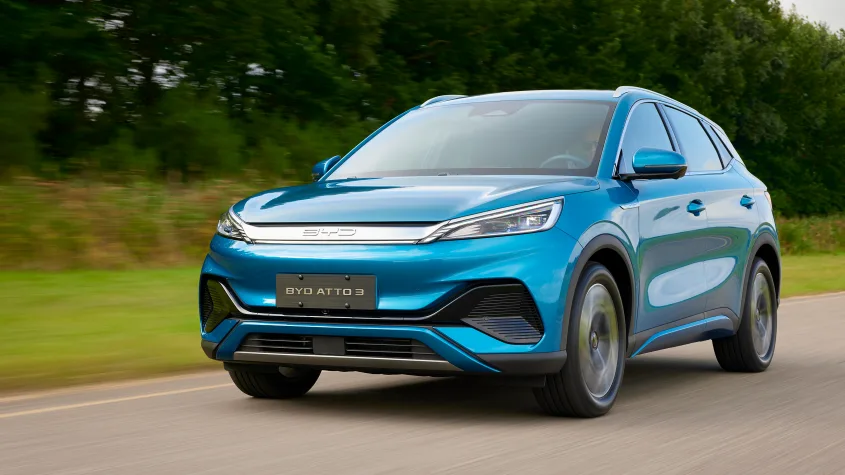
BYD officially entered the Korean market in January this year, with its first model — the Atto 3— starting at 31.5 million KRW ($21,366) before subsidies.
According to a report by SEDaily on December 3, data released by the Korea Automobile Importers & Distributors Association (KAIDA) shows that new registrations of imported passenger cars reached 29,357 units in November, rising 23.4% year-on-year and 22% month-on-month.
From January to November, cumulative registrations totalled 278,769 units, up 16.3% from 239,764 units in the same period last year, extending the steady expansion seen throughout 2024.
Breaking down the November data, EV registrations reached 10,757 units, accounting for 36.6% of all imported cars and remaining the primary growth driver. Hybrid vehicles recorded 15,064 units, gasoline models 3,210 units, and diesel vehicles 326 units.
By region of origin, European brands accounted for 61.3%, U.S. brands 27.7%, Japanese brands 7%, and Chinese brands 4% — with Chinese marques gaining more visibility compared with last year.
In brand rankings, Tesla led the market with 7,632 units, followed by BMW (6,526 units), Mercedes-Benz (6,139 units), and Volvo (1,459 units).
BYD, which ranked sixth the previous month, recorded 1,164 new registrations in November, surpassing Lexus and entering South Korea’s monthly top-five list for the first time.

BYD officially entered the Korean market in January this year, with its first model — the Atto 3 (Yuan PLUS in China) — starting at 31.5 million KRW ($21,366) before subsidies. The model sold more than 1,500 units within just over three months of launch.
In July, BYD introduced the Seal, a mid-size battery-electric sedan, with the top trim priced at 46.9 million KRW ($31,812).
This was followed in August by the mid-size “Sealion 7” SUV, launched at 44.9 million KRW ($30,456).

As of the end of September, BYD had opened 23 showrooms in South Korea and plans to expand the network to 30 locations by year-end — the fastest expansion pace among all foreign automobile brands entering the Korean market.
Looking ahead to 2026, BYD expects to open an additional 30 showrooms, bringing the nationwide network to 60. Over the longer term, the company aims to build out 100 showrooms across South Korea.
Discover more from ChinaEVHome
Subscribe to get the latest posts sent to your email.