ChinaEV Home and two veteran automotive journalists reached consensus on one point: today’s “mini BEVs” have made significant foundational improvements over the first generation of mini EVs.
Rewinding to 2024, BYD’s Seagull hit a major sales high and kicked off the wave of China’s “mini battery-electric vehicles (BEVs)” challenging traditional segments.
Throughout 2024, BYD’s Seagull posted retail deliveries of more than 460,000 units, narrowly trailing the Tesla Model Y to become the second best-selling individual model.
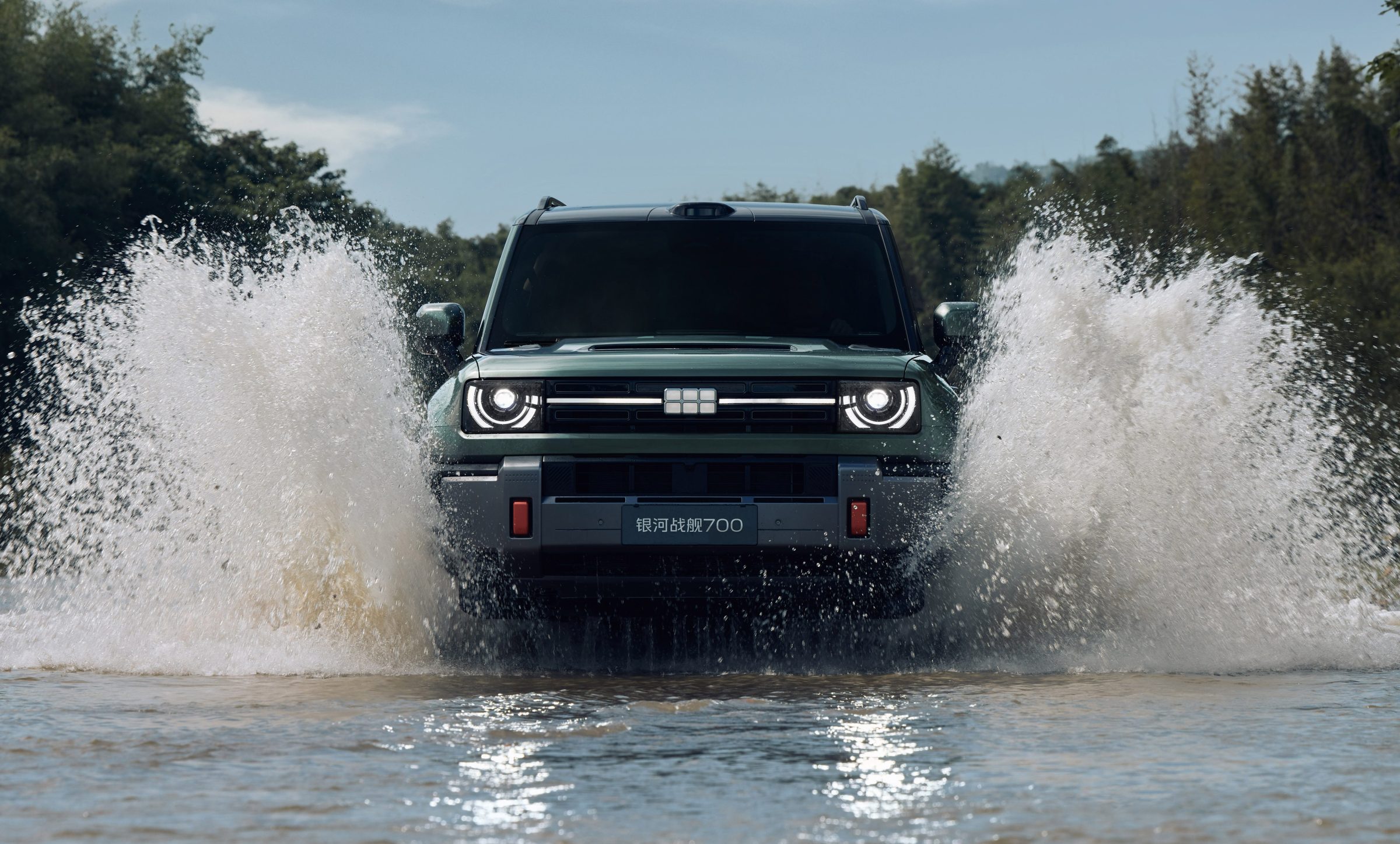
In September of the same year, Geely’s Galaxy Starship—known as Xingyuan—entered the market.
What few expected was that Xingyuan would emerge as the successor to the Seagull in sales performance.
In the first ten months of this year, Xingyuan topped overall market sales in five separate months (February, April, May, July, August).
Over the past 12 months, cumulative sales reached 424,000 units, outpacing the Model Y and placing it first across all categories.

The Model Y, once an absolute volume leader, now ranks only third. Second place is held by the former BEV champion, the Wuling Hongguang MINI EV, with 12-month cumulative deliveries of 422,000 units.
Sales are only part of the story. More automakers are now entering the mini BEV race.
Among the most recognized and visibly impactful entrants are Firefly under NIO Inc., SAIC MG’s MG4, Leapmotor’s Lafa5, and GAC Aion’s UT lineup (including UT Super).

This group of “mini BEVs”—MG4 and Firefly in particular—has performed beyond expectations.
The MG4 has logged several consecutive months of 10,000-plus sales, while Firefly sits steadily around 6,000 units a month.
Lafa5 and UT Super, though only recently launched, have generated considerable online buzz and show signs of breakout potential.
Meanwhile, BYD’s Seagull, the original segment front-runner, remains active. In November alone it delivered more than 50,000 units.
The strong performance of broadly defined mini BEVs throughout the year has led to a growing narrative online: “mini BEVs have blown up.”
But after speaking with industry colleagues and consumers, this conclusion still requires caution. Has the mini BEV category really “exploded”?
From Bare-Bones to Fully Fitted
Before assessing whether “2025’s mini BEVs have truly exploded,” ChinaEV Home and two veteran automotive journalists reached consensus on one point: today’s “mini BEVs” have made significant foundational improvements over the first generation of mini EVs.
This applies across the broad mini EV segment. Even when serving merely as daily commuters, the low-priced models now offer far better standard equipment, materials, and design quality than earlier predecessors.
Several examples illustrate this shift. Battery capacities in current mini BEVs commonly fall between 30–40 kWh, with some reaching the 50-kWh class and delivering CLTC ranges of 300–500 km.

In terms of powertrains, most adopt single-motor rear-drive layouts with output between 70–100 kW; some reach 130 kW, enabling 0–100 km/h times around seven seconds.
This places their performance close to that of earlier 150,000-RMB ($21,000) BEVs.
On intelligent features, the short but impactful “smart-driving equality” wave in early 2025 accelerated the adoption of driver-assistance in budget EVs.
The Seagull Intelligent Driving Edition, priced at RMB 78,800 ($11,000), comes with BYD’s “DiPilot” assisted-driving system and supports highway NOA.

More noticeable to the mass market is the upgrade in perceived vehicle quality.
Interviewees told ChinaEV Home that today’s mini BEVs look more appealing and now differentiate through distinct design languages.
Interior materials remain constrained by cost and cannot extensively use soft-touch surfaces, but some models elevate perceived premium value through ambient lighting, large displays, and other components.
Even more surprising is driving refinement—an area where early mini BEVs struggled. Some models priced around RMB 60,000 ($8,400) now offer independent rear suspension, resulting in better ride comfort and handling.
As for why overall product capability has risen so sharply, veteran journalist Li Hua attributes it squarely to supply-chain maturity.
Battery costs—the most critical component—hit a low and stable level in 2025, with LFP cells priced around RMB 0.3 per Wh ($0.04), and NCM cells around RMB 0.4 per Wh ($0.06).
Suppliers are also optimizing manufacturing processes to reduce costs further. BYD claims its second-generation Blade Battery lowers cost by an additional 15% versus the first-generation product.
However, while Li Hua acknowledges supply-chain maturity as the driver of improved quality, he does not see it as the reason for the rapid rise in mini BEV volumes in 2025.
“Entry-level consumers still want the same things: affordability, low running costs, usable space, easy driving, and solid features.”
Historically, micro and mini ICE cars met these needs—hence the success of the VW Polo, Honda Fit, and Nissan Tiida.
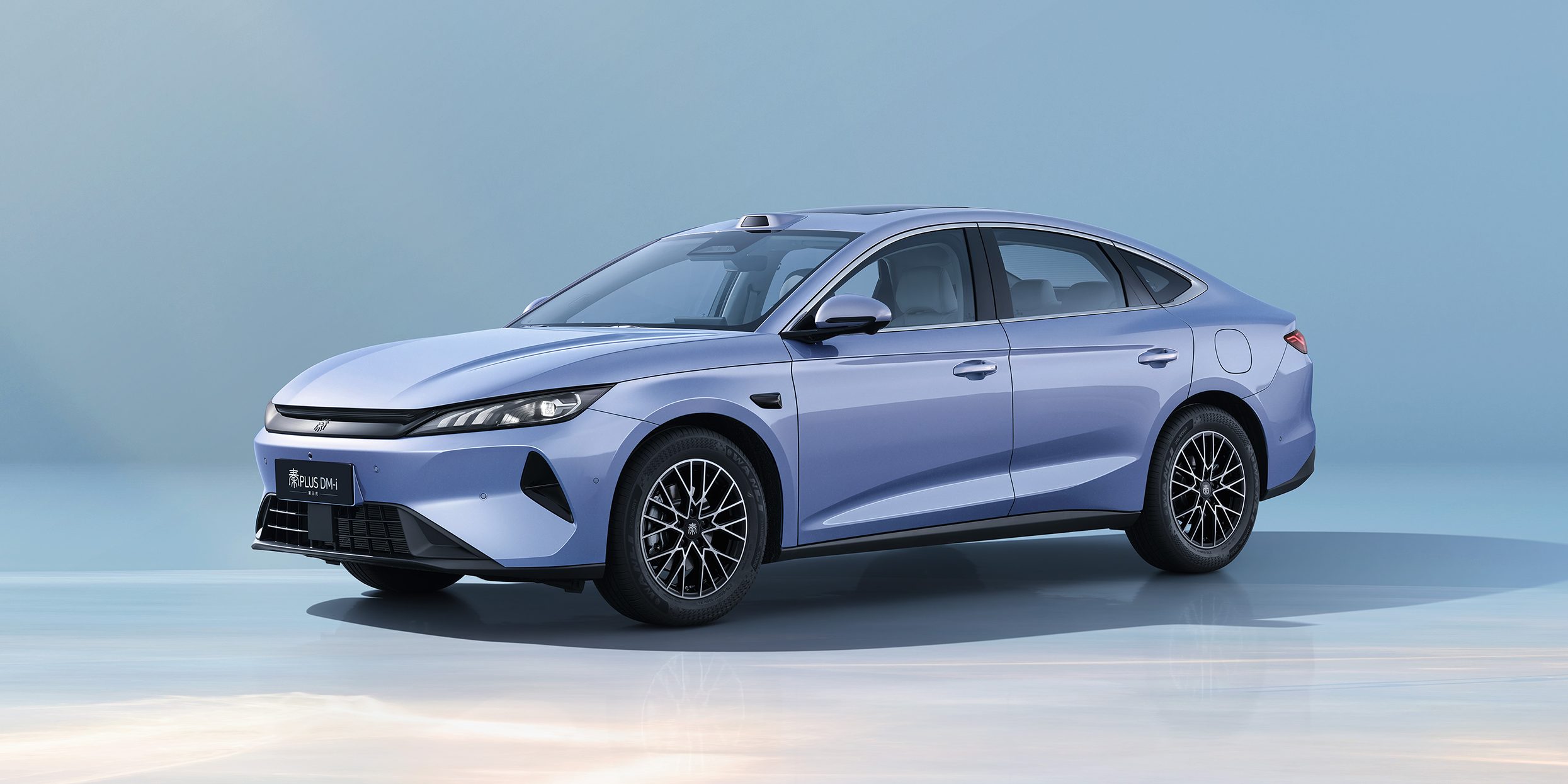
Later, compact sedans such as the Nissan Sylphy, Geely Emgrand, and BYD Qin PLUS DM-i filled the same role.
Today, mini BEVs leverage cost advantages to offer A-class driving fundamentals at RMB 50,000–60,000 ($7,000–8,400), while benefiting from lower EV running costs.
Consequently, they have replaced the ecological niche once occupied by mini ICE cars and entry-level compact sedans.
In the end, it all comes down to one idea: meeting demand.
Practical Demand Alone Does Not Equal “Explosion”
The next question is: what exactly do consumers want from mini BEVs at the end of 2025?
ChinaEV Home interviewed two potential buyers.
While both purchased—or planned to purchase—mini BEVs, their motivations differ. Mr. Liu bought a Geely Xingyuan for his wife, who recently earned her driver’s license. Ms. Ye is evaluating the Firefly as her first EV.

Practical Needs Still Come First
Mr. Liu said he normally drives a Tesla Model Y, which comfortably meets travel needs for a family without children. After his wife obtained her license, they decided a small, easy-to-maneuver car would complement daily commuting.
“For a new driver, a mini car is definitely more forgiving—especially for parking. But Xingyuan was entirely her choice, not something I picked for her.”
Ms. Ye, who recently began her career, likewise listed mini BEVs as candidates largely because of parking concerns—smaller cars reduce daily stress for new drivers.
More narrowly defined, Xingyuan falls into the “commuter mini” subsegment, while Firefly targets the “premium mini” niche. Their value propositions differ.
Mr. Liu explained that his wife chose Xingyuan because “it looks stylish and appealing.”
This was based on a clear budget limit. The couple did not want to exceed RMB 80,000 ($11,200).
“If it were above RMB 80,000, I wouldn’t look at these mini cars. Add a bit more—around RMB 110,000 ($15,570) or so—and I’d consider something like the Xpeng MONA M03.”

A Growing Interest in “Personality”
Ms. Ye did not treat price as the decisive factor.
“Price isn’t my main concern. I’m also considering other cars—Chery Fulwin A8, Xpeng M03. These models simply appeal to me or are reputed to be safe. I don’t believe choosing a mini car necessarily means I lack budget.”
She praised the Firefly’s design and especially appreciated details such as the extra storage space under the front passenger seat.
She also noted that its paint quality and interior workmanship appear more refined than typical low-cost commuter minis—“not cheap-looking.”
Thus, although both Mr. Liu’s family and Ms. Ye are aligned around mini BEVs, they represent two distinct consumer groups.
Mr. Liu’s camp prioritizes practicality, followed by emotional considerations such as “looks good” or “well-equipped,” without expecting too much from a mini car.
Ms. Ye reflects what NIO CEO William Li described as the target group for “premium minis”—seeking driving enjoyment, unique features, and higher expectations for design and interior quality.
But based on sales distribution, the segment’s volume comes overwhelmingly from commuter minis priced below RMB 80,000 ($11,200).
RMB 80,000 Is the Dividing Line
According to Landroads data compiled by ChinaEV Home, the top 18 A00/A0 hatchback EVs sold a combined 1.926 million units.
Using RMB 80,000 ($11,200) as the threshold, commuter minis accounted for 14 models and 1.721 million units—89.36% of the total. Premium minis accounted for only 205,000 units, or 10.64%.

Yet, as Li Hua emphasized, commuter minis do not reflect the true spirit of the mini-car category.
“In my view, mini cars should have attitude. They represent a lifestyle and a state of mind.”
To him, 2025’s mini BEVs simply leveraged industrial upgrading and scale efficiencies to better satisfy entry-segment needs—taking over the ecological niche once held by A0-class sedans, not winning consumers through “emotional value” or “mini-car charm.”
From an absolute sales perspective, the models that best capture the “mini-car spirit” in the new-energy era—the premium minis—barely register on the charts.
“These cars are just the new Sylphy or Corolla, occupying the ecological niche once held by the Sylphy and Corolla,” Li Hua said.
Demand-driven growth does not constitute a true “category explosion.”
Windfalls Are Not Competitiveness
“In my view, the first condition for calling something a ‘segment breakout’ is that the entire industry joins in. The second is that it must deliver genuine innovation.”
Liu Hua offered the example of “domestic three-row SUVs.”
“You can see how new models have reshaped the category through innovations around the ‘three-row’ definition, comfort-oriented use cases, and features ranging from cabin configuration to chassis systems. That revitalized the entire segment. That is what I call a real breakout.”
Addressing the third requirement—“products with real conviction”—he added that vehicles such as the firefly and Leapmotor Lafa5 show some degree of attitude and intent. But within the broader “mini BEV” category, such examples remain the minority.

The argument that “mini BEVs haven’t truly broken out” is echoed by Bai, a longtime auto journalist now working in the marketing division of an automaker.
He added another “piece of evidence.”
Not only do higher-priced “boutique mini BEVs” struggle to sell, even lower-priced, style-driven mini EVs perform only moderately in the market.
Bai cited the case of Baojun Yep—once a model he personally supported. Combining the Plus and standard versions, sales reached only about 4,000 units in October.

From today’s perspective, the Baojun Yep may be stylish, but its space efficiency is notably limited. The two-door version is only 3,381 mm long with a 2,110 mm wheelbase.
The later four-door Plus variant extended the wheelbase to 2,560 mm, but sales still failed to improve significantly.
“Today, there are probably very few buyers like me who pick the Yep purely for its style. For just over RMB 70,000 (about $9,800), most people are now looking at models like the Geely Xingyuan.”
This trend may not be a good sign.
Bai expressed concern that sales driven by “meeting basic needs” represent a temporary demographic windfall, one that cannot sustain long-term competitiveness for “commuter EVs.”
Once that windfall shifts toward other body styles, the foundational sales base of mini BEVs could collapse quickly.
For example, small SUVs and A0-segment sedans may become the strongest substitutes for commuter EVs: they offer more interior space, and pain points such as parking may be mitigated as intelligent driving features proliferate.

The only remaining advantage of commuter EVs is “price,” but as technology evolves and battery costs continue to decline, even this advantage may not endure.
Looking at future sales prospects for mini BEVs, Bai believes there is still room for incremental growth in 2026, though growth is likely to slow compared with the “surging” performance expected in 2025.
Veteran industry commentator “Elliot” added that commuter EVs may continue to grow simply because real market demand exists.
“Boutique mini BEVs” are showing early but inconsistent momentum; over the long run, they have yet to prove that they can scale.
So what exactly is the long-term fate of the “mini BEV” category?
Instant Coffee or Starbucks?
In an earlier conversation with a friend at an automaker, ChinaEV Home discussed the current popularity of mini BEVs in the market.
The friend was unimpressed by their short-term success.
Selling Well, But Meaningful?
“Wuling and models like the old Tianli once sold enormous volumes, but that did little for brand building—especially in the global arena.”
The positive counterexample is the Tesla Model Y, currently third in overall sales.
In his view, the Model Y is on an entirely different playing field than these “mini BEVs.” “It’s like comparing instant coffee to Starbucks.”

Even if instant coffee sells five or ten times more packets than Starbucks beverages, its contribution to brand equity is nowhere near comparable.
Likewise, if viewed through the lens of sales alone, mini BEVs are undoubtedly a success; but in terms of “brand uplift” and market influence, they bring limited structural value.
Ultimately, due to cost and positioning constraints, commuter EVs lack emotional resonance and technological premium. Their tool-like nature makes them easily replaceable.
From this perspective, several high-profile “boutique mini BEVs” offer much greater industry significance.
Even with lower absolute sales, they have overtaken legacy brands such as smart and MINI, signalling that Chinese brands are breaking into segments once dominated by overseas players.
But as noted earlier, boutique mini BEVs such as the firefly remain niche amid the broader boom.
This supports the views of Liu Hua and Bai: sales growth driven purely by basic-needs satisfaction cannot be interpreted as a true “segment breakthrough.”
Signs of Dawn
Even so, some optimistic trends are emerging. Bai noted that even basic commuter EVs—those not marketed for refinement or quality—still help accelerate China’s consumption upgrade.
“Consumers choosing mini BEVs are actually choosing better texture, better driving feel, stronger intelligence, and even better cabin space for the same price.”
From the perspective of promoting EV penetration, mini BEVs have made enormous contributions.
Between January and October, BEVs sold 7.766 million units in China. In contrast, range extenders and plug-in hybrids combined sold 4.61 million units.
A0 and A00-segment mini BEVs—depending on the statistical boundary—sold 2.65–2.68 million units, accounting for roughly 34–35% of all BEV sales.
With such a large base, even a small conversion rate yields a meaningful number of users who will graduate from commuter EVs to boutique mini BEVs.
In other words, the rise of a “boutique mini BEV culture” in China should not be ruled out.
Interviewee Mr. Liu mentioned that the firefly is beginning to attract enthusiast communities exploring “Itasha-style wraps,” modifications, and other forms of personalization—suggesting that a grassroots “car-play culture” may already be sprouting within the mini BEV segment.
Ultimately, whether a brand becomes “instant coffee” or “Starbucks” is not entirely up to automakers; market conditions impose their own limits.
But at the very least, more brands are attempting to make their mini BEVs “Starbucks-like,” instead of settling for the role of instant coffee.
Mini ICE culture took half a century to mature. Perhaps a true “breakout moment” for mini BEVs will arrive one day. For now, patience remains essential.
Discover more from ChinaEVHome
Subscribe to get the latest posts sent to your email.