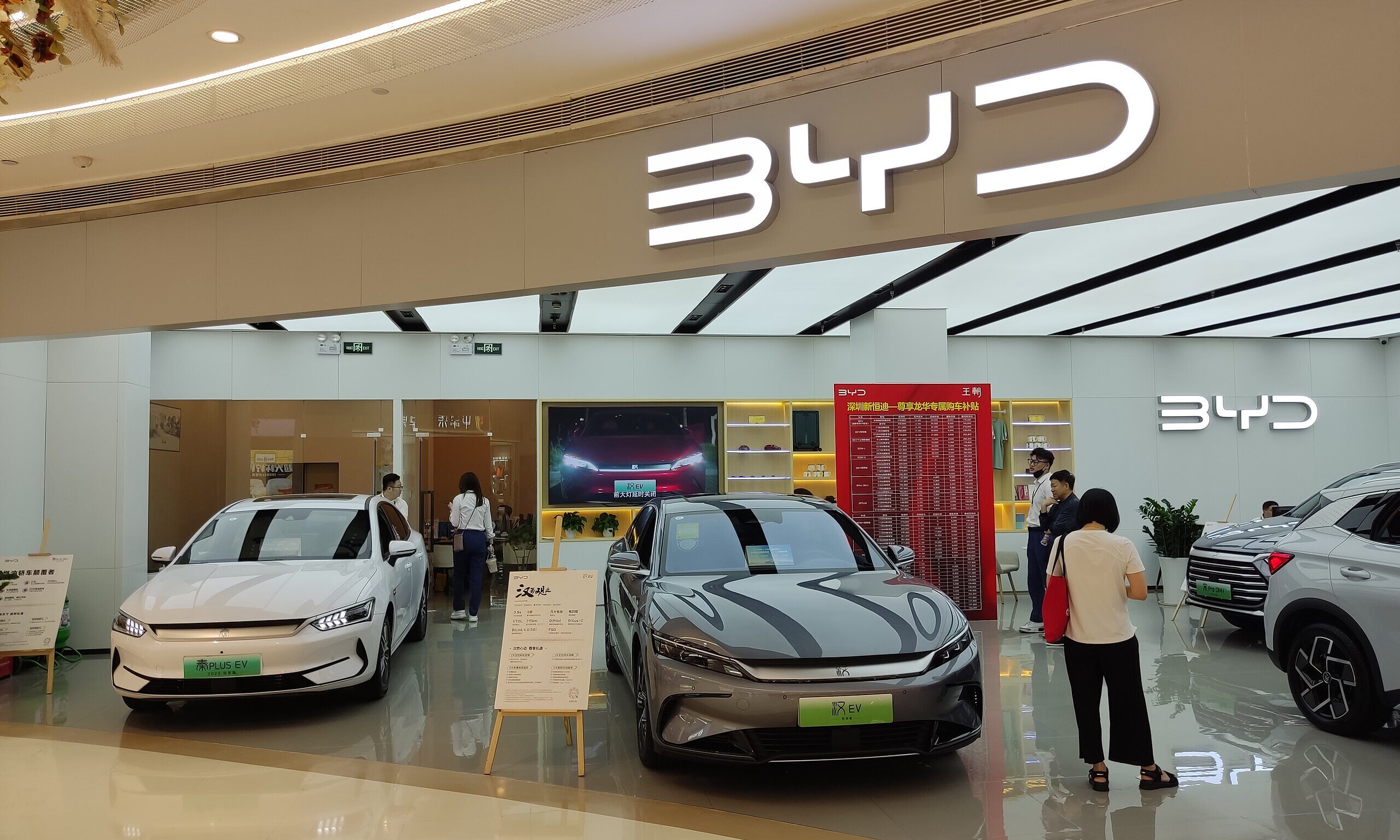
December sales in China’s auto industry are declining, with concerns about lack of incentives and consumer hesitation.
In conventional market wisdom, December is typically a peak sales season for China’s auto industry.
Automakers usually roll out aggressive incentives at year-end to boost deliveries and close the year on a strong note.
This year, however, the dominant keywords are “quiet,” “anxiety,” and “concern.”
During NIO Inc.’s Q3 earnings call in November, founder and CEO William Li attributed the decline in L90 sales to the disappearance of the so-called “tail-end effect,” noting that the industry had been caught off guard. He warned that sales conditions in December would likely be challenging.
The “tail-end effect” refers to the traditional year-end surge in vehicle sales each December, which creates a visible upward kink in annual sales curves.
Its disappearance means December sales fail to rise meaningfully from November levels, or even decline.
Now, that prediction appears to have materialized.
According to data from the China Passenger Car Association (CPCA), domestic passenger vehicle sales fell 24% year on year during the first two weeks of December (Dec. 1–14).
Even within the new energy vehicle (NEV) segment, sales declined 4% year on year.
This suggests that December 2025 has not only failed to deliver a year-end rebound, but may instead be described as a “drooping tail.”
Still, headline data is only one reference point. Does on-the-ground market reality fully align with the numbers?
Has consumer purchase appetite genuinely weakened, even with the theoretical appeal of the “final window for full purchase tax exemption”?
To answer these questions, ChinaEV Home spoke with frontline sales staff and potential buyers holding cash on the sidelines.
A Bleak Landscape
Even before visiting dealerships, complaints about weak December sales were already widespread online.
On social media platforms such as Xiaohongshu, searches for “December car sales” surface numerous posts from salespeople expressing frustration and confusion.
“Never seen it like this,” “Still no orders,” “What’s going on with December sales?” Sales staff across brands are voicing similar concerns, painting a pessimistic picture of the market.

One user identified as working at a GAC Honda dealership in Shijiazhuang wrote that December used to be the busiest delivery month of the year, but now showrooms are largely empty.
Another user with “NIO ONVO” in their profile name said they had expected a small December peak but felt no such momentum at all.
A separate post read: “Who said year-end is peak season? This year is completely different. It’s so quiet it already feels like the holidays.”
Taken together, these online accounts closely mirror CPCA data. Around early December, sales conditions appeared distinctly weak.

Coincidentally, around the same time, a reader told ChinaEV Home that his own dealership visits reflected similar conditions.
“I went to look at cars on December 6 and 7. It was a weekend, but there really weren’t many people.”
Based in Guangzhou, he visited Xiaomi SU7 and Zeekr 007GT showrooms. According to him, both Zeekr and Xiaomi stores were sparsely staffed on Saturday afternoons, with only a handful of salespeople present. Nearby BYD and Hongqi stores were similarly quiet.
“There are still people coming to look at cars, but very few are actually buying,” he said, citing feedback from sales staff that aligned with his own observations.
Although he liked both vehicles, he ultimately decided to wait until 2026. His reasoning was that refreshed versions of both models are expected in spring, with significantly upgraded specifications, and he preferred to wait rather than risk immediate obsolescence.
The fading of subsidy programs was another key factor. While buying now could still save more than RMB 8,000 ($1,120) in purchase tax, the overall incentive stack was weaker than earlier trade-in and local subsidy combinations.
“At this point there aren’t many discounts, and if you register the car this year, it’s already considered one year older when reselling later,” he said.
He believes discounts will eventually return, arguing that automakers will be forced to cut prices if sales remain weak.
This mindset may explain why many December showroom visitors hesitate to place orders, a reality that frontline sales staff increasingly face.
No Automaker Is Immune
“So far this month (as of December 17), sales have been average at best, but we’re not the worst,” said Mr. Lan, a salesperson at a Xpeng dealership in Guangzhou.
He told ChinaEV Home that conversations with peers across brands suggest that most major players are struggling.

“On December 11, I chatted with friends at another large dealership. They said they hadn’t closed a single order yet. They were actually envious that our store still had some orders.”
Mr. Lan also noted that a popular two-character domestic brand had seen sales “collapse” compared with November at one of its stores.
“Each salesperson might still have 20 to 30 orders, which sounds decent, but it’s basically half of November. And most sales now are inventory clearance.”
If complaints from traditional joint-venture brands such as Honda or Ford could be dismissed as structural weakness, the underperformance of leading new energy brands in Guangzhou further confirms the broader market slowdown in early December.
Mr. Lan added that although his dealership is not located in a prime shopping district, it is a flagship store that typically attracts high-intent buyers, many of whom would place orders quickly in the past.

Since December began, however, customer behavior has shifted subtly toward hesitation.
He attributed this mainly to the suspension of various subsidies, which has pushed many customers into a wait-and-see stance.
“Customers are extremely focused on discounts. It’s always the first thing they ask.”
As of mid-December, both local trade-in subsidies and national purchase incentives in Guangzhou had been paused. While dealerships could attempt to secure limited quotas from other regions such as Chongqing, success rates were uncertain.
Xpeng currently offers official discounts on select models, but these alone have not been enough to significantly boost demand.
The new Xpeng P7, for example, carries discounts of RMB 5,000–7,000 ($700–980), yet sales remain modest.
CPCA data shows that the model sold roughly 2,800 units in November, ranking toward the lower end of its segment.
Mr. Lan also observed that most consumers are not particularly sensitive to the partial rollback of purchase tax incentives, as the policy shifts from full exemption to a 50% reduction rather than complete removal.
Combined with automakers extending subsidy coverage into early 2026, many buyers assume incentives will persist.
Exceptions to the Trend
Despite the generally subdued conditions, not all brands are equally concerned.
After leaving Xpeng’s showroom, ChinaEV Home visited a Leapmotor dealership in Guangzhou’s Panyu district.
The atmosphere there was notably relaxed, with sales staff appearing far less pressured to close deals.
The attitude could be summed up as “welcome if you buy, fine if you don’t,” reminiscent of Xiaomi showrooms during peak order surges.
Leapmotor sales staff acknowledged a mild decline in early December sales compared with November, but emphasized that the drop was limited and consistent with broader market conditions.

Relative to peers, Leapmotor’s position appeared more resilient.
During test drives, sales staff explained that Leapmotor had not introduced specific purchase tax subsidy programs because most models are readily available from inventory. For the newly launched Lafa5, certain configurations can be delivered within two to three days.
“If you order now, you’ll definitely take delivery before year-end, so purchase tax is fully exempt. That’s why we don’t need fallback subsidy policies,” a salesperson said.
As a result, Leapmotor has been less affected by tax policy changes, with the primary impact coming from reduced local subsidies.
Given its lower price positioning, the absolute subsidy amounts were already limited, mitigating the overall effect.
“A RMB 2,000–3,000 ($280–420) subsidy isn’t huge, but it can matter. Some customers still go ahead if they need a car urgently, while others choose to wait,” the salesperson said.

Overall, Leapmotor’s relaxed showroom mood reflects its status as a leading new energy startup with a relatively stable sales base, which provides stronger risk resistance.
In a notable twist, ChinaEV Home visited the dealership around 4 p.m. on December 17, just an hour after Guangzhou officially announced the resumption of local subsidies.

Sales staff immediately shared the news with visible excitement, underscoring how closely the market is tied to policy signals.
For most salespeople, however, the softer December reality has largely been accepted, with hopes increasingly pinned on 2026.
A Glimmer of Hope
At Xpeng, Mr. Lan is already looking ahead.
He said that while the MONA M03 has continued its solid momentum, the Xpeng X9 extended-range version has emerged as a new sales pillar.
“So far, we already have 30,000 to 40,000 orders for the X9 extended-range model,” he said, highlighting how the Kunpeng Super Range Extender technology has boosted both range and sales.
Looking into 2026, models such as the Xpeng P7+ and G7 are also expected to adopt the same system.
Encouraged by the X9’s performance, Mr. Lan believes Xpeng’s overall sales could reach a new level next year, potentially bringing quarterly profitability within reach.

“Extended-range models just sell better for us. If we can turn profitable next year, that should also support sales,” he said, offsetting some of his near-term concerns.
Sales staff at other automakers, including Leapmotor, expressed similar optimism, pinning hopes on new product rollouts in 2026.
Meanwhile, the gradual resumption of local subsidies and confirmation that national incentives will continue into 2026 have provided additional reassurance.
One salesperson said internal discussions suggest that major incentives such as trade-in and scrappage subsidies may remain in place next year.
Combined with recovering local subsidies, these measures could again stimulate demand.
He even speculated that while the “winter” arrived early this year, January and February 2026 could see counter-seasonal strength as incentives return and hesitant buyers finally place orders.
Ultimately, sales staff believe policy adjustments have only a short-term impact on the NEV market.
As penetration rates rise and consumer understanding deepens, such “counterintuitive” sales patterns are unlikely to become the norm.
For now, they say their priorities are simple: stay focused, and remain patient.
Discover more from ChinaEVHome
Subscribe to get the latest posts sent to your email.