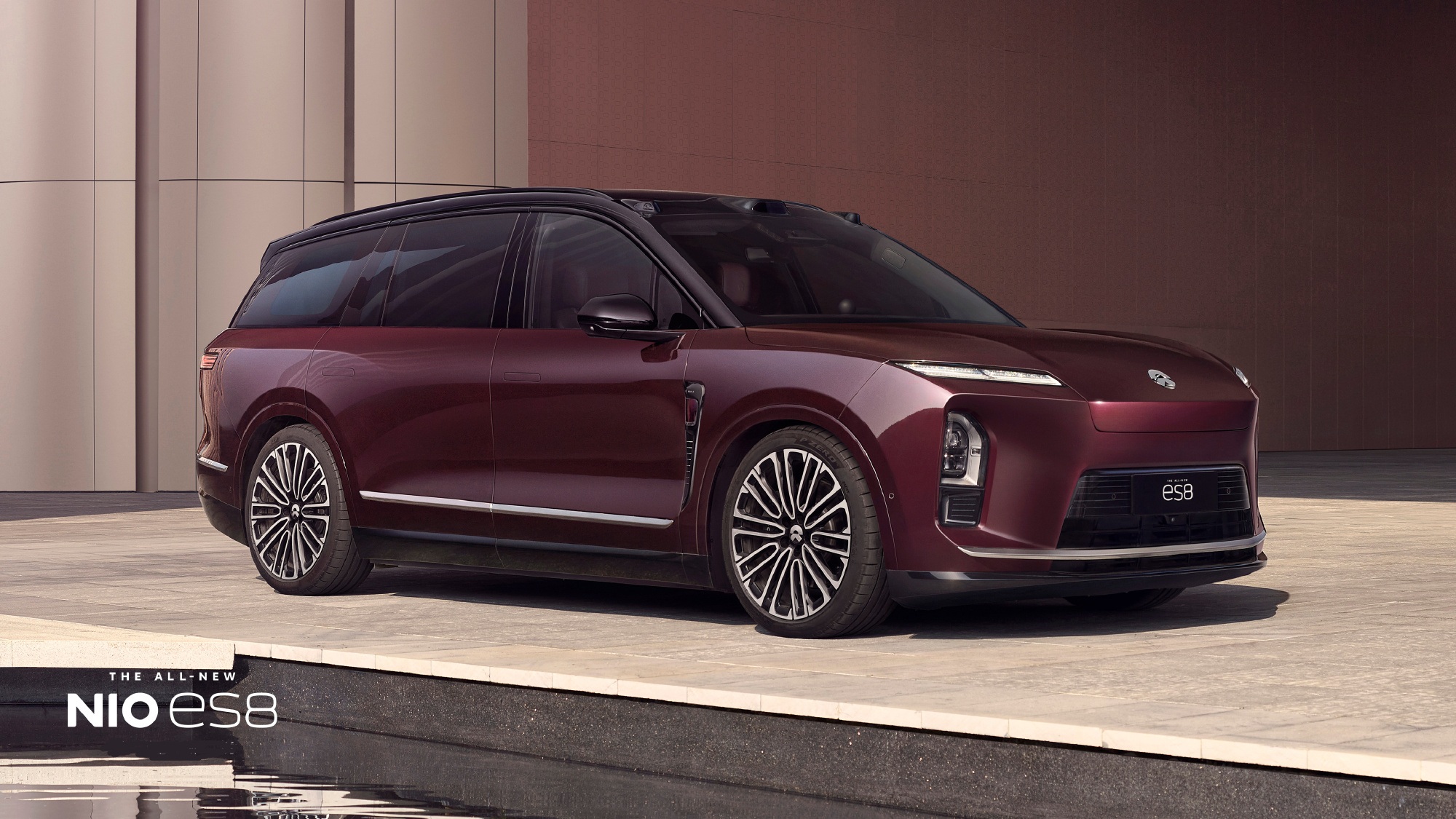
- NIO ES8 and Li Auto i6 topped C‑IASI across all five safety categories with full marks.
- Low‑speed active safety and AEB reached 100% installation across the tested models.
- Repair economy diverged sharply, with Li Auto i6 rated “Advanced” and Luxeed R7/XPeng P7 rated “Poor.”
On March 26, the China Insurance Automotive Safety Index (C-IASI) released its third batch of evaluation results for 2025.
This round covered five models: Chery-backed Luxeed R7, Lynk & Co 900, XPeng P7, NIO ES8, and Li Auto i6, including four SUVs and one sedan (P7), all of which are new energy vehicles.

The evaluation framework includes sub-indices for crashworthiness and repair economy, occupant safety, pedestrian protection, vehicle-assisted safety, and a dedicated new energy vehicle index.
Results show that among the five models, only the NIO ES8 and Li Auto i6 achieved top ratings across all five categories, while the remaining models exhibited weaknesses in specific areas.

In the crashworthiness and repair economy category, both the NIO ES8 and Li Auto i6 received a “Good” (G) rating, Lynk & Co 900 scored “Acceptable” (A), while the Luxeed R7 and XPeng P7 were rated “Marginal” (M).
A closer breakdown shows that only the NIO ES8 achieved a “Good” (G) rating in structural crashworthiness. In terms of crash compatibility, the Luxeed R7, NIO ES8, and Li Auto i6 all reached the top “Good” (G) level.

Notably, low-speed active safety emerged as a consensus strength in this round.
All five models received bonus points and achieved top ratings, reflecting the widespread adoption of baseline active safety features across mainstream vehicles.
However, greater differentiation appeared in repair economy. The Luxeed R7 and XPeng P7 were rated “Poor” (P) in repairability and cost, while the NIO ES8 and Lynk & Co 900 scored “Marginal” (M). The Li Auto i6 stood out with an “Advanced” (A) rating.
Across occupant safety, pedestrian protection, and assisted safety, all five models achieved “Excellent+” (G+) ratings, indicating broadly consistent performance.
In pedestrian protection specifically, only Lynk & Co 900 (41.229) and NIO ES8 (40.067) scored above 40 points, while the others trailed slightly but remained close.

In assisted safety, all five vehicles were equipped with AEB automatic emergency braking and E-call emergency response systems, with a 100% installation rate.
Under the dedicated NEV index, all five models received a “Good” (G) rating. Crashworthiness scores were uniformly “Good.”
Meanwhile, repair economy showed divergence: Luxeed R7, XPeng P7, and NIO ES8 achieved “Good” (G), while Lynk & Co 900 and Li Auto i6 were rated “Acceptable” (A).
Overall, the evaluation underscores that real-world cost considerations, safety redundancy, and system integration are becoming increasingly critical metrics. The latest results suggest that leading models are beginning to pull ahead.
Discover more from ChinaEVHome
Subscribe to get the latest posts sent to your email.

.jpg)
