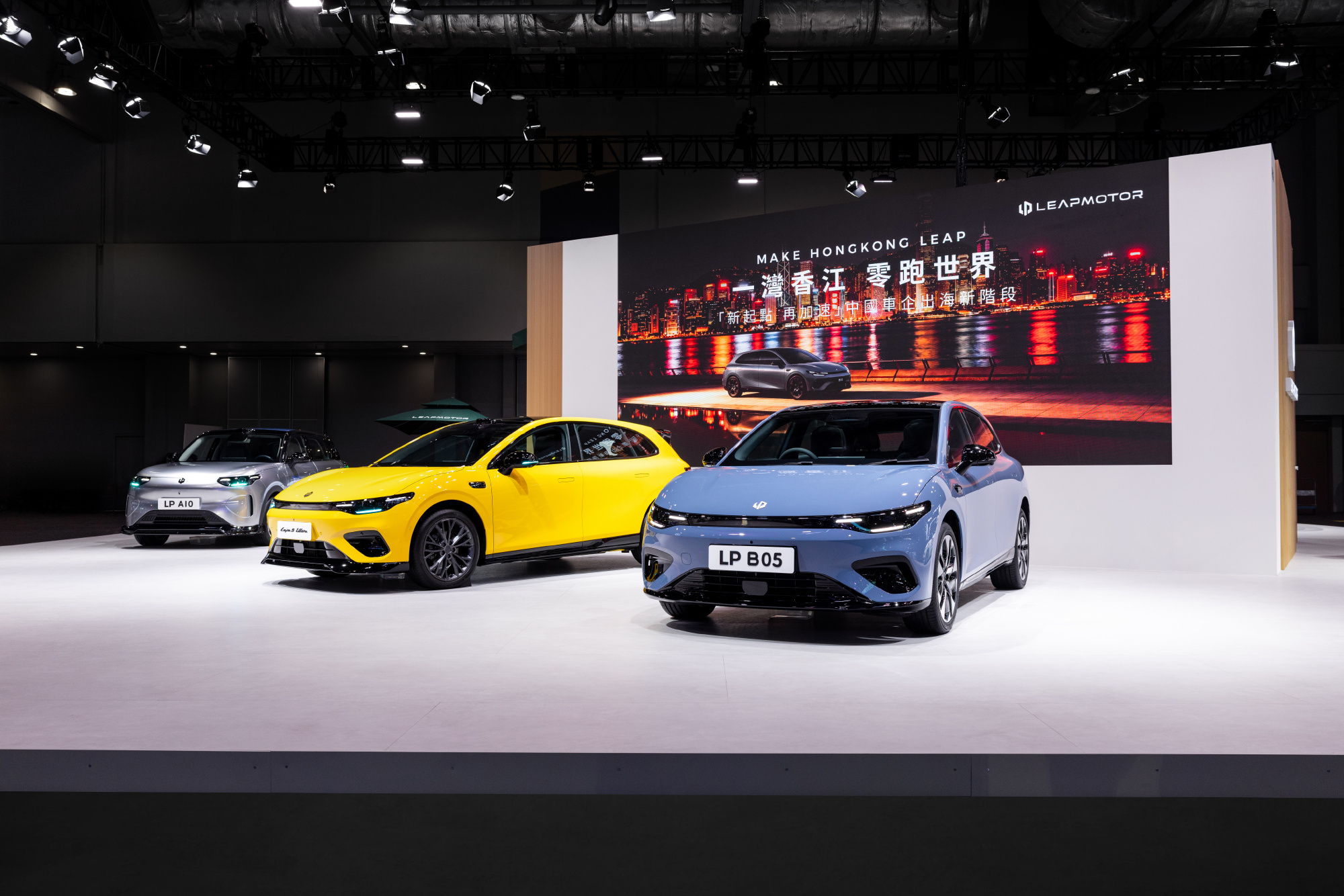
- Leapmotor hit a new record with 93,376 June deliveries and nearly 356,387 first-half units, widening its lead among new entrants.
- NIO surged 62.9% in June to 40,597 deliveries, powered by ES8/ES9 momentum and narrowing quarterly losses.
- Li Auto slipped with June deliveries down 14.9% and H1 volumes falling 5.1%, pressured by model transitions and margin erosion.
June delivery rankings arrived as scheduled. The pace at which companies submitted their “mid-term report cards” has become a reflection of confidence across the sector.
Strong performers—such as NIO and Leapmotor, which both posted record highs—typically released their June and first-half results early in the morning.
In contrast, those that fell short of expectations tended to publish closer to the end of the working day.
In this round of evaluation, Leapmotor stood out with more than 93,000 deliveries in a single month, making its position as the “sales champion among new entrants” effectively uncontested.
Geely Galaxy and BYD, meanwhile, continued to tell different stories in terms of scale leadership and overseas expansion respectively.
The divergence among NIO, XPeng, and Li Auto mirrors the broader competitive landscape.
Some are consolidating their premium positioning, some rely on high-volume models to support growth, while others are still undergoing painful product transition cycles.
More importantly, as price competition and product competition in China’s domestic market deepen, “going overseas” has shifted from an optional strategy to a mandatory one.
Leapmotor’s cumulative overseas sales are approaching 100,000 units, BYD’s export share has exceeded 43%, and Deepal’s overseas sales have surpassed domestic volumes, among others.
Each automaker is pursuing international markets at its own pace and through different pathways.
So in this mid-year “exam,” who is gaining confidence, and who is turning more conservative?
Below is a breakdown of June delivery performance across major brands.
NIO
In June, NIO Inc. delivered 40,597 vehicles, up 62.9% year-on-year.
First-half cumulative deliveries reached 191,123 units, up 67.4% from 114,150 units in the same period of 2025.

By brand, the NIO brand delivered 21,908 units in June (+50.1% YoY), with first-half deliveries of 119,488 units (+60.5% YoY).
ONVO delivered 11,743 units in June (+83.5% YoY), with first-half deliveries of 42,463 units (+33.3% YoY).
firefly delivered 6,946 units in June (+76.7% YoY), with first-half deliveries of 29,172 units (+271.9% YoY).
All three sub-brands under NIO Inc. thus set new first-half delivery records.
A key product that cannot be ignored is the third-generation ES8.
Although NIO has not disclosed June ES8 delivery figures, the model has delivered over 10,000 units per month for seven consecutive months since November 2025, with cumulative deliveries surpassing 120,000 units in June.
Together with the ES9 achieving 10,000 deliveries within 30 days of launch, updates to ONVO L60 and L90, the launch of ONVO L80, and stable performance from firefly, NIO’s dual-track strategy in premium and mass-market segments underpinned its first-half milestone.
This also contributed to a sharp 95% year-on-year narrowing of its Q1 net loss to RMB 332 million ($48 million).
Beyond the five-seat ES8 variant, NIO is expected to introduce refreshed ES7, ET7, and EC7 models in the second half of the year.
Whether the “7-series” can replicate the success of ES8 and ES9—and lay the groundwork for the potential NT3.0-based 5566 models in 2027–2028—remains a key point of interest.
XPeng
In June, XPeng delivered 40,126 vehicles, up 15.9% year-on-year.
First-half deliveries reached 202,704 units, up 2.8% from 197,189 units in the same period of 2025.

Based on January–May model performance, the M03 remains XPeng’s core volume driver and the only model consistently exceeding 10,000 monthly deliveries.
The next candidate to join this tier is the GX, launched on May 20.
XPeng noted that GX achieved 6,739 deliveries in its first full month (June), and rolled off its 10,000th unit on July 1.
With sufficient orders and ramping production, GX is positioned to potentially cross the 10,000 monthly delivery threshold.
In addition, XPeng will launch the L03, the first SUV under its MONA lineup.
The model is expected to strengthen the company’s presence in the RMB 100,000–200,000 segment ($14,700–$29,400), complementing the M03 and expanding XPeng’s influence in this price band.
On the smart driving front, second-generation VLA has been gradually rolled out since late March.
The EU’s DCAS UN R171 Series 02 regulation taking effect on June 26 also provides regulatory support for VLA’s potential European deployment in 2027.
Having achieved success in lower-tier markets, XPeng now faces the question of whether its capabilities in assisted driving, range, and spatial efficiency can translate into another high-volume model in higher segments.
Li Auto
In June, Li Auto delivered 30,895 vehicles, down 14.9% year-on-year.
First-half deliveries totaled 193,472 units, down 5.1% from 203,938 units in the same period of 2025.

The company’s delivery trajectory in the first half shows a “rise then stabilization” pattern.
After a volatile first quarter, monthly deliveries stabilized in the 30,000–35,000 range.
Only March recorded year-on-year growth (41,053 units), while other months saw varying degrees of decline.
The i6 remains the key volume driver. Excluding the Lunar New Year disruption in January–February, monthly sales from March to May remained above 20,000 units.
In March, the i6 recorded 24,198 units, accounting for 58.9% of total monthly sales. Meanwhile, former mainstays L7 and L8 declined to roughly 3,000 and 1,000 units respectively.
This shift has placed pressure on both average selling price and gross margin.
In Q1, Li Auto reported a net loss of RMB 2.276 billion ($334 million), reversing from profitability.
In response, the company launched updated L9 and L8 models at the end of Q2. However, their contribution has yet to fully materialize in June sales.
Amid rapid expansion in the extended-range SUV segment, Li Auto’s L-series advantage is being diluted by intensifying competition.
Its next key product—the updated L6 scheduled for July launch—will be critical.
Whether upgraded assisted driving and embodied intelligence features can reignite growth remains uncertain.
Leapmotor
In June, Leapmotor delivered 93,376 vehicles, up 95% year-on-year.
First-half deliveries reached 356,387 units, up 60.8% from 221,664 units in the same period of 2025.

Leapmotor once again led the new forces, setting a new monthly delivery record and becoming the only brand among new entrants to surpass 90,000 units in a single month.
Its first-half performance is also closing the gap with Geely Galaxy.
Multi-product momentum continues to drive growth. The A-series A10, launched in April, quickly ramped to over 20,000 monthly units in May.
The D19, also launched in April, delivered 7,021 units in May.
In June, Leapmotor refreshed the C-series lineup and launched the D99 MPV starting at RMB 249,800 ($36,800), targeting higher-end segments.
Overseas expansion has become a second growth engine. First-half exports approached 100,000 units, surpassing the full-year 2025 total of 67,052 units.
Leapmotor is now likely to exceed its 100,000–150,000 overseas target.
Key developments include C10 production and deliveries at Stellantis’ Malaysia plant and expanded cooperation in Spain, where B10 production is expected later this year.
Despite strong momentum, Leapmotor’s H1 total of nearly 360,000 units still falls short of its 2026 target of 1.05 million units, leaving execution of its B-series refresh and sales expansion as key variables.
Xiaomi EV
In June, Xiaomi delivered over 30,000 vehicles.
First-half cumulative deliveries exceeded 169,000 units, representing less than 1% year-on-year growth versus 157,000 units in the same period of 2025.

However, this figure represents the lower bound of monthly performance.
According to China Passenger Car Association (CPCA) data for the first five months, cumulative deliveries in the first half have already exceeded 180,000 units.
In the first half of the year, Xiaomi focused primarily on upgrading and strengthening its existing lineup.
In March and May, Xiaomi launched a fully upgraded next-generation SU7 and introduced a Standard and GT high-performance variant for the YU7.
This shift in focus once again positioned the SU7 as the higher-volume model, reaching 26,826 units in April.
In March, Xiaomi also introduced the new Xiaomi XLA cognitive large model.
The company stated that its assisted driving system has evolved from “data-driven end-to-end” to a “cognition-driven system with commonsense reasoning capabilities.”
OTA version 1.16 was rolled out in May, covering more high-frequency driving scenarios.
The main highlight for the second half of the year will be the sub-brand SkyNOMAD and its first model, the N90, previously rumored to be named “YU9,” a large extended-range SUV.
The new brand is expected to focus on family-oriented extended-range vehicles, differentiating itself from Xiaomi’s main brand positioning in pure EV and performance segments, although internal positioning hierarchy has not been officially clarified.
Huawei-backed Harmony Intelligent Mobility Alliance (HIMA)
In June, HIMA delivered 50,624 vehicles, down 4% year-on-year. First-half cumulative deliveries increased 18.6% year-on-year.

With its “five-division” structure now established, HIMA introduced refreshed and new models in the first half of the year, including the updated AITO M6, next-generation AITO M9, Shangjie Z7 series, and Stelato S9.
A key user-side development in the first half was the launch of ADS 5 and the HarmonySpace 6 cockpit system in April.
In June, HIMA also raised the price of its advanced autonomous driving package by RMB 3,000 to RMB 15,000 ($2,200), reflecting both capability upgrades and pricing adjustments.
In the second half of the year, multiple new models are expected, including Luxeed RX, new SUVs and MPVs under Stelato, Maextro V800, and Shangjie H7, further expanding the product matrix.
However, concerns remain: while aggressive new product launches expand coverage, the risk of internal competition and overlapping positioning across brands continues to be a challenge.
Zeekr
In June, Zeekr delivered 35,159 vehicles, up 111% year-on-year. First-half deliveries reached 178,370 units, up 97%.

The standout performer remains the Zeekr 9X. According to company data, Zeekr 9X and Zeekr 009 have jointly delivered nearly 150,000 units cumulatively.
The 9X alone maintains an average selling price above RMB 530,000 ($77,900), with roughly one in every three vehicles priced above RMB 500,000 sold being a 9X.
From March onward, monthly sales of the 9X stabilized at 9,000–10,000 units, a strong performance for a vehicle starting at RMB 465,900 ($68,600).
Beyond the 9X, Zeekr refreshed the 001 and 007 models and launched the performance-focused 8X in April, which sold 6,103 units in its first full sales month, becoming the second-best-selling Zeekr model in May.
Following success in the premium segment, Zeekr plans to enter the Middle East market with the 9X in Q3.
Voyah
In June, Voyah delivered 14,223 vehicles, up 41% year-on-year. First-half deliveries reached 76,264 units, up 36%.
Among its “three flagship and one breakout” lineup, the Taishan Ultra and Taishan X8 have already been launched and delivered.

The pure electric version of the X8 rolled off production on June 30, though ramp-up is still in early stages.
Despite new product launches, the overall sales structure has remained largely unchanged.
The Taishan PHEV briefly exceeded 3,000 monthly units in December 2025 but fell back to around 1,000 units, and recorded only 449 units in May.
The newly launched X8 PHEV reached 1,614 units in May, with backlog demand still unclear.
Sales remain primarily supported by the Voyah Dreamer and Voyah Courage at opposite ends of the price spectrum.
In the second half of the year, Voyah is expected to launch the all-electric FUV Passion S (codename “FE”) and a luxury MPV positioned in the RMB 500,000 segment ($73,600), internally codenamed “Everest.”
IM Motors
According to SAIC Motor’s June production and sales report, IM Motors delivered 8,000 vehicles in June, up 81.32% year-on-year. First-half deliveries reached 39,652 units, up 106.97%.
However, IM’s own delivery poster reported 40,087 units for the first half, indicating discrepancies in reporting methodologies.

On April 16, IM launched the LS8 Extended-Range Edition, featuring a combination of steer-by-wire chassis, full-domain 800V architecture, and advanced autonomous driving hardware.
However, May sales of 3,090 units suggest weaker-than-expected market reception.
The LS9, launched in November 2025, peaked at 4,786 units in December but has since stabilized around 1,000 units per month.
The LS6 remains its best-selling model but has plateaued at around 3,000 units monthly. The L7 and LS7 continue to register only double-digit sales.
To stimulate growth, IM is relying on two strategies: the upcoming LS8 BEV variant listed in MIIT filings and its global expansion plan “DRIVE TO THE NEXT,” leveraging SAIC’s overseas distribution experience.
However, with accelerating global expansion from competitors such as Leapmotor, BYD, and XPeng, IM’s ability to establish itself overseas remains uncertain.
Deepal
In June, Deepal delivered 33,625 vehicles, up 12.5% year-on-year. First-half global deliveries reached 164,156 units, up 14.6%.
The S05 remains the core model, with 18,369 units delivered globally in June and cumulative sales exceeding 240,000 units, up 78.86% year-on-year.

Other models include the L06/S07 at 7,977 and 6,994 units respectively, while the off-road G318 exceeded 1,500 units.
Deepal’s stable structure is supported by frequent product updates, including L06 range-extended variants, refreshed S07 EV versions, and Huawei-assisted versions of S07 and G318, which is expected to launch in Q3 with upgraded hardware.
Overseas momentum is also strong, with first-half exports reaching 35,795 units, up 141%.
Deepal now covers over 100 countries and five key global regions under Changan’s “global expansion” strategy.
As a partner of the Portugal national football team, Deepal is also leveraging sports marketing to strengthen its European presence.
GAC Aion & Hyptec BU
In June, combined sales of Aion and Hyptec reached 33,682 units, up 21% year-on-year. First-half deliveries totaled 174,938 units, up 15%.
More than three new models and over 10 upgraded variants were launched in the first half, including Aion i60, Hyptec A800, Hyptec S600, and AION S Max.

The standout performer is the i60, which recorded 11,020 units in May and has exceeded 10,000 monthly units for three consecutive months, becoming the new sales pillar.
Since the integration into the Aion-Hyptec BU structure, the company claims shorter R&D cycles and faster market response.
The channel network has also expanded to over 1,000 outlets, achieving coverage across all tier-4-and-above cities in China.
Geely Galaxy
In June, Geely Galaxy sold 108,206 vehicles, up 20% year-on-year. First-half sales reached 519,793 units, down 5%.
June marked the end of consecutive months of decline, but structural issues remain.

The Star Wish is still the dominant model, exceeding 50,000 units in June and accounting for over 46% of total Galaxy sales.
Other models remain weak. Galaxy E5 has fallen to around 5,000 units monthly, while Starship 7/8 plug-in hybrids remain at roughly 3,000 units. The large SUV Galaxy M9 has seen declining demand.
Despite product expansion and price adjustments across the 6–200,000 RMB ($88,000–$29,400) range, dependence on a single model remains high, and brand upward mobility has not met expectations.
BYD
In June, BYD sold 397,292 passenger vehicles, up 5.2% year-on-year.
First-half sales reached 1,777,375 units, down 15.89% from 2,113,271 units in the same period of 2025.

By segment, Dynasty and Ocean contributed 340,863 units in June; Fangchengbao delivered 35,607 units; Denza delivered 20,352 units; Yangwang delivered 470 units.
With China’s domestic market shifting toward a saturated phase and competition intensifying, BYD’s domestic sales growth has encountered bottlenecks.
Overseas markets have therefore become its key growth driver. In June, exports reached 175,349 units, up 95% year-on-year.
First-half exports totaled 789,367 units, accounting for over 43% of total sales, supported by ongoing global channel expansion and localization efforts.
In the first half, BYD refreshed several mainstream family models and introduced megawatt charging and higher-level ADAS systems.
However, these improvements were not enough to offset double-digit declines, marking a break from its multi-year high-growth trajectory.
In the second half, BYD plans to launch several new models including Han and Xia variants, alongside overseas localized production projects that are expected to further support export growth.
Whether it can balance both domestic pressure and overseas expansion remains an open question.
Discover more from ChinaEVHome
Subscribe to get the latest posts sent to your email.