- NIO will break ground on a Shanghai battery R&D center in H2 2026 featuring 31 test labs and pilot lines.
- NIO targets solid-state and next‑gen batteries with in‑house R&D and a CATL partnership aiming mass production by 2027.
- NIO’s expanding battery R&D and swap network underpins recovering deliveries, with June shipments up 62.9% year‑on‑year.
NIO plans to begin construction of a new battery research and development center in Shanghai’s Jiading District in the second half of 2026, according to a Shanghai-based media report.
Once completed, the facility will house 31 lithium battery testing laboratories, one lithium-ion cell pilot production line and one battery pack pilot assembly line.
The new center will further reinforce NIO’s dual-platform strategy of “manufacturing in Anhui and R&D in Shanghai.”

Under the framework, Anhui will remain the company’s primary manufacturing base, while Shanghai will continue to serve as NIO’s global R&D headquarters, focusing on vehicle engineering, intelligent driving technologies and next-generation battery development.
NIO has maintained a presence in Jiading for more than a decade and has already established multiple R&D and testing facilities in the district, with a combined floor area exceeding 60,000 square meters.
In March this year, NIO signed a cooperation agreement with the Anting Town government in Shanghai’s Jiading District, formally confirming plans to establish the new battery R&D center there.
In February, NIO Battery Technology (Shanghai) Co., Ltd., a wholly owned subsidiary of NIO, was officially registered with a capital of RMB 100 million ($14.7 million), focusing on power battery technologies and next-generation battery research.
Solid-state batteries remain a key focus of the company’s research efforts.

NIO is currently developing multiple technical routes, including oxide- and sulfide-based solid-state battery technologies, while working with industry partners and research institutions to validate the technologies.
The company has previously said it aims to begin large-scale commercialization of solid-state battery technologies after 2027.
Alongside its in-house R&D efforts, NIO is also strengthening partnerships across the battery supply chain.
Earlier this year, the company signed a five-year comprehensive strategic cooperation agreement with CATL.
The two companies will jointly develop long-life battery systems and next-generation battery products compatible with NIO’s battery swap ecosystem, with mass production targeted for 2027.
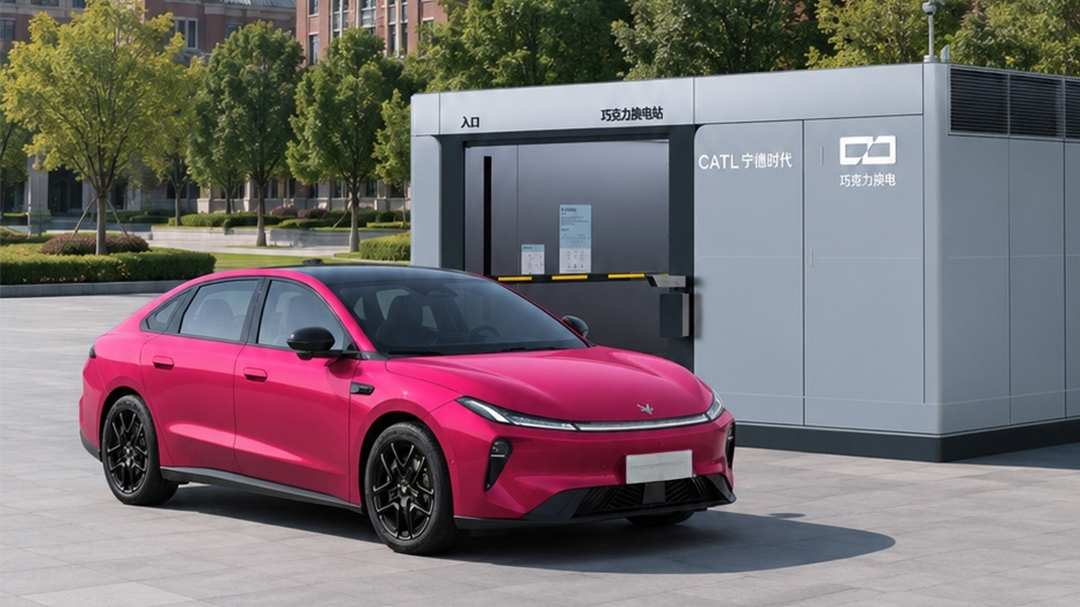
NIO’s battery investment is also aligned with the continued expansion of its battery swap infrastructure.
The company now operates more than 3,964 battery swap stations across China, including over 1,048 along expressways, with cumulative battery swap services surpassing 110 million.

As the battery swap network continues to expand, longer-lasting batteries with enhanced safety and higher energy density are expected to play an increasingly important role in improving network efficiency.
Operationally, NIO has continued to recover this year. The company delivered 40,597 vehicles in June, up 62.9% year-on-year, marking its highest monthly delivery total so far in 2026.
Discover more from ChinaEVHome
Subscribe to get the latest posts sent to your email.