- Leapmotor prices refreshed B01/B10 from RMB 95,800 ($14,140) while keeping most trims unchanged.
- Higher-spec B01/B10 adopt full-domain 800V architecture with 3C charging, 210 kW peak, 16-minute 30–80% charge.
- Top trims add 69.7 kWh batteries (up to 670 km CLTC), AR-HUD, Zero-Gravity seats and LiDAR-assisted Snapdragon driving.
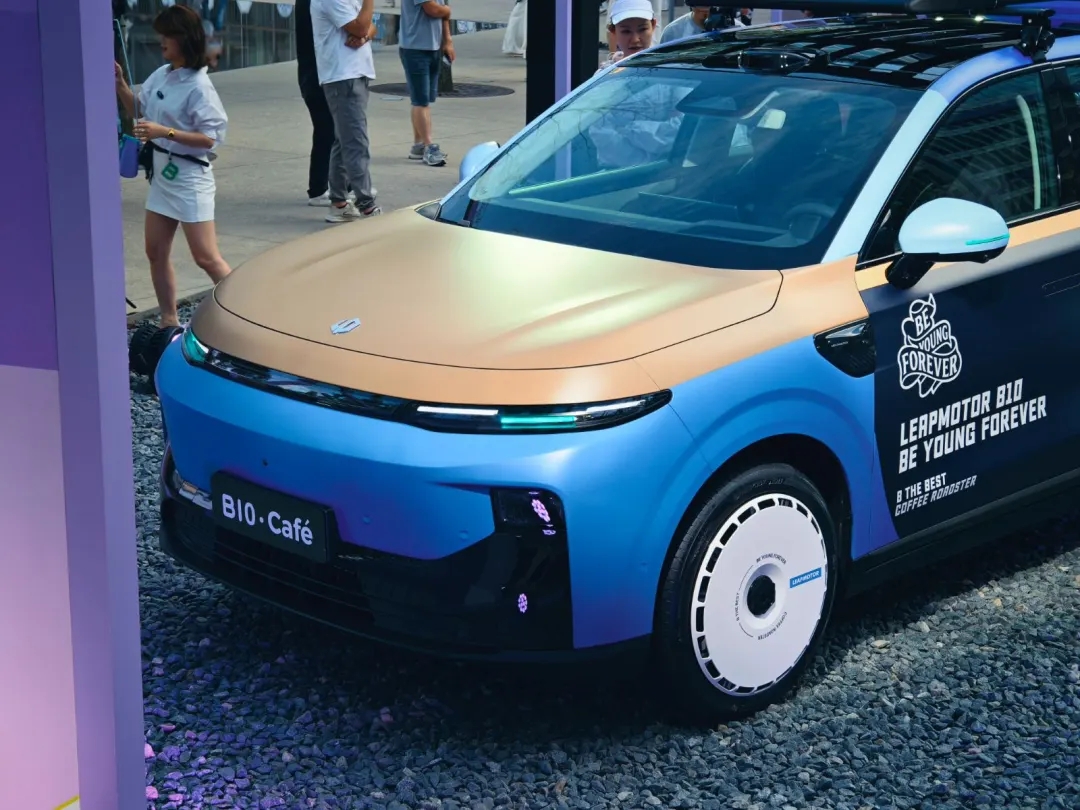
On the evening of July 16, following the annual update of its C Series, Leapmotor also unveiled the refreshed B Series lineup.
Pricing for the new B01 is as follows:
- 590 Comfort: RMB 95,800 ($14,140);
- 590 Enjoy: RMB 103,800 ($15,300);
- 590 LiDAR Edition: RMB 113,800 ($16,800);
- 670 Enjoy: RMB 109,800 ($16,200);
- 670 LiDAR Edition: RMB 119,800 ($17,700).

Pricing for the new B10 is:
- 540 Comfort: RMB 99,800 ($14,730);
- 540 Enjoy: RMB 109,800 ($16,200);
- 540 LiDAR Edition: RMB 119,800 ($17,700);
- 610 Enjoy: RMB 115,800 ($17,100);
- 610 LiDAR Edition: RMB 125,800 ($18,500).

Compared with the previous generation, the upper-mid and flagship B10 trims are RMB 4,000 ($590) cheaper, while pricing for all other variants and the B01 remains unchanged.
The B01, however, has dropped the previous entry-level RMB 89,800 ($13,200) version.
The main differences across trims lie in the electrical architecture, driving range, LiDAR availability, powertrain output and comfort features, while the brand continues its tradition of offering a broad range of standard equipment across the lineup.
Whether through the slogan “B The Best” or the claim that competitors will need “a year to catch up,” Leapmotor made clear that it has high expectations for the updated B Series.

Competition in China’s RMB 100,000 ($14,700)-class EV market remains intense. The B01 and B10 face well-established rivals in their respective segments, including the refreshed XPeng MONA M03 and Changan Nevo Q05, both of which have recorded monthly sales exceeding 14,000 units over the past two months.
These best-selling compact EVs typically succeed by building a clear identity—whether around intelligent driving, youthful appeal, brand reputation or value for money—allowing them to sustain strong sales momentum.
That naturally raises a series of questions. After bringing LiDAR and advanced driver assistance into the affordable market last year, what exactly has Leapmotor upgraded on the new B01 and B10? With prices largely unchanged, what gives the company confidence that it can redefine the benchmark for the RMB 100,000 EV segment?
Following the launch event, ChinaEV Home spoke with Leapmotor executives to learn more about the company’s expectations for the refreshed B Series.
Four Game-Changing Upgrades
Leapmotor’s confidence in the refreshed B Series ultimately comes down to the product itself.
The most significant improvement lies in the electric drivetrain. Higher-end versions of both the B01 and B10 now adopt a full-domain 800V high-voltage architecture.

In the compact new energy vehicle segment at this price point, most models continue to use 400V systems due to cost and positioning considerations.
By comparison, an 800V platform delivers lower energy losses and higher charging power, providing a stronger technical foundation for improved efficiency.
Built on the new 800V architecture, the updated B01 and B10 offer lower energy consumption while supporting 3C fast charging.
Charging from 30% to 80% now takes just 16 minutes, with peak charging power reaching 210 kW.
The battery pack has also been upgraded. Higher-spec versions now feature a 69.7 kWh battery, increasing CLTC range to 670 km for the B01 and 610 km for the B10.

For comparison, the longest CLTC ranges offered by the XPeng MONA M03 and Changan Nevo Q05 are 640 km and 506 km, respectively.
Many of the other upgrades focus on the cabin. Both models now feature front seats with a 124-degree Zero-Gravity mode, along with suction ventilation, heating and massage functions—features Leapmotor claims are unique in this segment.
Display technology is another highlight. Both models receive the same 17.3-inch 3K central display used in Leapmotor’s D Series, while higher-end trims are equipped with an AR head-up display previously reserved for flagship models.

The AR-HUD was first discussed during the media session following the updated C Series launch, where Leapmotor founder and CEO Zhu Jiangming said, “Once you’ve used it, there’s no going back,” explaining the decision to bring the feature down to the B Series.
On the intelligent driving front, top-spec versions of the B01 and B10 are equipped with up to 27 perception sensors, including LiDAR, paired with Qualcomm’s Snapdragon Ride 8650 platform.
The system supports 40 advanced driver assistance functions, including urban and highway navigation assist as well as memory parking.
Meanwhile, the intelligent cockpit now uses Qualcomm’s Snapdragon 8295P platform across the lineup, eliminating hardware differences between lower and higher trims.

Processing power and LiDAR are no longer rare differentiators. The refreshed XPeng MONA M03 offers up to 750 TOPS of computing power, while the BYD Atto 3 (Yuan Plus in China) features BYD’s LiDAR-equipped “God’s Eye B” intelligent driving system.
Even so, Leapmotor’s updated B Series still offers one of the lowest entry prices for a LiDAR-equipped vehicle with advanced driver assistance.
In terms of styling, the refreshed B Series retains the original design language with minor exterior and interior revisions, while introducing two new colors: Liquid Silver and Cloud Purple.
Combined with joint China-Europe chassis tuning, a 50:50 weight distribution, LMC integrated motion control and 0-100 km/h acceleration in around six seconds, the updated models are also expected to deliver improved driving dynamics.
In simple terms, the annual refresh brings more features and functionality.
Looking more closely, however, features such as the full-domain 800V architecture, large AR-HUD, front Zero-Gravity seats and 3K display effectively bring hardware commonly found on flagship vehicles into the RMB 100,000 ($14,700) segment, where they remain relatively rare.
The claim that competitors will need “a year to catch up” may be an intentionally bold marketing statement, but Leapmotor is ultimately trying to demonstrate what can now be delivered at this price point through its vertically integrated in-house development and manufacturing capabilities.
With what the company describes as a generational leap in product competitiveness, where could the B Series go next? And where does Leapmotor’s confidence come from? ChinaEV Home spoke with senior executives Cao Li and Xu Jun for their perspective.
An Unusually Confident Tone
Leapmotor adopted an unusually assertive tone during the launch of the refreshed B Series.
That confidence did not go unnoticed by the attending media, particularly the claim that “our competitors can start chasing today, but won’t complete the package until next year”—a rare display of aggression from the company.

Unsurprisingly, the remark became one of the most frequently raised topics during the post-event media session.
Cao Li responded candidly. He acknowledged that being outspoken is not part of his personality, but added, “When the product is this good, why not be a little more confident?”
His answer pointed directly back to the B Series. Bringing together an 800V platform with 3C charging, dual front Zero-Gravity seats, the same 3K display used in the D Series and an AR-HUD—all in vehicles priced below RMB 130,000 ($19,100)—currently puts the lineup in a class of its own, he argued.
When asked why Leapmotor chose to bring so many premium features into the B Series at once, Cao again pointed to the company’s vertically integrated strategy.
“About 65% of the vehicle’s cost is under our own control,” he said. “That means we don’t have to wait for suppliers or upgrade features bit by bit.

Keeping the original pricing while adding an 800V platform, dual Zero-Gravity seats, an AR-HUD and a 3K display is something automakers without in-house development simply can’t achieve.”
According to Cao, “Eleven years of accumulated capabilities are being released all at once. This wasn’t a spur-of-the-moment decision—it reflects where our self-developed system has reached.”
That, he said, is the real foundation behind Leapmotor’s claim that competitors will need a year to catch up.
As the company added more features without raising prices, another question naturally followed: Would so much premium technology hurt profit margins?
Cao’s answer was straightforward: “Making excessive profits has never been Leapmotor’s style.”
He elaborated further: “A gross margin of around 15% is sufficient to support healthy development. We can fully equip the vehicle from the start, but our pricing logic hasn’t expanded with the feature list. We can be confident without crossing the line.”
Another topic of interest was how much the upgraded models could lift monthly sales.
Cao said his primary concern was not demand, but production capacity.
“We’re not worried about sales volume. We’re worried about capacity,” he said. “Each factory currently produces just over 30,000 vehicles a month, with both domestic and overseas markets supplied from the same facilities. Every month we’re looking for ways to increase output.”

The B Series has now accumulated nearly 250,000 global sales, while Leapmotor ranks first among Chinese EV startups in Europe by sales volume, providing further evidence that demand is already well established.
With competitive products and a mature in-house development system already in place, production capacity—not demand—has become the main constraint on further volume growth.
As Xu Jun put it, market opportunities do not remain open indefinitely. “Capacity is time,” he said, adding that time has become Leapmotor’s “biggest enemy.”
Leapmotor has generally maintained a relatively low profile in recent years.
This time, however, it openly promoted the B Series and even adopted the slogan that competitors would need “a year to catch up,” suggesting the company has set high internal expectations for the refreshed lineup.
Can It Go Even Further?
So, does the refreshed B Series really have what it takes to keep competitors chasing for a year?
The answer ultimately depends on the market. In China’s RMB 100,000 ($14,700) EV segment, consumers tend to let products speak for themselves.
At the same time, purchasing priorities are evolving beyond traditional factors such as safety, reliability and driving range.

According to iiMedia Research’s “2026 China Consumer New Energy Vehicle Purchase Considerations” report, operating costs, intelligent features and charging convenience have become equally important decision factors, with each influencing more than 30% of buyers alongside safety, reliability and range.
That helps explain why intelligent driving, fast charging and energy efficiency have become major areas of investment across the industry.
Whether the refreshed B Series can truly reshape the competitive landscape may be open to debate. Over the longer term, however, it could become a new benchmark for the RMB 100,000 ($14,700) segment.
Going forward, consumers may increasingly ask different questions: Can RMB 100,000 buy an 800V platform?
Can it buy advanced driver assistance? Can it deliver technology and user experience previously reserved for flagship models?

For a product competing globally, these technological advances should also strengthen Leapmotor’s competitive position in overseas markets.
From a sales perspective, Leapmotor says cumulative global deliveries of the B Series are approaching 250,000 units, with the model already ranking first in sales in certain overseas markets.
That suggests the lineup has begun establishing a presence internationally through product competitiveness.
In China, the refreshed C Series has already driven a broader recovery in sales.
According to data from the China Passenger Car Association (CPCA), the C10 sold 15,097 units in June, up more than 100% month-on-month, helping Leapmotor’s monthly deliveries surpass 90,000 vehicles.
As the company’s other key volume driver, the market performance of the refreshed B Series will be closely watched.
How far the lineup can grow will also play a direct role in determining how quickly Leapmotor can move toward its long-term goal of achieving annual sales of one million vehicles.
Discover more from ChinaEVHome
Subscribe to get the latest posts sent to your email.