- SAMR establishes the world’s first national qualification system for automotive chip testing, unifying cross-industry validation.
- XPeng, NIO, and Li Auto are spinning off chips and already shipping hundreds of thousands of units while pursuing external customers.
- Unified accreditation removes repeat testing barriers and primes Chinese EV silicon for scalable commercial sales.
China’s State Administration for Market Regulation (SAMR) recently rolled out five automotive chip certification and accreditation standards, establishing the world’s first national-level qualification evaluation system covering organizations across the entire automotive semiconductor value chain.

Rather than imposing new computing power or process node thresholds on the hardware itself, the framework shifts regulatory focus toward evaluating the qualifications of industry organizations. It sets unified criteria for chip design auditing bodies, third-party testing laboratories, certification authorities, and autonomous driving computing validation platforms.
In practical terms, Beijing is establishing at the national level which accredited institutions can issue validation reports that carry universal credibility across different automakers.
The regulatory rollout comes at a pivotal transition point, as Chinese EV makers look beyond in-house deployment and begin commercializing their custom silicon for external clients.
China’s leading EV startups at the forefront of in-house silicon development are no longer content with supplying only their own vehicle fleets.
XPeng’s in-house autonomous driving chip, the Turing, secured a mass-production nomination from the Volkswagen Group and has surpassed 200K cumulative shipments, making it the first proprietary AD chip from a Chinese automaker to enter the supply chain of a legacy global carmaker.

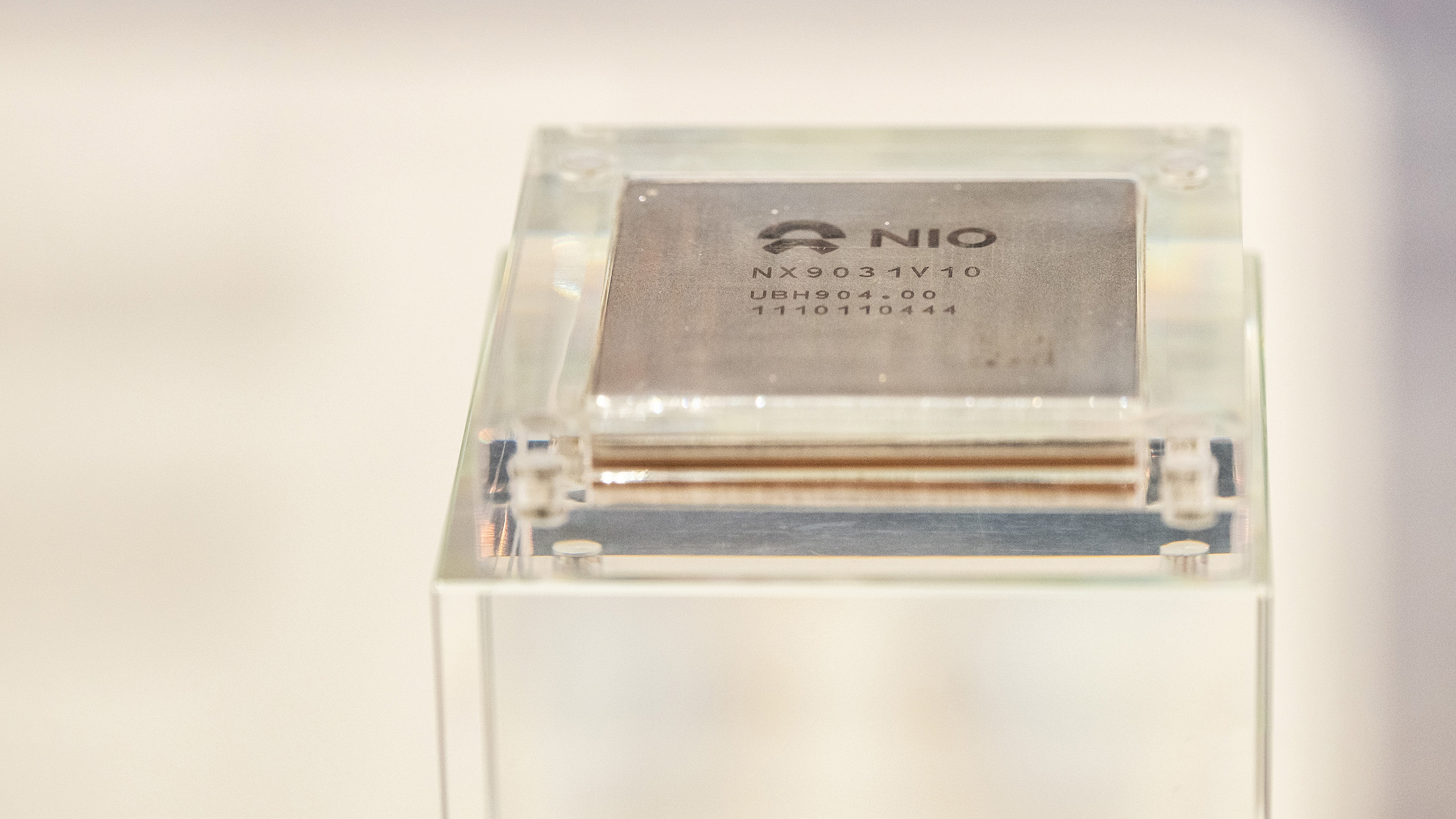
NIO spun off its chip division into Shenji Technology as an independent entity, completing a funding round exceeding 2.2 billion RMB ($305M). Its first chip, the Shenji NX9031, is already standard across key models from both the NIO and ONVO brands with cumulative shipments topping 300K units. Meanwhile, its second co-developed chip, the M97, has taped out successfully, with negotiations underway with automakers including Geely and Leapmotor for chip supply and IP licensing.

Li Auto followed a similar path in July by spinning off its chip business into a standalone entity named Xinchuang Zhihe. After making its proprietary Mach M100 chip standard across core vehicle lineups, the company began actively pitching the silicon to external automakers and robotics firms.

Yet for these automakers seeking to scale external chip sales, cross-OEM verification hurdles remain a formidable commercial barrier.
Within China’s traditional automotive supply chain, automotive-grade testing has long lacked unified, state-backed institutional accreditation. Automakers and test labs frequently refuse to recognize one another’s test findings. Because EV makers typically validate proprietary chips in internal labs or through closely tied partners, pitching that silicon to rivals inevitably faces skepticism over test objectivity.
Even in a strategic alliance as deep as the one between Volkswagen and XPeng, Volkswagen still deployed substantial engineering resources over an extended timeframe to execute a fully independent validation cycle.

The five new standards mean that Chinese EV makers supplying proprietary silicon to the open market will carry universally recognized test reports. By eliminating the need to repeat testing from scratch for every prospective customer, this framework shifts custom chip sales away from inefficient, one-off trial periods into standardized, scalable industrial procurement.
From a global supply chain perspective, this domestic framework will not replace established international baselines such as AEC-Q100 for qualification or ISO 26262 for functional safety. Rolling out lab accreditations and fostering cross-OEM trust across China will also take time.
Nevertheless, the signal is unambiguous. Having built manufacturing scale and software expertise, China’s smart EV sector is now moving upstream into fundamental testing and standard-setting, seeking greater rule-making authority across the global automotive semiconductor landscape.
Discover more from ChinaEVHome
Subscribe to get the latest posts sent to your email.