- The state-backed commentary reframes automakers’ moves to diversify battery suppliers and build in-house capabilities as routine supply-chain optimization, not an industry crusade against dominant suppliers.
- CATL led installed battery capacity at 289.6 GWh Jan–Jul 2026, up 26.6% YoY, holding 39.9% global share; NielsenIQ shows CATL brand awareness at 87% in China and 78% overseas.
- Direct rivals include CATL and BYD in branded cells, while risks center on scaling cell manufacturing, preserving safety and quality versus short-term cost-driven procurement and margin pressure.
A recent commentary criticized the growing “de-CATLization” narrative in China’s new energy vehicle sector, as reported by China Industry Information News (CNII), a media outlet under China’s Ministry of Industry and Information Technology (MIIT).

The article said automakers’ efforts to adjust supply chains, add battery suppliers and develop in-house battery capabilities are normal market decisions. However, some public discussions have reframed these moves as “de-CATLization,” turning them into a perceived conflict between vehicle manufacturers and power battery companies.
CNII argued that China’s NEV industry has entered a stage of higher-quality development. The key question is not “who replaces whom,” but how the entire industrial chain can continue improving its competitiveness.
The debate comes as several Chinese automakers have recently been reshaping their power battery supply strategies.
For example, Li Auto has introduced CALB as a new battery cell supplier while advancing its own battery development plans. The company adopts a model combining in-house battery pack development and manufacturing, self-designed battery cells and outsourced production partnerships.

Xiaomi Auto, meanwhile, has formed a strategic partnership with CALB and Sunwoda Energy under its “Xiaomi Longjia Battery” initiative, taking a leading role in battery product definition, pack design and development while advancing its battery self-development efforts.
These moves are essentially normal choices for automakers seeking greater supply chain stability, lower costs and more differentiated products. However, they have also fueled market discussions over “de-CATLization.”

CNII said supply chain diversification does not mean eliminating any single company.
China’s NEV industry has reached its current position through the combined growth of automakers, battery suppliers, chipmakers, intelligent driving providers and other parts of the ecosystem. Leading companies such as CATL have accumulated global competitiveness through years of development. The industry needs more strong players to emerge, rather than limiting growth by weakening market leaders.
The article also warned that if “de-CATLization” becomes merely a push for cheaper procurement, competition could shift away from technology, quality and efficiency toward price pressure across the supply chain.
Power batteries are not ordinary components. They directly affect vehicle safety, lifespan and user experience. NielsenIQ research shows consumers have already become aware of differences between battery brands.

CATL’s brand recognition reaches 78% in overseas markets and 87% in China, while BYD’s battery brand recognition reaches 84% in China, according to the survey. Leading battery suppliers have already established meaningful brand influence among consumers.
Regarding automakers’ battery self-development efforts, CNII said the industry should take a rational view. Automakers’ involvement in battery R&D, battery system optimization and supply chain control is not an issue. However, battery pack design, system integration, cell development and large-scale manufacturing represent different levels of capability.

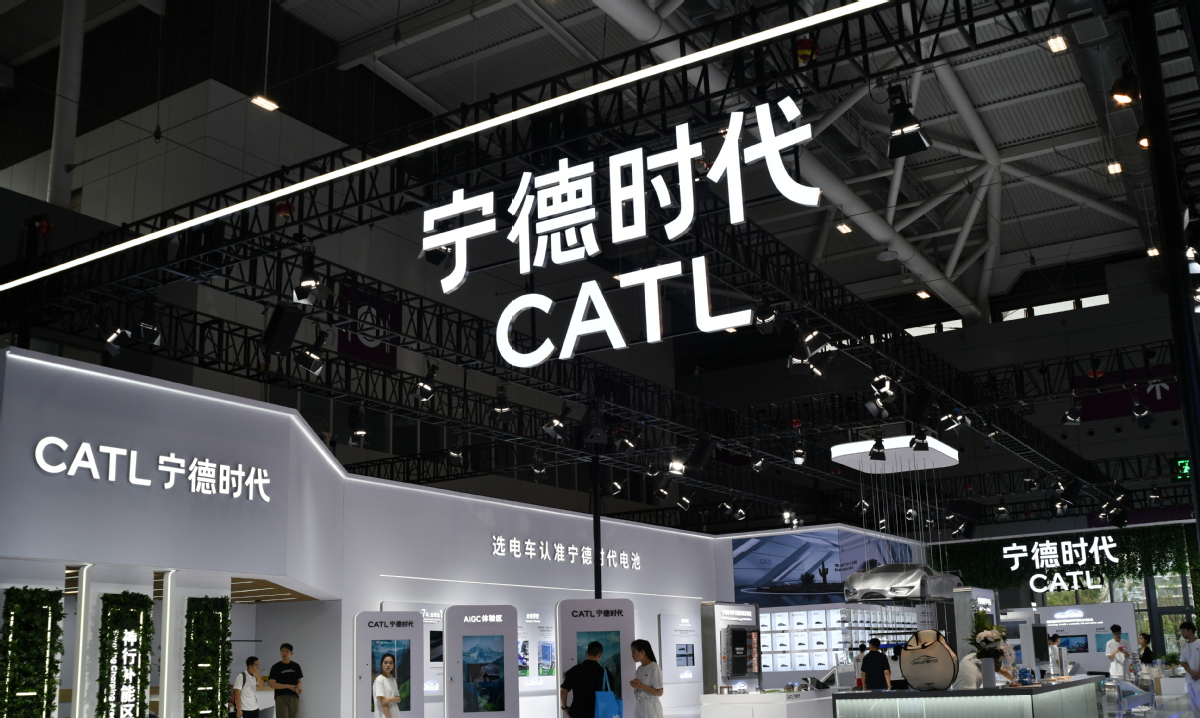
CATL remains the global leader in power batteries. Data from SNE Research shows that from January to July 2026, CATL’s installed power battery capacity reached 289.6 GWh, up 26.6% YoY, lifting its global market share to 39.9% and keeping it in the No.1 position.
Discover more from ChinaEVHome
Subscribe to get the latest posts sent to your email.