- NIO’s Firefly launched a 60-kWh CATL Qilin Long-Life battery for its compact model, signaling a push to lift range and durability while defending margin under intense EV price competition.
- The pack offers 560 km range, 10.9 kWh/100 km consumption, 33-minute 10–80% charge, 12-year/2,500-cycle warranty, with BaaS at RMB 599 (about $89.8) monthly and outright prices from RMB 136.8K (about $20.5K).
- Targets small premium city EV rivals and BaaS adopters, but limited initial batches, slightly slower charging versus 42-kWh, upgrade logistics and scaling could constrain near-term deliveries and margins.
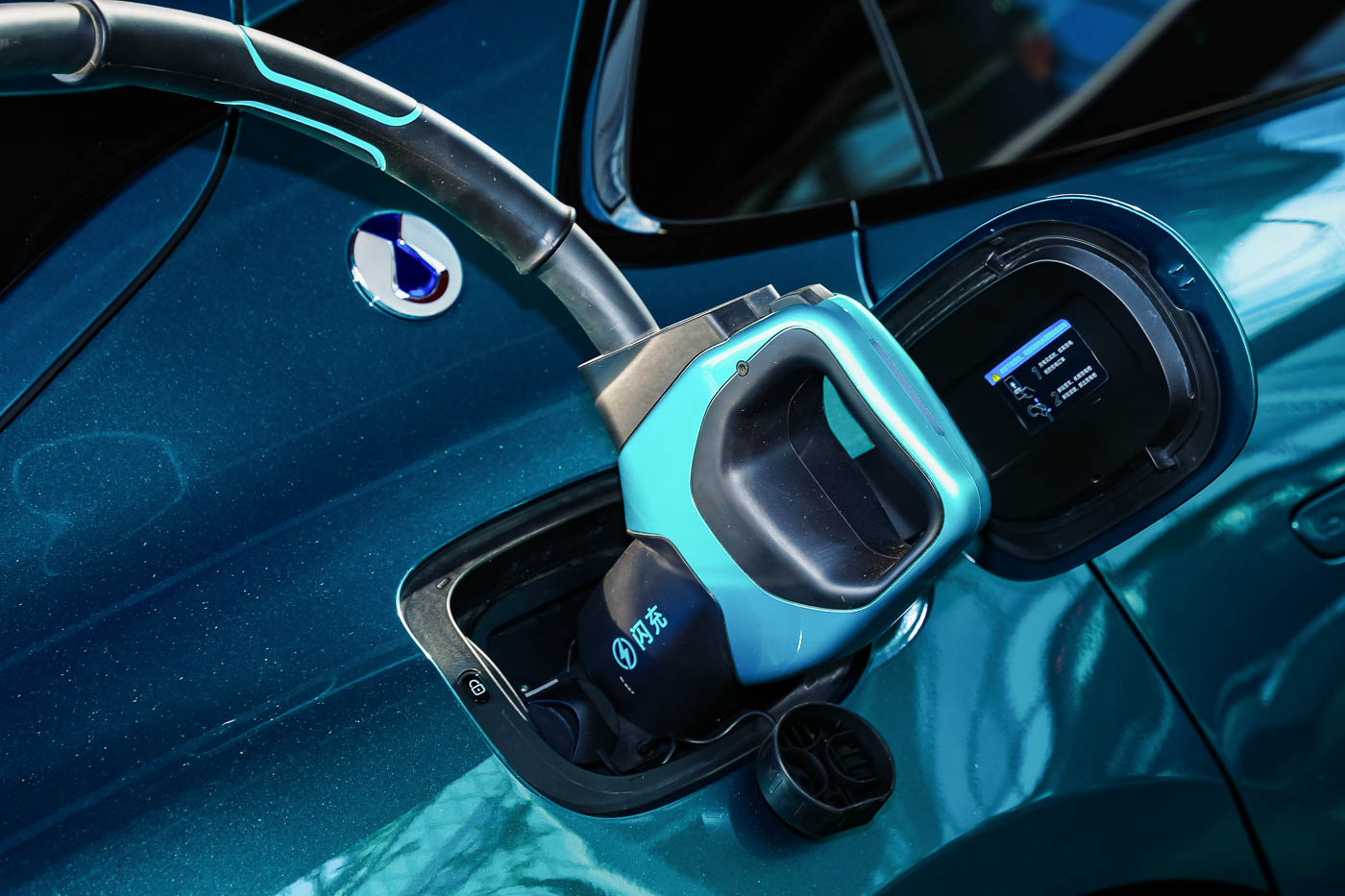
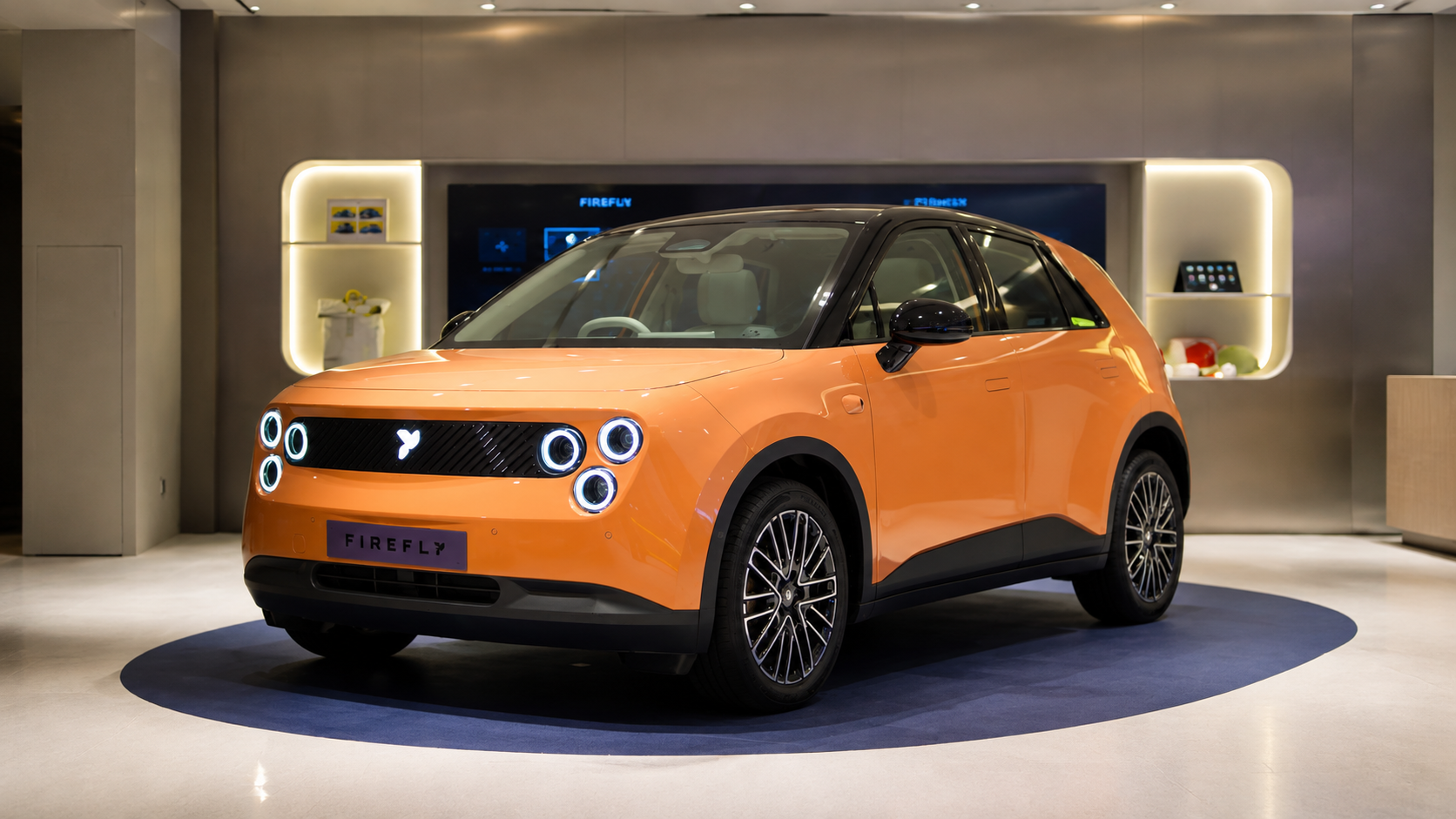
NIO’s Firefly officially launched its 60-kWh battery pack at 10 a.m. on October 23, 2026.
Here are the key details buyers want to know:
- Battery as a Service (BaaS) pricing starts at RMB 599 ($89.8) per month, while purchasing the vehicle outright starts at RMB 136.8K ($20.5K).
- The 60-kWh pack has the same dimensions and weight as the existing 42-kWh pack, with the same energy consumption of 10.9 kWh per 100 km.
- Driving range reaches 560 km under the applicable test cycle. Charging from 10% to 80% takes 33 minutes, slightly longer than with the 42-kWh pack.
- A limited initial batch is available, with the first few dozen units expected to ship within four weeks. Subsequent orders will follow the same production schedule as the 42-kWh version.
Questions about the convertible and hardtop versions will also be addressed in the Q&A section at the end of this article. However, based on yesterday’s media briefing, there may be little reason to get ahead of those questions just yet.
The article will focus on two key areas: what sets the 60-kWh battery pack apart, and where Firefly stands today, including its overseas prospects.
The 60-kWh Battery

Although Daniel Jin, president of the firefly brand, opened yesterday’s media briefing at 2 p.m. with a look at the brand’s growth trajectory, ChinaEV Home will leave that discussion for later. Part One today focuses on the battery.
Monthly Rent of RMB 599 ($89.8)
Let’s start with the latest details, released by firefly about half an hour ago, on pricing and promotions for the 60-kWh battery pack.
Battery as a Service (BaaS): Monthly rent of RMB 599 ($89.8), with the vehicle priced at RMB 79.8K ($12.0K) under the battery-rental scheme. Under the “Pay for Four, Get One Free” offer, customers pay for four months and get the fifth month free, up to a maximum of nine months free over the first 48 months. This saves up to RMB 5,391 ($808). The offer is available only to first owners of 60-kWh models and ends if the battery capacity is changed or the vehicle is transferred to another owner.

Outright purchase: Prices start at RMB 136.8K ($20.5K). Buyers also receive a limited-time bonus of 20,000 points if they lock in an order for a 60-kWh model between October 23 and November 30, 2026, inclusive.
For comparison, here are the prices for the 42-kWh version.

Outright purchase: Zizai trim starts at RMB 119.8K ($18.0K); Faguang trim costs RMB 125.8K ($18.9K).
BaaS: The Zizai trim costs RMB 79.8K ($12.0K), while the Faguang trim costs RMB 85.8K ($12.9K). Monthly rent is RMB 399 ($59.8) for the 42.1-kWh battery.
Pricing was also one of the biggest questions at yesterday’s media briefing. Jin said the price would “stay within NIO’s existing energy pricing framework” while taking customer expectations into account. “We’ve found a pricing sweet spot that should satisfy everyone,” he said.
What do you think of the pricing? Does it meet your expectations?
The next question is whether existing owners of the 42-kWh version can upgrade to the 60-kWh pack. The answer is yes.

As shown in the image above, BaaS users upgrading from 42 kWh to 60 kWh must pay a service fee of RMB 3,000 ($449.6), reduced to RMB 2,000 ($299.7) under the current promotion. Their monthly rent will then rise from RMB 399 ($59.8) to RMB 599 ($89.8).
Owners who have already purchased their 42-kWh batteries outright can apply for a permanent upgrade to 60 kWh once their vehicle has been registered for at least one year. The battery price difference is RMB 17K ($2.55K).
A special promotion is also available: a RMB 1,000 ($149.9) discount coupon for the battery-upgrade service fee. In simple terms, the fee drops from RMB 3,000 ($449.6) to RMB 2,000 ($299.7).
There is another important detail in the fine print. First owners of 42-kWh models who locked in their orders on or before October 22, 2026, can qualify for the offer by completing a permanent upgrade to the 60-kWh battery by December 31, 2027.
What Makes It Special?
Now that we’ve covered the pricing, let’s look at the 60-kWh battery itself.

At the start of yesterday’s briefing, Jin repeatedly emphasized one central message: this is a premium ternary lithium battery with high capacity, long service life and a strong focus on safety, designed not to catch fire or allow thermal runaway to spread.
He invited Hou Yuhang, CATL’s chief product engineer for its passenger-vehicle business with NIO, to explain the battery’s technical details.
Hou began by introducing it as a long-life version of CATL’s Qilin battery family: the Qilin Long-Life Battery.
12 Years, 1.25 Million Kilometers
What makes it so durable?

Hou explained that CATL currently has two major battery product lines for battery electric vehicles. Shenxing focuses on fast charging and value for money, while Qilin occupies the premium flagship segment.
The Qilin family itself has four versions: ultra-fast charging, long range, track performance and long life. firefly uses the Qilin Long-Life Battery.
According to CATL, it is the industry’s first mass-produced ternary lithium battery to carry a 12-year service-life commitment. After 2,500 charge cycles, it retains more than 80% of its original capacity. Its pack-level gravimetric energy density reaches 187.18 Wh/kg, and its volumetric utilization rate is 73.4%.

At 500 km of driving per cycle, 2,500 cycles translate into 1.25 million km.
Hou offered an analogy: “It’s like taking the entire back-of-house operation of a five-star hotel and moving it, completely intact, into an intimate private restaurant. The space is smaller, but none of the standards have changed.”
firefly says its model is the only vehicle in its class equipped with CATL ternary lithium batteries and the only one in its class to use a Qilin battery.
Hou added with a smile: “You can drive it with complete peace of mind — just don’t use it as a ride-hailing car.”
No Fire, No Explosion
Battery safety was the central theme of yesterday’s media briefing, and Hou devoted much of his presentation to it.

Starting with a single battery cell, he walked the attending media through the technical principles behind battery safety.
Why can a battery pack catch fire or explode? Under extreme conditions, external forces such as crushing or puncturing can cause an individual cell to generate intense heat and gas. If that heat spreads to neighboring cells, they can reach a critical temperature and enter thermal runaway themselves. One failure can then trigger a chain reaction.
That is why battery safety depends on two key measures: blocking the spread of heat and providing a safe path for gases to escape.
Each cell has an explosion-proof vent between its positive and negative terminals. When thermal runaway occurs, the vent releases high-temperature gases. CATL has used thermal simulations to optimize the gas-discharge paths.
Blocking heat means interrupting heat conduction, convection and radiation.
The 60-kWh pack incorporates several layers of protection to achieve this.
Jin held up a nano-aerogel thermal insulation pad, explaining that it serves as the first line of defense against heat transfer. The pad sits against the broad face of each cell and contains a nanoscale porous structure. Its thermal conductivity is below 0.03 W/(m·K).
The sides of the cells use a different material: ceramic-aerogel insulation pads. Compared with the nano-aerogel pads, these are more rigid. They not only block heat but also absorb vibration and impact caused by body flex and torsion.
Segmented mica boards cover the top of the pack. Made from muscovite and phlogopite, the material can withstand temperatures of 800–1,000°C or higher over extended periods. Because reinforcement ribs on the upper cover take up space, the boards are split into separate sections rather than made as one continuous piece.
All exposed high-voltage components inside the battery pack are fully wrapped in mica paper and ceramic composite materials. This prevents high-temperature particles from damaging insulation and triggering high-voltage arcing.

After explaining these three layers of thermal protection, Hou said: “I can say with full confidence that the thermal safety of this 60-kWh battery pack should give everyone peace of mind.”
Jin then explained the pack’s physical structure.
The pack uses a high-strength aluminum frame arranged in a grid. Cast aluminum sections at the front and rear house the high-voltage wiring harnesses and coolant connections. Both sides use extruded aluminum sections with hollow, grid-shaped cross-sections. Two additional cross-shaped crash beams in the middle protect against side impacts and front- or rear-end collisions.
The two executives also exchanged a bit of friendly banter.
Jin recalled visiting CATL’s laboratory, where Hou told him, “You’ve really made things difficult for us.” CATL supplies batteries to many automakers, but NIO has some of the toughest requirements for battery specifications, safety standards and testing.
Jin responded: “Let me be modest and add ‘number one’ here. In fact, we’re the one.”
900 Million Kilometers, Zero Battery Fires
Jin then presented videos covering 14 separate tests, explaining the results as they played.

For mechanical shock testing, China’s national standard requires 7G. NIO’s requirements reach 50G along the X and Y axes and 25G along the Z axis. A 25G shock is equivalent to “ten consecutive impacts, each equivalent to eight metric tons, within 15 milliseconds.” Eight metric tons is roughly the weight of five firefly vehicles.
Random vibration testing was extended from the national standard’s 36 hours to 63 hours.
Damp-heat cycling increased from 25 hours to 240 hours.
For thermal runaway, the standard calls for two hours of observation. NIO’s requirement is more stringent: the battery must never catch fire or allow the fire to spread.
After 130 seconds of external flame exposure, the battery is not simply left untouched for two hours. It must remain under observation for a full day without catching fire or exploding. The pack also passed all 12 subtests for bottom-impact protection.
The presentation then showed a nail-penetration test. A steel nail pierced the battery pack, which was then left undisturbed for 24 hours. No fire or explosion occurred, and thermal imaging showed a peak temperature of just 36.1°C.

Jin remarked: “Everyone knows this test is famous. Many companies have stumbled over it.”
A simulated collision test followed. Jin pointed out that videos of real-world crashes often show vehicles catching fire immediately after impact. “That means the battery pack didn’t hold up,” he said.
In another fire test, the pack remained intact for 24 hours after the flames were extinguished, with no fire or explosion.
The water-ingress test used a green pool to make it easier to identify any water entering the pack. China’s national standard requires immersion at a depth of one meter for 30 minutes. NIO tested the pack at two meters for 200 hours.
Jin noted that vehicles have been swept away by floodwaters this year. He joked that firefly owners could treat their cars like boats, calling the model an “underwater mini-tank.”

Each firefly battery also has a unique identification number, effectively giving it its own digital ID. Its cloud-based record tracks battery information, cell health, charge level and cycle count. The voltage of every individual cell can be checked.
AI models analyze large volumes of data to predict risks and alert owners to evacuate or arrange repairs before problems escalate. Whenever a vehicle returns to a battery-swap station, cameras inspect the pack for external damage, and the station conducts further cell-health analysis.
Finally, the presentation displayed a slide summarizing the results: since launch, 90,000 owners have driven a combined 900 million km, with zero battery fires.

Jin closed by emphasizing that the same testing requirements apply to both battery sizes and across NIO’s vehicle brands.
“The test requirements are exactly the same for the 60-kWh and 42-kWh packs. They’re also identical for firefly and the ES9, because we follow NIO’s corporate standards,” he said.
Fifth-Generation Battery-Swap Stations
The rollout of NIO’s fifth-generation battery-swap stations was another major topic at the briefing.

Jin said NIO opened its first fifth-generation station in Quanzhou on August 7. In the two and a half months since then, it has completed 109 stations across 69 cities. firefly owners have completed a cumulative 28,000 battery swaps.
“The vehicle with the most swaps at our fifth-generation stations isn’t a NIO — it’s a firefly,” Jin said.
However, relatively few of firefly’s 90,000 owners have tried battery swapping so far. Jin believes there is still considerable room for growth.
The more pressing question is how quickly NIO will roll out the new stations. One reporter asked why so many fourth-generation stations are still entering service.
Jin explained that NIO still has a stock of fourth-generation stations to deploy. Starting in mid-November, however, fifth-generation stations will become the primary focus of new installations.
Another key question is how each fifth-generation station will accommodate three brands and multiple battery sizes while ensuring that firefly owners have enough compatible packs available.
Jin said each station has 23–24 battery bays. Initially, four bays at each station will be allocated to firefly batteries. NIO will then adjust the allocation dynamically based on the local concentration of users.
The system can adjust the number of bays assigned to firefly’s 42-kWh and 60-kWh batteries, as well as the share reserved for NIO and ONVO batteries.
The rollout will take place in stages rather than filling every station’s capacity at once. Deployment plans will also take into account the distribution and share of users who have adopted the 60-kWh battery.
Aiming Higher

Firefly’s launch of a 60-kWh battery pack is clearly designed to broaden its market. After examining the battery’s specifications and safety features, the next question is how the brand plans to grow from here.
Will it change its overseas strategy? How much can it produce each month? Are monthly sales of around 7,000 units close to the ceiling? And how deep is its order backlog?
Let’s take these questions one at a time.
More Than 7,000 a Month
At the start of yesterday’s media briefing, Daniel Jin, president of Firefly, presented a chart showing the brand’s sales trajectory.

Over the past 18 months, monthly sales have climbed from 3,000 to 5,000 and then 7,000 units. The average transaction price has also risen by RMB 7,000, driven by optional equipment, the Halo Xunguang series and wheel upgrades.
Jin sounded pleased with the progress. “There are very few models that can increase both sales volume and average transaction prices 18 months after launch,” he said.
He added that Firefly is a rare model in China’s NEV market whose monthly sales have continued to rise 18 months after launch.
The latest figure was 7,346 units in September. Firefly’s share of China’s market for cars priced above RMB 100K ($15K) has climbed from 27% in January to 46%. NIO CEO William Li previously said the model had captured 74% of the premium small-car market.
Jin also showed a list of the cities where Firefly sells best. When consumers shop for a car priced above RMB 100K ($15K), he said, Firefly is “bound to be in their shopping cart.”
Global deliveries have now reached 90K units. The next milestone—100K—is not far away and could arrive as soon as next month, Jin said.
He also offered an upbeat outlook for the coming months, while stopping short of giving a specific forecast.
“If you were drawing the chart for October, November and December, how would you extend the line?” he asked. “I don’t think it will turn downward, and I don’t think it will flatten out either. Most likely, it will keep climbing. Monthly sales could exceed 7,000 in the next few months. Let’s wait and see where we finish the year. We should have a small surprise for everyone.”
560 Kilometers of Range
The 60-kWh battery arrives as Firefly looks to build on its sales momentum.
Jin said 80% of customers who choose the existing 42-kWh version buy it as a second family car, alongside a larger vehicle. The remaining 20% rely on it as their household’s only car.

With a rated driving range of 560 km, the 60-kWh version is intended to attract more of that second group, including drivers who regularly travel between Suzhou, Changzhou, Changshu and Shanghai.
“Both the 42-kWh and 60-kWh versions offer freedom, but in different ways. We call the 42-kWh version ‘City Freedom’ and the 60-kWh version ‘Long-Distance Freedom,’” Jin said.
The new battery is not intended to replace the 42-kWh pack.
“I don’t want it to replace the 42-kWh version, and I don’t believe it will,” Jin said. The goal is to expand the overall customer base and shift the ratio of buyers purchasing Firefly as a second car versus their first or only car from roughly 8:2 to 7:3.
“This isn’t because the 42-kWh version causes range anxiety. I need to attract new customers.”
At the briefing, reporters also asked about fast charging. Hou Yuhang, CATL’s chief product engineer for its NIO passenger-car business, said the 60-kWh pack uses ternary lithium cells with a peak charging rate of around 3C.
Jin clarified that this figure applies at the cell level. At the vehicle level, the maximum charging power remains 100 kW, the same as the 42-kWh version. Charging from 10% to 80% takes 33 minutes, slightly longer than the 29 minutes required by the smaller pack.
“However fast you charge, you still can’t beat my three-minute battery swap,” Jin added.

Another notable feature is that the 60-kWh pack is almost identical in size and weight to the 42-kWh version.
Jin attributed this to two factors. First, Firefly’s vehicle architecture was designed with this flexibility in mind back in 2022. Second, the larger pack uses ternary lithium chemistry.
Had Firefly opted for lithium iron phosphate (LFP), the 60-kWh pack would have weighed 130 kg more than the 42-kWh version—equivalent to carrying two extra adults in the car, Jin said. That additional weight would affect the handling and driving feel of a small car. Firefly therefore chose the more expensive ternary lithium chemistry, which offers higher energy density.
The result is a weight difference of just 10 kg between the two packs, within the stated tolerance. The vehicle’s curb weight remains 1,492 kg, its 0–100 km/h acceleration time stays at 7.9 seconds, and energy consumption remains 10.9 kWh per 100 km.
Monthly Production Capacity of 11K Units
During the Q&A session, ChinaEV Home focused on two issues: production capacity and order backlog.
Jin appeared confident about both.
On orders, he said the monthly trend in locked-in orders versus deliveries shows that Firefly has consistently received more locked-in orders than it has delivered this year.
“There is still a substantial backlog of orders on hand,” he said. “That is one reason I can give you a fairly precise estimate. The order backlog is healthy.”
With orders holding up, Firefly has not deliberately stockpiled the 60-kWh version. One key reason is that CATL has only just begun rolling the new battery pack off the production line.
As a result, only the first few dozen customers are expected to receive their vehicles in less than four weeks. Other buyers will follow the normal production and delivery schedule. The 60-kWh version will not receive preferential treatment once deliveries begin.
Production capacity, Jin said, is no longer the bottleneck. With the factory operating at optimal efficiency, monthly output can reach 10K–11K units.
The main constraint had been battery supply. With CATL increasing deliveries of larger packs and Sunwoda upgrading its production line, Jin expects the battery bottleneck to be fully resolved by the end of October.
Overseas Expansion
On October 19, Firefly opened its first dedicated overseas showroom in Bangkok, Thailand.
Its overseas strategy was therefore another key topic at the briefing.
Jin acknowledged that Firefly faces very different market conditions at home and abroad. In China, part of the brand’s success comes from its association with NIO, which has spent 12 years establishing itself as a premium automaker.
“When my car is sold in a NIO showroom, it naturally benefits from that premium positioning, and customers recognize it,” he said.
Overseas, the situation is different. Firefly has yet to establish comparable brand awareness or reputation, making its Chinese-market pricing difficult to justify to foreign customers.
“It is difficult for overseas consumers to accept such a premium from an unfamiliar Chinese brand,” Jin said.
He illustrated the difference with a comparison: “In China, we are 80% to 100% more expensive than a certain rival. Overseas, even a 40% premium makes people ask, ‘Why is this so expensive?’ They don’t understand.”
Building brand recognition abroad will take time, he said. Firefly will also need to expand alongside NIO’s other brands to gain traction more quickly.
Still, Jin said the overseas strategy remains firmly in place. That was why he traveled to Bangkok on October 19 to formally open Firefly’s first—and currently only—standalone showroom worldwide with Thailand’s Thonburi Group.
Q&A
1. Convertible Version
Question (Mr. Cao): When will the convertible version launch?
Daniel Jin: We’ve been pushing hard for the convertible with our boss, and we’ll still need support from the media and users to make it happen.
William Li and I have run the numbers. The investment would be substantial because developing the convertible would be almost like developing an entirely new car. At this point, there’s still a big question mark over whether we could recoup the investment. It might make more sense to treat the convertible as the crown jewel of the lineup once our user base grows larger.
2. Fixed-Roof Version
Media question: When will Firefly offer a fixed-roof version without the large sunroof as a standard model? In the Pearl River Delta, the sun beats down for 10 months of the year, and having no physical sunshade for the sunroof can be unbearable.
Daniel Jin: Replacing the sunroof with a solid roof would cut 10–15 kg of weight. That translates into no more than 5 km of extra range, so it wouldn’t affect handling. “The biggest benefit for you would simply be protection from the sun.”
I want to position the fixed roof as a distinct style rather than just another configuration. So even if we launch it, I may not want to price it differently from the sunroof version.
3. Retractable Soft-Top Roof
Question from Mr. Fei of Xchuxing: Older European cars, the Fiat 500 and newer Renault models have offered roll-back fabric roofs that retract and stow at the rear. The engineering isn’t complicated, and the body structure doesn’t need to change. Why hasn’t anyone developed this option in China? I’ve always been curious.
Daniel Jin: This solution isn’t difficult and is much simpler than developing a convertible. But the experience and feel are in a different league. In Europe, a soft-top like this is essentially a lower-tier, halfway version of a convertible, and it costs much less.
4. CarPlay: Unofficial Workarounds in China, Official Support Overseas
Media question: Some users on Xiaohongshu have used ADB tools to modify the system and enable CarPlay without additional hardware. What is the company’s position?
Daniel Jin: The official company cannot do this in China. Apple would sue us. This loophole will eventually be closed because it could damage our reputation with Apple. It’s not the right thing to do.
The China-spec version lacks the Apple-certified hardware chip required for CarPlay. It can’t simply be added to the existing central computing unit, so there’s no point expecting an aftermarket CarPlay solution.
The overseas version has the chip, but it uses a different central computing unit, and the cost of the solution is substantial.
5. Will More Battery Options Follow?
Media question: Are there plans for other battery options? Is 60 kWh the physical limit?
Daniel Jin: We currently have no plans to develop other battery variants. With a 60-kWh pack and a range of 560 km, Firefly is already at the top of its class. We define small cars as those shorter than 4.4 meters; anything longer falls into the compact-car category, which “has nothing to do with me.”
“My car currently has the longest range in its class. There are no plans for a larger battery.”
Discover more from ChinaEVHome
Subscribe to get the latest posts sent to your email.