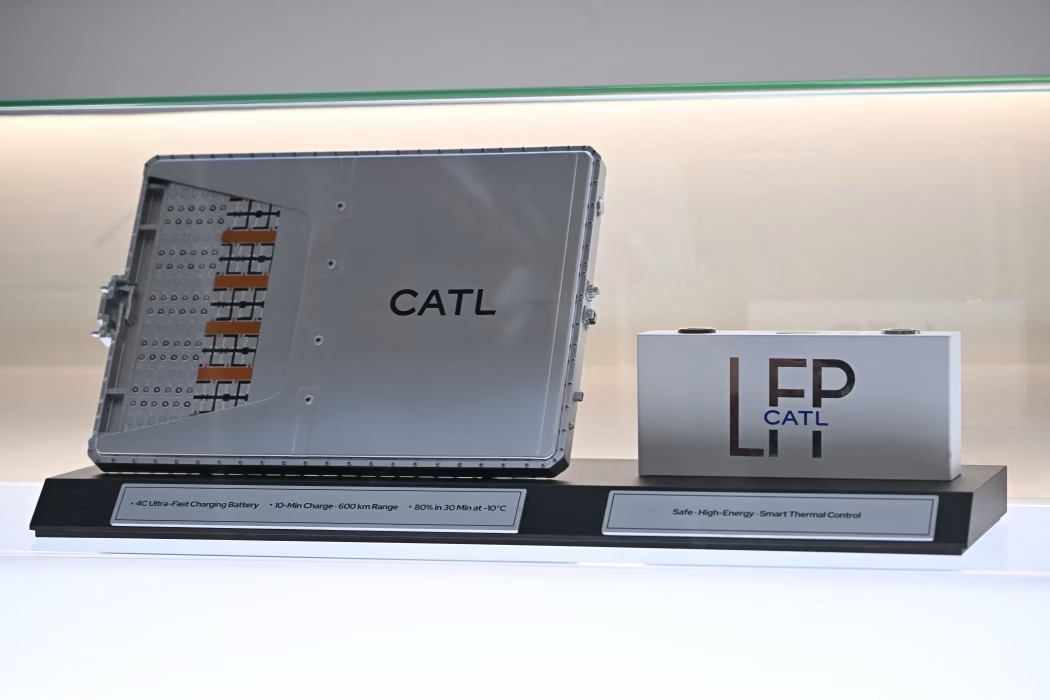
- CATL surged to a 40% share with 39.6 GWh installed in October, reflecting supplier consolidation as firms chase scale amid intense price and margin pressure.
- Domestic installations hit 99.4 GWh in October with LFP at 86.3 GWh (86.9%); cumulative Jan–Oct installations were 675.6 GWh, up 16.9% year over year.
- Top competitors BYD (21.14 GWh, 21.36%) and CALB, Gotion, EVE face execution risks from scaling constraints, export logistics, and sustained margin compression.
On November 19, the China Automotive Power Battery Industry Innovation Alliance released its monthly data on the power battery market for October 2026.
China’s combined output of power and energy storage batteries reached 245.1 GWh in October, up 43.6% year over year and 3% month over month.
Output totaled 2,078.1 GWh in the first 10 months of the year, representing a 60.8% increase from the same period last year.

Combined sales of power and energy storage batteries reached 230.4 GWh in October, up 38.8% year over year and 3.4% month over month.
In September, combined sales stood at 222.7 GWh, up 52% year over year but down 0.2% from the previous month.
Of the October total, power battery sales accounted for 159.3 GWh, or 69.1%, while energy storage battery sales reached 71.1 GWh.
From January to October, combined sales of power and energy storage batteries totaled 1,912.1 GWh, up 55.1% year over year.
Exports provided another important source of growth for the industry.
China exported a combined 46.1 GWh of power and energy storage batteries in October, up 63.4% year over year and 4.8% month over month. Exports accounted for 20% of total battery sales for the month.

Power battery exports reached 29 GWh, while energy storage battery exports totaled 17.1 GWh. Cumulative exports for the first 10 months reached 349 GWh, up 53% year over year.
The growth in battery exports has coincided with the expansion of China’s new energy vehicle exports.
According to the China Passenger Car Association (CPCA), Chinese NEV manufacturers exported 582,000 passenger vehicles in October, up 144.7% year over year.
In the domestic market, retail sales of NEV passenger vehicles reached 1.109 million units during the month.
The NEV retail penetration rate climbs to 67.5%, up 10.5 percentage points from a year earlier.
The expansion of the vehicle market continued to support demand for power batteries.

Domestic power battery installations reached 99.4 GWh in October, up 18.2% year over year and 14% month over month.
By chemistry, lithium iron phosphate (LFP) batteries continued to widen their lead.
LFP installations totaled 86.3 GWh in October, accounting for 86.9% of the market, while ternary lithium battery installations stood at 12.8 GWh.
In the first 10 months of 2026, cumulative domestic power battery installations reached 675.6 GWh, up 16.9% year over year.
By vehicle type, battery electric vehicles remained the largest source of demand, accounting for 83% of power battery installations in October. Plug-in hybrid vehicles made up the remaining 17%.

Market concentration continued to increase, with a growing share of installations going to leading suppliers.
A total of 28 battery manufacturers supplied batteries for vehicles in October, five fewer than in the same month last year.
The top 10 manufacturers recorded combined installations of 94.3 GWh, accounting for 94.9% of the market and leaving a relatively small share for other suppliers.
CATL maintained a commanding lead, with battery installations reaching 39.6 GWh in October, giving it a 40% market share.
BYD ranked second with 21.14 GWh installed, accounting for 21.36% of the market. Together, CATL and BYD held more than 60% of the market.
CALB, Gotion High-Tech and EVE Energy followed, with installations of 8.55 GWh, 5.99 GWh and 5.48 GWh, respectively.
Discover more from ChinaEVHome
Subscribe to get the latest posts sent to your email.