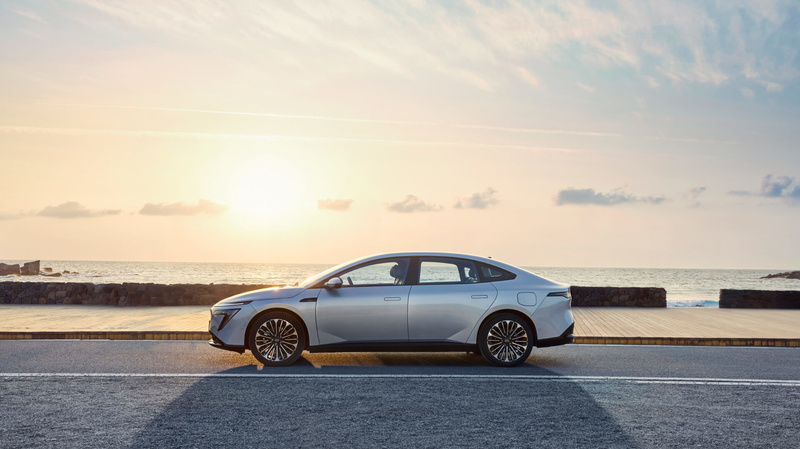
Nissan teams up with IAT to localize EV development for global markets, supporting its transition toward electrification and smart mobility.
According to a July 5 report by Nikkei Asia, Nissan (China) Investment Co. is set to begin exporting electric vehicles (EVs) from China to markets in Southeast Asia, the Middle East, and Latin America starting in 2026. The N7 model will lead the push as the company’s first mass-export EV from China. In a strategic move earlier this year, Nissan invested in IAT Automobile Technology Co., a leading Chinese vehicle design firm, and signed a Master Business Agreement with the company in late March to deepen cooperation in EV localization and intelligent technology.

Behind this collaboration lies a broader reassessment of Nissan’s electrification roadmap. Grappling with intensifying global competition and mounting operational pressure, the automaker is reconfiguring its global production strategy—positioning China not only as a major EV manufacturing hub but also as a key export base. China’s advantages in cost and technology are clear, but ensuring product compatibility with diverse international markets remains a critical challenge.
That’s where IAT steps in. As China’s only A-share listed independent vehicle design company, IAT offers full-stack development capabilities—from vehicle platform design and software development to computer-aided engineering (CAE) simulation and testing. With a client base of over 80 original equipment manufacturers (OEMs) worldwide, the company brings deep expertise in adapting vehicles for global markets.
Under the new partnership, IAT will provide Nissan with comprehensive support across the entire vehicle development cycle for its export models—including styling, engineering design, CAE simulation, testing, and prototype manufacturing. The two companies will also collaborate on component and system development to meet diverse market requirements.

Beyond Nissan, IAT is also expanding its global presence, forming partnerships with Japanese companies such as Yamato Mobility Mfg (YAMATO) and Aichi Industrial Markings (AIM), and developing business ties across the Middle East and Eastern Europe. This trend underscores a growing shift: Chinese automotive design firms are climbing the value chain—from manufacturing to high-end design and innovation—and playing an increasingly strategic role in the global EV transition.
Nissan’s investment in IAT highlights a growing trend among global automakers: embracing new forms of collaboration to navigate the complex transition to electrification. It also signals a new model for Sino-Japanese industrial cooperation in smart mobility and global standard-setting.
In the coming years, when the Nissan N7 rolls through the streets of Southeast Asia and the Middle East, it won’t just be the “Made in China” label that stands out — but the unseen, yet increasingly powerful, mark of “Designed with China.”
Discover more from ChinaEVHome
Subscribe to get the latest posts sent to your email.