ONVO L90 under ¥320,000 ($44,800) offers family-oriented luxury, competitive space and features, challenging Li Auto i8 despite trade-offs in range.
Just one day after the official pricing of the Li Auto i8 was released, William Li announced the official launch date and time for the ONVO L90: 7:30 PM on July 31.

As both are large, all-electric six-seat SUVs with similar price ranges, the Li Auto i8 and ONVO L90 have been natural rivals since their respective unveilings.
Now, with the i8 having revealed its full pricing lineup—¥321,800, ¥349,800, and ¥369,800 ($45,052 / $48,972 / $51,772)—the ONVO L90 had earlier announced a pre-sale price of ¥279,900 ($39,186), and an even lower BaaS (Battery-as-a-Service) option at ¥193,900 ($27,146).
According to industry norms, the official price of the L90 could be even lower.
In leaked chat screenshots, ONVO’s sales executive Zhang Zhengchen stated that the top-spec L90 would not exceed ¥320,000 ($44,800), emphasizing a “one-step pricing” strategy.

It’s still unclear whether Zhang’s “top-spec” includes optional features. But if ONVO’s highest-trim model undercuts the base price of the i8, it could subtly shift the dynamics of this competition.
What consumers may care about even more is—what does a sub-¥320,000 ($44,800) top-spec L90 actually offer? Let’s explore the possibilities based on available information.
What a Top-spec Model Should Offer
Some features of the ONVO L90 were already disclosed during its “Technology Launch” earlier this month. However, the specific configuration of the top-spec model remains largely speculative.
Consider the 100 kWh battery, for example.
ONVO has rarely discussed this battery publicly, but given NIO’s approach and genuine demand for long-distance travel, it’s highly likely that a 100 kWh battery option will be unveiled during the official launch.
Even if it appears only as an optional upgrade.
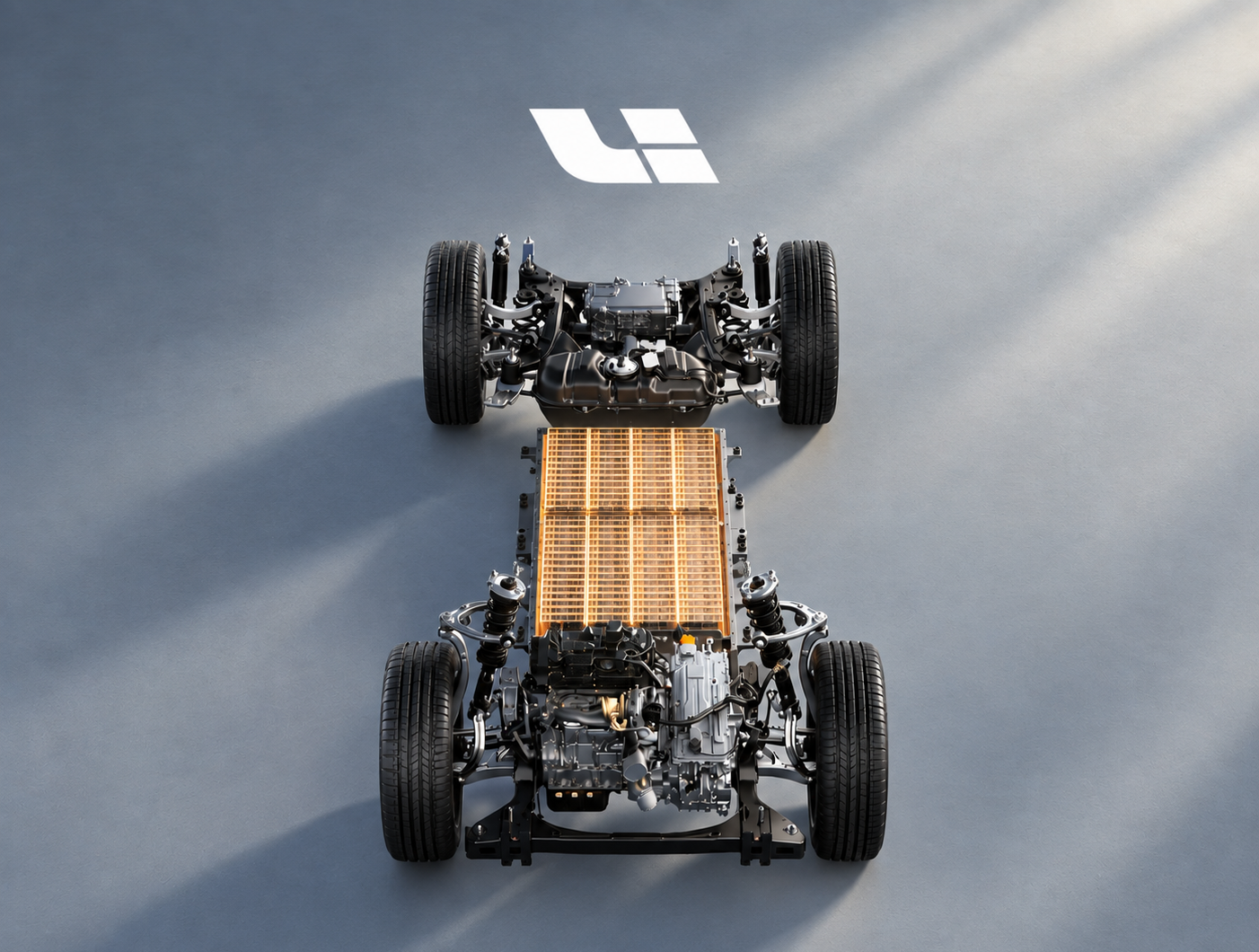
The standard 85 kWh battery offers a CLTC range of up to 605 km and a minimum energy consumption of 14.5 kWh/100 km, which is impressive for a nearly 5.2-meter-long SUV.
However, the dual-motor AWD version increases energy consumption and reduces range. With a rated energy usage of 15.9 kWh/100 km, the 85 kWh battery only delivers 570 km—less ideal for long-distance journeys.
Moreover, ONVO positions the L90 as a “6 people, 10 suitcases” long-distance family SUV, which places higher demands on range. Therefore, seeing a 100 kWh or even larger battery mentioned at launch wouldn’t be surprising.
If, as Zhang suggested, the top-spec L90 with the 100 kWh battery still costs less than ¥320,000 ($44,800), its value proposition would be dramatically strengthened.
As for other features, ONVO has confirmed ventilated and massaging front and second-row seats as standard across the lineup. Additionally, rear entertainment screens, in-car fridge, and zero-gravity seats will be included as “first-owner perks.”

From available information, the L90 will use a vision-only ADAS solution powered by a single Orin-X chip, providing full-scenario assisted navigation.
Compared to other ¥300,000 ($42,000) pure electric SUVs on the market—which often come equipped with LiDAR and dual Orin-X chips—this setup isn’t particularly outstanding.
We can reasonably speculate whether the top-spec L90 might offer an optional hardware upgrade, possibly including a second Orin-X chip. XPeng has already implemented similar strategies.
In short, the “under ¥320,000 ($44,800) top-spec L90” sounds exciting but is likely a result of strategic trade-offs.
The L90’s top-spec strength lies in its abundant comfort features, aiming to challenge competitors through a sense of luxury.
On the other hand, if it doesn’t offer the 100 kWh battery, range performance won’t stand out. And with only one Orin-X and no LiDAR, the ADAS system may raise concerns.
So the crucial question remains: at the ¥320,000 ($44,800) price point, how does the ONVO L90 compare to the Li Auto i8?
Luxury vs. Balance
Let’s start with a simple comparison: against the ¥321,800 ($45,052) Li Auto i8 Pro, the ONVO L90 is unlikely to achieve a “total victory.”
We can assess them in three dimensions: space and configuration, intelligence, and power/range.
Space & Configuration
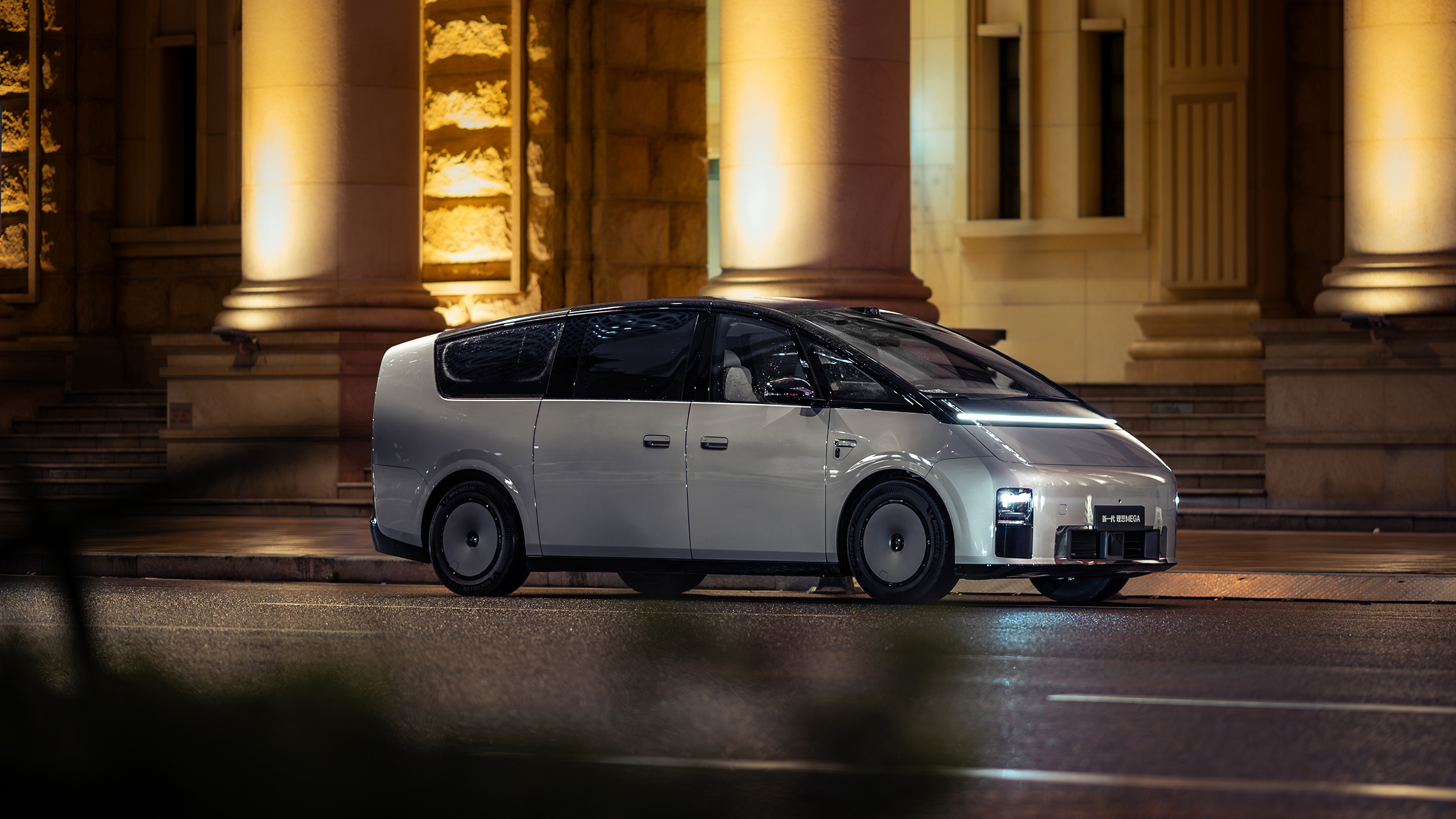
The ONVO L90 measures 5145×1998×1786 mm, offering both 6-seat and 7-seat layouts. Its third-row legroom reaches 1020 mm.

In comparison, the Li Auto i8 measures 5085×1960×1740 mm and comes only in a 6-seat configuration, with 920 mm of third-row legroom.
Clearly, the L90 wins on both size and rear-row comfort. It also offers more flexibility in seating configurations.
In terms of features, the L90’s top-spec version includes a rear entertainment screen, zero-gravity seats, and an in-car fridge as “launch perks.” Optional extras like power-retractable side steps and larger wheels may also be included within the ¥320,000 ($44,800) budget.
By contrast, the ¥321,800 ($45,052) i8 Pro—being the base model—falls short in terms of standard features. It doesn’t come with a fridge or entertainment screen, let alone zero-gravity seats, and power side steps are not available in any trim.

However, the i8 Pro counters with its standard dual-chamber “magic carpet” air suspension, which the L90 lacks—making ONVO’s air suspension less of a competitive edge.
Overall, for configuration-sensitive buyers, the ONVO L90 clearly has more to offer within the same budget.
Smart Features
On the intelligence front, the top-spec L90 and the i8 Pro are set up for a direct showdown.
The L90 boasts an Orin-X chip with 254 Tops computing power—enough for both urban and highway NOA. Meanwhile, the i8 Pro uses the Horizon Journey 6M chip with only 128 Tops—half the performance.

That said, the i8 Pro has LiDAR, which gives it a hardware advantage.
However, its AD Pro system mainly supports highway scenarios and lacks functions like enhanced memory parking. In real-world usage, this could limit its lead.
Both cars use Qualcomm 8295P chips for their infotainment systems, so differences would come down to UI preferences rather than capabilities.
Thus, in terms of intelligent features, the two are effectively neck and neck.
Power & Range
Finally, in terms of power and range—if the ONVO L90’s 100 kWh battery pushes its price far above ¥320,000 ($44,800), or isn’t available at all—it could fall behind.
The i8 Pro includes a 90 kWh battery with 670 km of CLTC range and supports 5C ultra-fast charging.

The L90, with only the 85 kWh battery, has shorter range, slower charging (around 3C), and slightly higher energy consumption. For long-distance travel, the i8 Pro gives more peace of mind.
Interestingly, even in performance, the top-spec L90 doesn’t clearly outmatch the i8 Pro.
Both use dual-motor AWD. The L90 has 440 kW and a 0–100 km/h time of 4.7 seconds. The i8 Pro has 400 kW but accelerates slightly faster at 4.5 seconds.

These differences highlight the unique personalities of the two vehicles.
The i8, while positioned for families, hasn’t abandoned driving performance—echoing Li Xiang’s goal of making the i8 a “mini MEGA,” a car known for its dynamic feel.
The ONVO L90 leans more into luxury, offering decent power but clearly avoiding a sporty tuning style.
Smart Family Choice
This comparison shows that the ONVO L90 is the ultimate expression of ONVO’s “smart family vehicle” branding. Every design element focuses on family-oriented use, with strong performance in space and comfort features.
As such, its relatively weaker aspects become understandable.
With the L90 about to be fully revealed, NIO is positioning ONVO as a family-focused sub-brand, completing a three-tiered lineup alongside NIO and Firefly.
Public sentiment suggests ONVO’s strategy is working. Most mainstream buyers prioritize space and features, and are naturally drawn to the L90’s more luxurious and affordable appearance.
This could be ONVO’s clearest sign yet of “finding its rhythm.”
However, whether the L90 can turn this positive momentum into actual sales remains to be seen.
Given ONVO’s previous ups and downs with the L60, this time they’re likely better prepared.
Discover more from ChinaEVHome
Subscribe to get the latest posts sent to your email.