BYD’s Thailand plant officially began production in July 2024, marking the company’s first overseas passenger vehicle facility with an annual capacity of 150,000 units.
On August 25, BYD Auto (Thailand) Co., Ltd. announced that its Thailand-made left-hand drive (LHD) Dolphin electric vehicles (EVs) have officially begun their journey to Europe, with the first batch of 959 units destined for the UK, Germany, and Belgium.

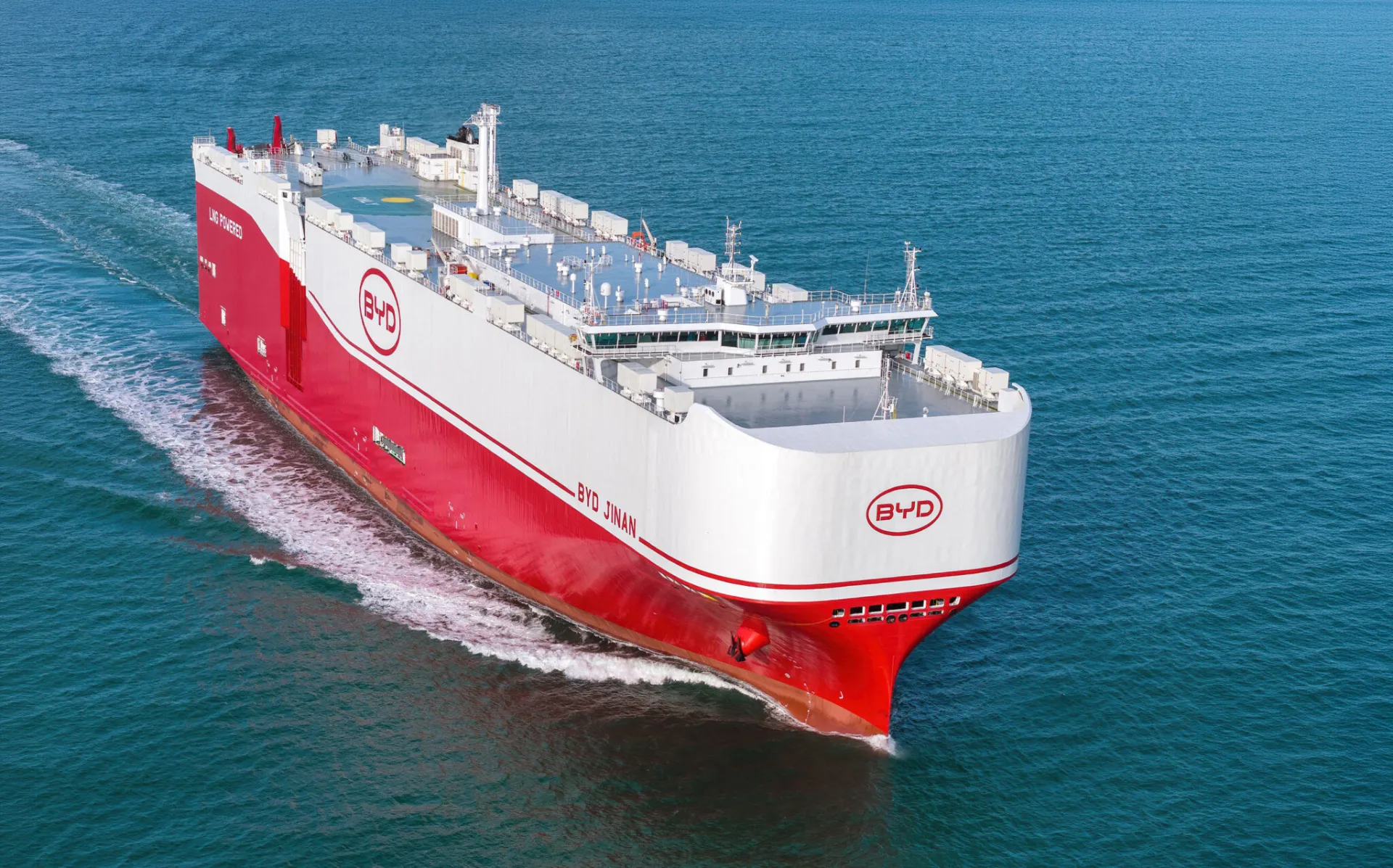
The shipment is carried by BYD’s own roll-on/roll-off vessel, the “BYD ZHENGZHOU,” marking the ship’s first voyage from Thailand to Europe.
BYD’s Thailand plant, which officially began production in July 2024, is the company’s first overseas passenger vehicle facility, with an annual capacity of 150,000 units. The factory currently employs around 6,100 staff, with plans to expand to 10,000.

Originally focused on right-hand drive vehicles for Thailand and ASEAN markets, the plant is now increasing output to serve LHD markets, including Europe.
Ke Yubin, general manager of BYD Thailand, said the export milestone follows the delivery of the plant’s 90,000th new energy vehicle in July. Launching the Dolphin in Europe not only reflects BYD’s global expansion strategy but also underscores Thailand’s pivotal role in the company’s worldwide supply chain.

BYD entered the Thai market in 2022, generating strong demand for its first model, the ATTO 3 (BYD Yuan PLUS).
Since then, BYD has expanded its local lineup to include both EVs and PHEVs, while investing in battery and powertrain facilities with total investments exceeding 35 billion THB ($945 million).
Thailand has also supported EV manufacturing through its “EV 3.0” policy, offering tax incentives and subsidies that have attracted automakers, including BYD, to establish local production.
Discover more from ChinaEVHome
Subscribe to get the latest posts sent to your email.