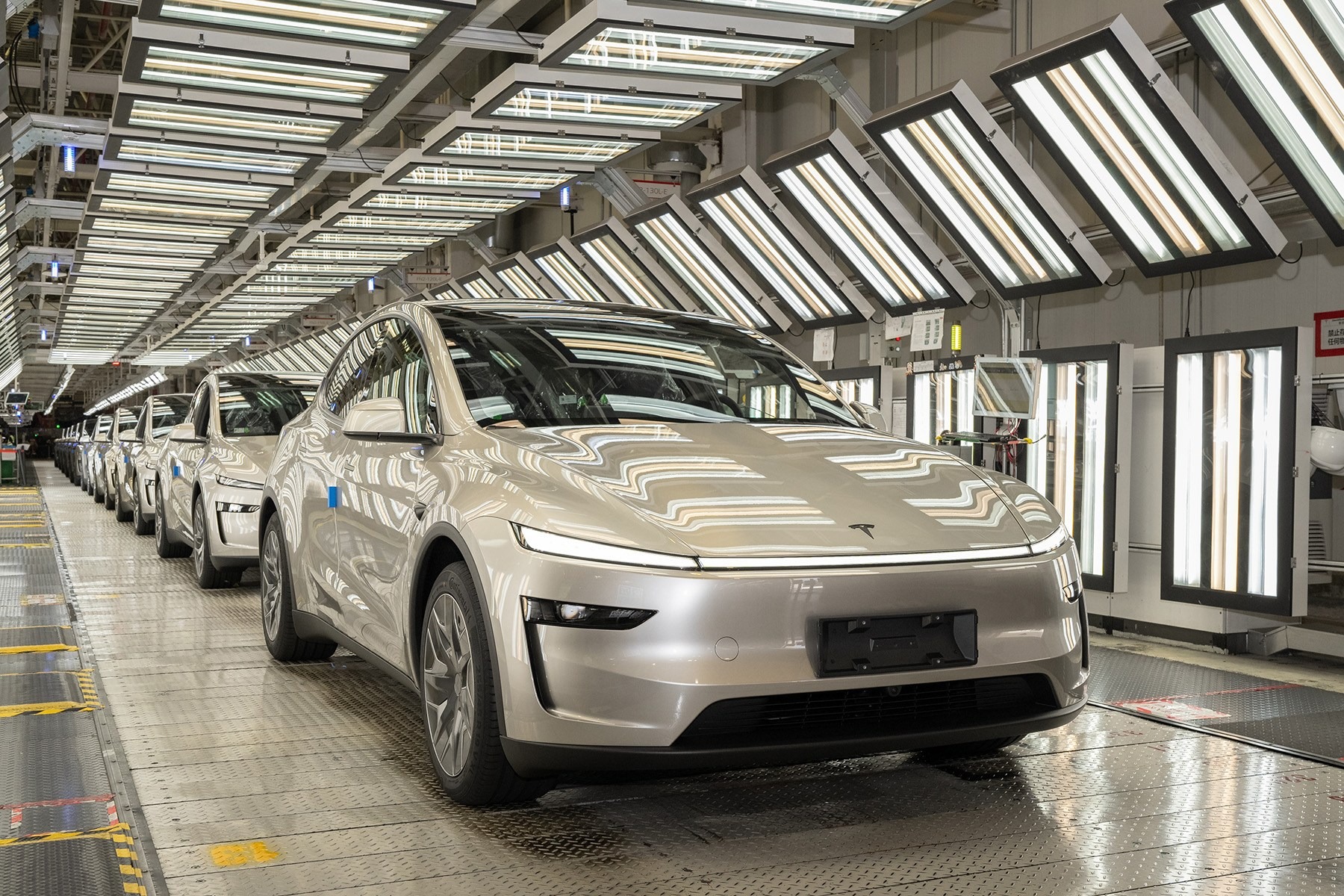
The Tesla Model Y L, despite mixed initial reviews regarding its comfort and features, has achieved significant popularity, garnering 120,000 orders shortly after its launch.
When we got a first look at the Tesla Model Y L in August, to be honest, our feelings were quite mixed.
From our perspective at ChinaEV Home, the Model Y L did not appear to hold an obvious advantage in the crowded “all-electric three-row SUV” segment. The second-row seating felt less than comfortable, the third row was cramped, and the vehicle lacked some of the now-standard features in China’s mainstream market—what consumers jokingly call “TVs and fridges.”

And yet, on the morning of September 12, news broke that production capacity for October had already been fully booked. Tesla’s website now shows that deliveries are pushed back to November.

In other words, the Model Y L is effectively “sold out” for the time being.
Since its late-August launch, order numbers have climbed steadily. By September 3—just 16 days after launch—orders had already reached 120,000 units.
For reference, the highest monthly sales ever recorded by the broader Model Y lineup this year were 48,000 units, without hitting a true “sold-out” status. Its typical monthly sales fall between 20,000 and 40,000 units.

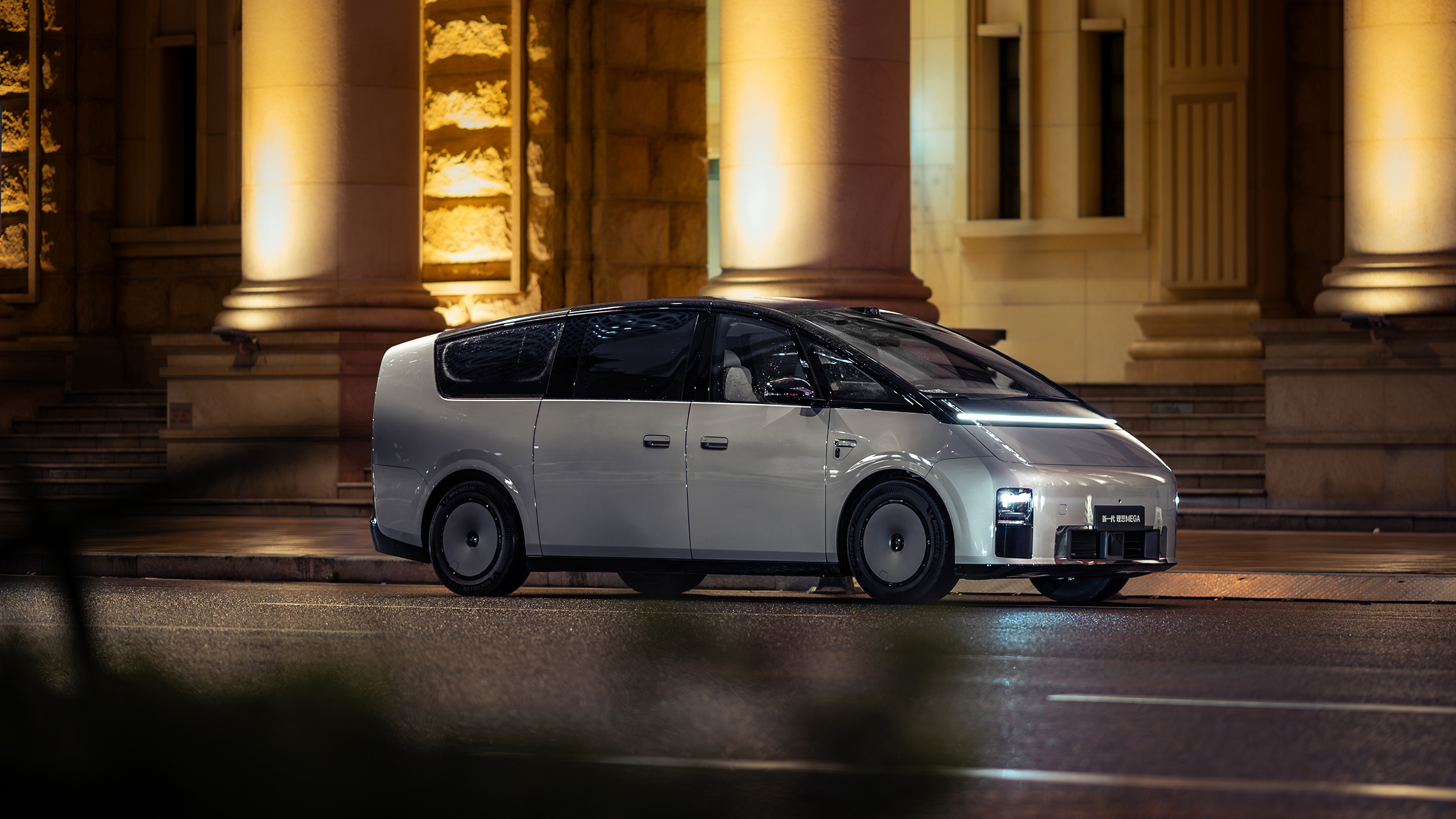
Assuming Tesla allocates all the production capacity of its production lines to manufacturing the Model Y L, this would mean that its sales volume in October is likely to exceed 40,000 units, making it the sales champion among the currently launched “pure electric six-seat SUVs”.
Even if its sales volume is halved to 20,000 units, this performance will still outperform the domestically produced “pure electric six-seat SUVs” that have the upper hand in public opinion.
Such a “contrast” will naturally raise some questions. For example, “How did the Model Y L achieve this success?”
Perhaps we can first take a look at the opinions of potential car owners who have placed orders for the Model Y L.
What Makes the Model Y L Appealing?
Mr. Liu, who was once a Model Y owner but briefly switched to a domestic new energy vehicle, has already placed an order for the Tesla Model Y L.

Since the Model Y L made its debut, Mr. Liu has held a different opinion from us, believing that the Model Y L will definitely sell well. Now, facts speak louder than words, and Mr. Liu’s judgment on the Model Y L is more representative under the current circumstances.
“Model Y L will definitely be a blockbuster—it’s practically the upgraded alternative to the Long Range version. For just a little over RMB 20,000 ($2,800) more, you get significantly better features, a larger cabin, and a six-seat layout. How could it not sell like crazy?”
As he pointed out, the Model Y L is priced at RMB 339,000 ($47,600), offering a 751 km driving range. By comparison, the Model Y Long Range AWD costs RMB 313,500 ($44,000) and delivers 750 km of range.
The difference in configurations is actually the main upgrade point of the Model Y L. These include a 16-inch and higher-definition central control screen (the Model Y has a 15.4-inch one), and it is the first to be equipped with a more intelligent voice assistant, which can be activated by the prompt “Hello, Tesla”; the speaker system has also been upgraded, from 16 speakers to 19.

In terms of seat configurations, both the front and second rows of the Model Y L support ventilation and heating, while the Model Y only has ventilation and heating functions for the front row, and the second row only has heating.
However, in Mr. Liu’s view, the more important upgrade is actually the chassis. The Model Y L is equipped with CDC (Continuous Damping Control) adjustable shock absorbers, which makes the driving style of the new car more versatile, and in extreme cases, it can provide a stronger handling experience.
“Originally, Tesla’s advantage lies in its good driving performance. Now, with the upgraded chassis, it’s undoubtedly a plus. I dare say that among these six-seat pure electric SUVs, Tesla offers the best driving experience.”

Mr. Liu’s judgment is not groundless. As a fledgling tech-focused self-media creator, he has also test-driven many cars at stores. After comparing popular pure electric six-seat SUVs such as the Li Auto i8, ONVO L90, and AITO M8 EV, the driving experience of the Model Y L is indeed superior.
That said, for non-Tesla audiences, some might be puzzled: the things Tesla buyers focus on don’t exactly match the mainstream.
“Exactly,” Mr. Liu observed. “I’ve noticed the same. People who want a Tesla and those who want a domestic EV are almost two completely different groups.”
In short, Liu summed it up this way: consumers opting for Chinese EV brands tend to spend a lot of time comparing configurations—down to the smallest detail. Tesla buyers, by contrast, focus primarily on two things: brand and core fundamentals such as drivetrain reliability and energy efficiency. Comfort and entertainment features are of much lower concern.
There’s no precise data yet on the size of each group. But clearly, a sizeable segment of the market still aligns more closely with Tesla’s target audience—buyers who prioritize brand reputation and core performance.
Which naturally brings to mind a recent internet meme: Chinese EVs are the “Android cars,” while Tesla is the “apple car.”
“Android Car” vs. “Apple Car”?
The joke comes from comparing “Android phones” and “Apple iPhones.”
If a car is called an “Android car”, it means that although the model has rich configurations and high cost performance, its basic experience is not stable enough, and it can be described as “flashy”; while an “Apple car” refers to a model similar to the Apple iPhone—although its functions are not advanced and its experience is not rich enough, it has the advantages of being a “big brand” and having good stability, and is often a “reliable choice”.
As a side note, the new generation of iPhones went on sale on the evening of September 12, and the consumer market responded enthusiastically. Only half an hour after the launch, it showed that a waiting time of “3-4 weeks” was required. This fully shows that in the current context, only the better-performing side can be named “Apple X”.

“For me, the iPhone is all about texture, screen, and smooth software; other aspects are not that outstanding,” said Mr. Liu, who is also an iPhone user. He has a clear understanding of his own needs, and this way of thinking can also be applied to Tesla.
As mentioned above, the brand, the quality of the three-electric system, and stable quality are the main reasons why Mr. Liu chose Tesla.
His car-purchasing mindset can, to a certain extent, represent the views of Tesla’s target group. At least, Tesla is still the top brand in pure electric vehicles and has a high global reputation; the public opinion generally believes that Tesla’s overall quality is more stable, and based on the brand reputation of this global enterprise, its ability to handle problems is also stronger.
It has to be admitted that there may be some stereotypes and “prejudices” in these “views”. Just like the idea in the mobile phone industry that “Android phones will become laggy after a few years, while iPhones can remain smooth for a long time”, but such a perception is difficult to reverse in a short period of time.

He believes that in fact, most consumers who buy cars are not that “knowledgeable about cars”.
His definition of being “knowledgeable about cars” is that users can better distinguish the experiential value of configurations, the pros and cons of driving texture, and can make a relatively objective and fair evaluation of a new car.
In his view, the user groups of leading new energy vehicle companies have already possessed such qualities. Unfortunately, they are still unable to dominate the market trend.
On the other hand, Mr. Liu has, after all, had a short experience with domestic new energy vehicles. He does not consider himself completely on the opposite side of the domestic new energy industry, and he does not hide his criticism of “die-hard Tesla fans”.
When talking about some extreme remarks made by certain “Tesla fans”, he even swore: “It’s ridiculous to say that large screens, refrigerators, and big sofas are useless.”
In his opinion, it is an objective fact that the rich experience provided by domestic new energy vehicles is indeed beyond the reach of the current Model Y. One cannot say that just because Tesla does not have these features, fans can blindly claim that these functions are unnecessary.
It is also worth mentioning the main reason for his car change—he switched from the Model Y to the Jiyue 01 because he disliked the overly “simple” interior of Tesla.
However, due to well-known reasons, he had to change his car again. After careful consideration, he felt that the Model Y L would be a better choice.

As mentioned earlier, Mr. Liu attaches great importance to the driving experience. The “best driving experience among six-seat cars” made him unable to resist the Model Y L—just like “the more linear animation of the iPhone”.
It seems that the “large screen, refrigerator, and big sofa” that he said were “not unnecessary” ultimately failed to impress him.
The Power of the “Silent Majority”
The “Apple car’s sweeping victory” may well be the most interesting takeaway from our conversation with Mr. Liu.
This phenomenon highlights the presence of a “silent majority” in the market—consumers who may not voice their opinions online but whose actual purchasing behavior can tip the balance.
Especially at a time when major new energy vehicle companies are all making efforts in the “pure electric six-seat SUV” segment, the fact that Tesla’s Model Y L has taken the “short-term victory fruits” is enough to make these companies fall into deep thought.
For example, to sell “pure electric six-seat SUVs” well, is it really necessary to have a “large screen, refrigerator, and big sofa”? Can “absolute space” be transformed into a competitive advantage?

If we take the Model Y L, which currently has the most outstanding order volume, as a reference, then the above views do not hold, and the product logic of most domestic new energy vehicle companies will be “falsified”.
But this is only a one-sided conclusion for a certain market segment. If we expand to other segments in the entire new energy industry, it is a fact that Chinese new energy vehicles still lag behind overseas car companies like Tesla in terms of brand strength, but the momentum of catching up is very strong.
For example, in the pure electric sedan segment, the Xiaomi SU7 has broken the sales monopoly of the Model 3; currently, the best-selling new energy vehicle model is the Geely Xingyuan, not the Tesla Model Y.
Going back to the topic of “Android phones” and “Android cars”, it may be beyond most people’s expectations that Chinese smartphones and new energy vehicles have become two entities with similar fates at this moment.
If we learn from the development path of the Chinese smartphone industry, then with the continuous upgrading of products and the continuous innovation of technology, there will definitely be a day when an automobile company emerges in the Chinese auto industry that surpasses Tesla in multiple brand indicators such as reputation and user loyalty, thereby reversing the stereotypes.
From an optimistic perspective, the Model Y L has only achieved a “short-term victory”, and it relies on “living off its past achievements” (brand reputation). More importantly, there is a trend of “awakening” among “die-hard Tesla fans” like Mr. Liu, rather than being confined to an information cocoon.
Of course, the hot sale of the Model Y L this time is also a “wake-up call”. Chinese new energy vehicle companies must have a deeper understanding of the importance of building a brand. Especially when market competition enters a stalemate stage, the appeal of the brand will play a greater role, and may even be the key to determining the outcome.
In addition to having high-quality products, building brand reputation also includes various aspects such as pre-sales reception, after-sales service, user care, and user commitments. In terms of these “soft power” aspects, most car companies still have room to learn from global car companies.
In conclusion, Chinese new energy vehicle companies still have the opportunity to compete with Tesla for the “silent majority”. With steady efforts day by day, it is not impossible that the public opinion on “Android cars” and “Apple cars” will reverse after a period of time.
(End)
Discover more from ChinaEVHome
Subscribe to get the latest posts sent to your email.