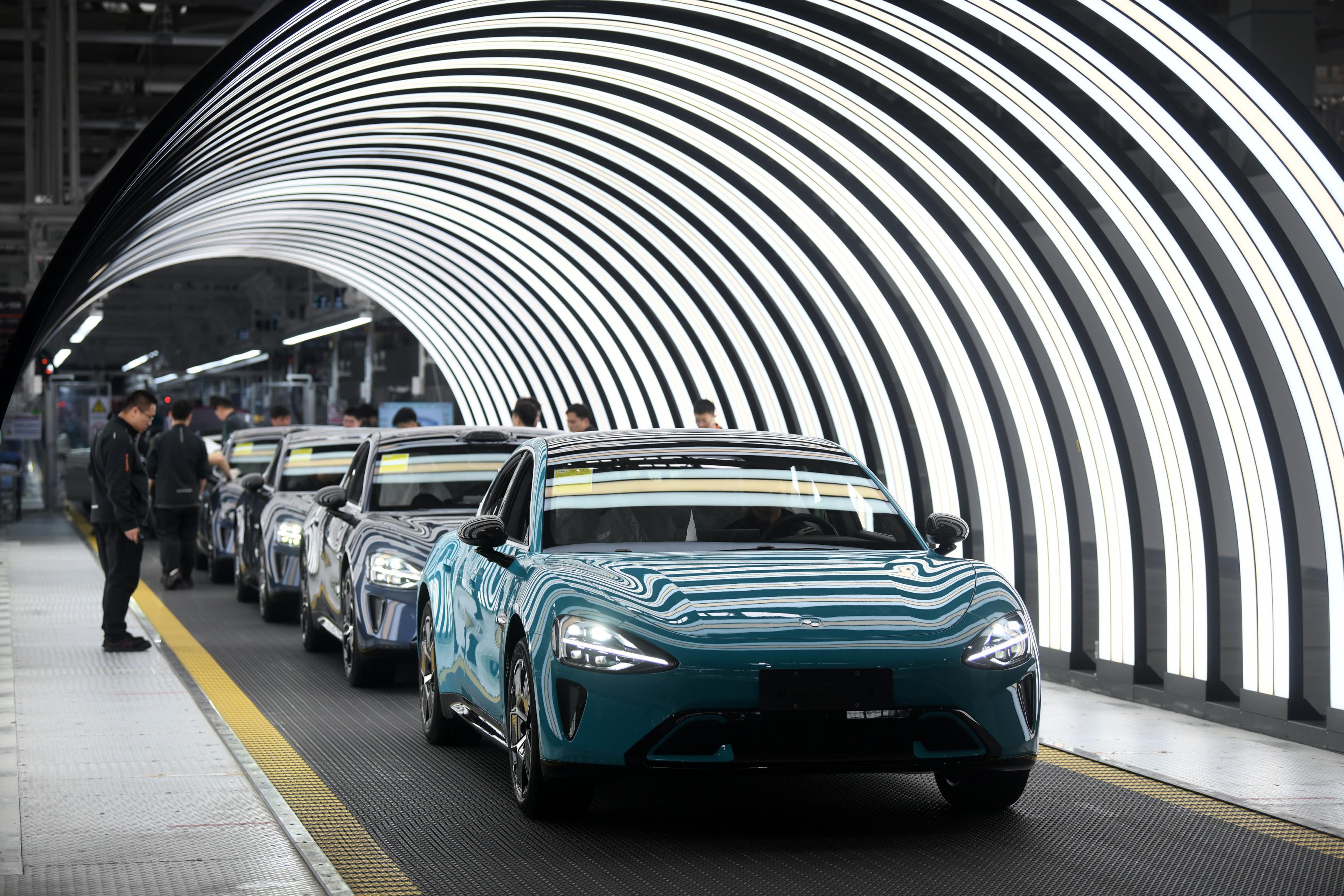
Currently, major automakers including Seres Group, BYD, Xiaomi Auto, NIO, GWM, Changan, Chery, GAC, SAIC, Dongfeng, and Li Auto have voiced support for the Code.
On September 15, the China Association of Automobile Manufacturers (CAAM) issued the Code of Conduct for Supplier Payment Practices of Automobile OEMs (hereinafter referred to as the “Code”), aiming to implement the Regulation on Ensuring Payments to Small and Medium-Sized Enterprises and encourage leading automakers to honor their payment commitments to suppliers.

The document sets forth detailed standards for contract clauses relating to payment terms between automakers and suppliers.
According to officials from the Ministry of Industry and Information Technology (MIIT), the Code refines requirements across key stages—including goods acceptance, calculation of payment terms, account reconciliation, and fund settlement—providing a framework to support the healthy development of the automotive sector.
The Code emphasizes that OEMs and suppliers should adhere to principles of equality, voluntariness, fairness, and integrity, comply with national laws and regulations, and avoid exploiting market dominance to the detriment of suppliers. Instead, it calls for a cooperative and mutually beneficial “OEM–component supplier” ecosystem.
Four critical stages are highlighted:
- Order confirmation: Both parties must clarify the order date, specifications, quantity, and delivery cycle. Any changes require mutual agreement.
- Delivery and acceptance: Suppliers must complete factory inspections. OEMs, in principle, must complete acceptance within three working days of receipt and promptly address quality or quantity issues.
- Payment and settlement: Payment terms are to begin from the date of delivery and acceptance, with a maximum duration of 60 calendar days.
- Contract duration: OEMs are encouraged to establish long-term, stable partnerships, with individual contracts lasting no less than one year to improve supplier stability.

Payment delays have been a long-standing issue in the Chinese auto industry, with some automakers extending settlement periods up to 180 days. Coupled with pricing pressure, this has strained suppliers’ cash flows, in some cases pushing turnover cycles beyond 240 days—well above the warning threshold.
In June, 17 leading automakers across China responded to the revised SME payment regulation by making public pledges to keep supplier payment terms within 60 days. A Ministry survey in August found that companies such as Seres, FAW, and GAC had already made progress in enforcing this commitment.

Currently, major automakers including Seres Group, BYD, Xiaomi Auto, NIO, GWM, Changan, Chery, GAC, SAIC, Dongfeng, and Li Auto have voiced support for the Code.
The MIIT stated that it will strengthen industry communication mechanisms to address issues arising during implementation, and further promote long-term, mutually beneficial cooperation between OEMs and suppliers, thereby advancing the high-quality development of the automotive industry.
Discover more from ChinaEVHome
Subscribe to get the latest posts sent to your email.