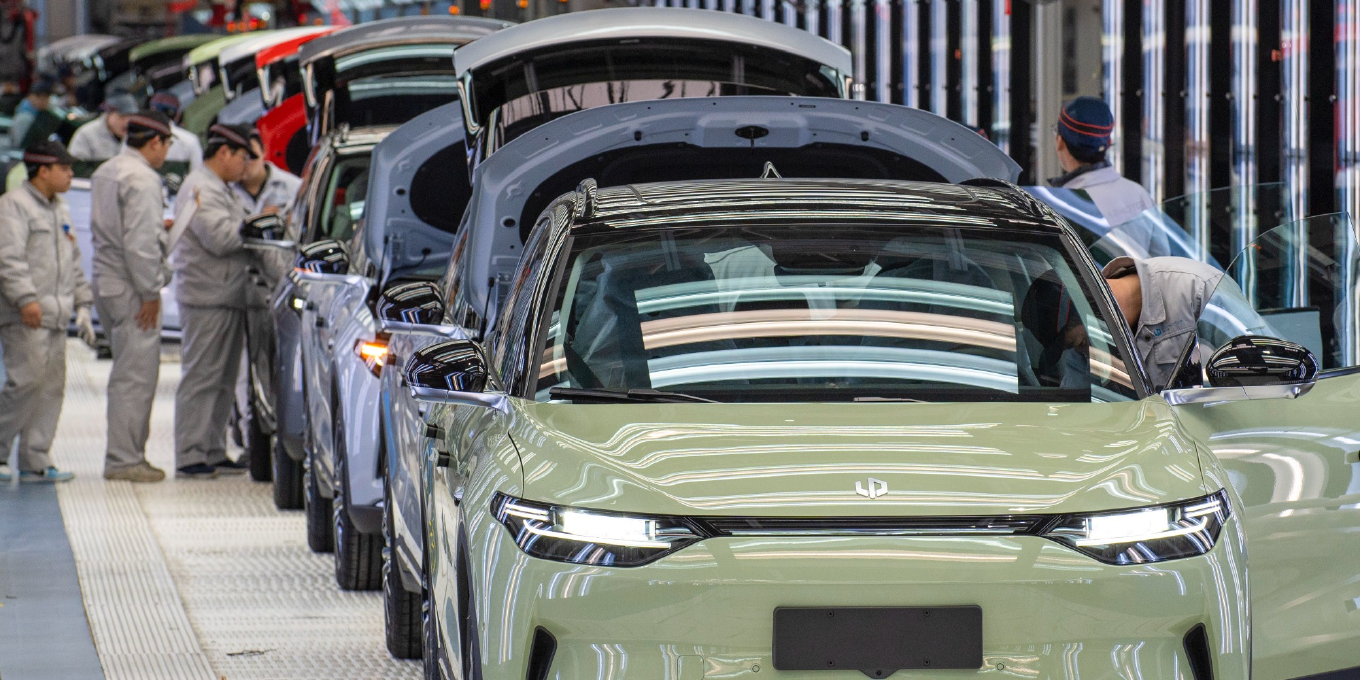
From January to August 2025, China’s auto output totaled 20.83 million vehicles, an 11 % YoY increase, while NEV production reached 9.38 million units—up 31 % YoY.
According to the latest data from the China Passenger Car Association (CPCA), automobile production in August reached 2.75 million units, an 11% year-on-year (YoY) increase.
Of these, new energy vehicles (NEVs) accounted for 1.33 million units, surging 23% YoY and pushing their penetration rate to 48%. By contrast, internal combustion engine (ICE) vehicles totaled 1.42 million units, rising by just 1%.
From January to August 2025, domestic auto production continued its upward momentum, reaching a cumulative 20.83 million units, up 11% from a year earlier.

NEV production totaled 9.38 million units over the same period, expanding 31% YoY and capturing a 45% penetration rate, reinforcing the strong growth trajectory seen in recent years. ICE vehicles, meanwhile, saw output decline 2% YoY.
Structurally, NEVs are now approaching half of total production, underscoring the continued contraction of space for traditional ICE vehicles.
On the demand side, consumer spending remained relatively stable. Auto consumption in August amounted to RMB 409.3 billion ($57.5 billion), up 1% YoY. Cumulative auto spending from January to August reached RMB 3.13 trillion ($439.3 billion), a marginal increase of 0.5%.

Although the pace of growth remains modest, policies supporting trade-ins for new vehicles have helped sustain positive momentum in auto consumption, partially offsetting broader market weakness.
Overall retail sales of consumer goods rose 4.6% in the first eight months of 2025, with autos contributing only moderately, but still ranking among the most significant categories of big-ticket spending.
In terms of industrial output, value-added in the automotive manufacturing sector grew 10.5% YoY in the first eight months, outperforming most other manufacturing industries.
Investment in the sector also rebounded strongly, rising 20.2% YoY, significantly outpacing overall manufacturing investment growth.
This expansion reflects the ongoing build-out of the NEV supply chain, which has spurred concentrated investment in batteries, components, and vehicle assembly plants.

Commenting on the trend, CPCA Secretary General Cui Dongshu noted that the external environment has become increasingly complex and challenging, making the task of stabilizing growth in the auto sector more difficult.
He added that the government’s trade-in subsidy policy has delivered a particularly strong boost to the 2025 market. While auto sales expanded 11% in the first half, growth is expected to moderate in the second half.
Overall, China’s auto industry in the first eight months of 2025 showed stronger performance on the production side than on the retail side.
NEVs continue to drive the structural transformation of the sector, though end-market demand remains comparatively weak.
Whether the industry can sustain stable growth will depend on the combined strength of supply-side expansion and consumption-driven demand in the second half of the year.
Discover more from ChinaEVHome
Subscribe to get the latest posts sent to your email.