Tesla has launched new entry-level Standard variants for Model 3 and Y, featuring significant cuts in equipment and design, while retaining core performance.
After nearly three years, Tesla has finally launched a new vehicle again.
However, this isn’t a “cheap Tesla” in the strict sense—what we see is a newly introduced entry-level version of the Model 3 and Y.

After four days of teasers, both of Tesla’s flagship models now have lower-starting-price variants, with reductions not only in exterior styling and interior finishes but also in equipment — the new “Standard” trim.
This “Standard” is not the same as the prior “Standard Range RWD”—with this new entry variant, Tesla is restructuring its overseas Model 3/Y lineup into:
Standard RWD → Premium RWD → Premium AWD → Performance.
Regarding pricing, both new Standard models are more than 10% lower than the previous entry thresholds:
The Model 3 Standard is priced at $36,990 (a reduction of $5,500), and the Model Y Standard is $39,990 (a $5,000 cut).

So, where exactly did Tesla make the cuts in the new Standard versions? And will they be introduced to China to compete further with new entrants?
Tesla-style Cuts
Let me start with the conclusion: compared to the currently sold Premium trims, the Standard version has very noticeable configuration cuts — yet it still retains the core “soul” of Tesla’s carmaking.
Now I’ll explain what the cuts are, and what the soul remains.
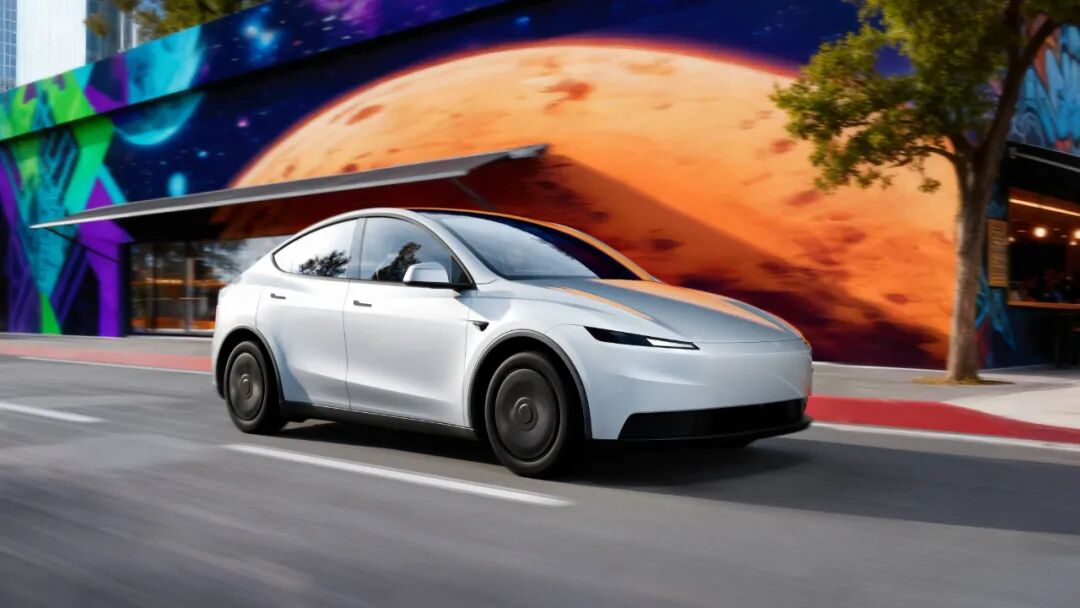
The most conspicuous cuts lie in the front fascia and wheel design of the Model Y Standard, which are substantially differentiated.


Compared to the familiar Premium versions, the Standard’s lighting cluster size and the complexity of its front fascia lines are noticeably diminished, and adaptive high-beam is removed.
Although it may look more “entry-level,” in terms of front-end cohesion the new styling actually feels more futuristic, leaning closer to the Cybercab aesthetic.
By contrast, the front end of the Model 3 Standard sees almost no changes.

Moreover, in the order configuration page you’ll see that the Standard only offers three color options (black, white, gray), three fewer than the Premium-and-above models.

Also, the Standard versions adopt newly designed, more enclosed 18-inch low-drag wheels: the “Prismata” wheels for Model 3, and “Aperture” wheels for Model Y (both 18-inch).
In addition to the wheels, the tires are also changed: Standard versions are fitted with Hankook Ion Evo EV low-rolling-resistance tires. Tesla claims that this wheel-tire combination is its lowest energy-consuming setup ever.
These wheels stand in stark contrast to the Premium’s Photon wheels on the Model 3 and the “Interaction Storm” wheels on the Model Y—the combination with the new exterior means you can tell a Standard version at a glance (without modifications).
Then, inside the car, the cuts continue—or we might say the Standard reverts many areas “back to square one.”

In the interior, ambience lighting is predictably removed. Also excised are power adjustment switches for the steering wheel and seat (now only adjustable via the central screen), and the independent rear-seat control screen.

Digging deeper, the speaker count is cut from 15 to 7 (hardware FM is removed too), seat materials downgrade from fabric + perforated leather to pure faux leather, the headliner becomes plain fabric, and even the movable cover for the central cup holder is eliminated.
Even completely invisible items have been cut.

For example, the laminated dual-glass is canceled; HEPA filters and seat ventilation are removed; side mirrors fold manually; the suspension reverts to a normal multi-link (non-adaptive) setup; and seat heating is limited to the front row.
But in several core parameters—the “soul” I referred to earlier—the Model 3/Y Standard still holds firm.
Here comes the driver assistance systems.
Standard still comes standard with Tesla’s HW4 driving hardware—roughly 720 TOPS compute capacity— and 8 ultra-high-definition cameras (the self-cleaning function is retained).

On the software side, however, it drops Autosteer (the conventional lane-centering function), leaving only the option to purchase FSD (Full Self-Driving).
Another example is energy consumption.
As a major cost factor, the Standard trims naturally reduce battery capacity—in North America the Model 3 Standard is set to 69.5 kWh, and its 0–60 acceleration is reduced to 5.8 seconds; by contrast, the Premium RWD retains above 80 kWh and 4.9 s 0–60.
Yet owing to Tesla’s efficiency control, the Model 3 Standard still achieves an EPA range of 321 miles (514 km), on par with the Y Standard.
Compared to the 363 miles (584 km) of the Model 3 Premium RWD, the range delta closely mirrors the battery capacity difference.
However, the peak charging power for both Standard versions is also lower due to the reduced battery—capped at 225 kW instead of 250 kW in Premium models.

So that outlines the key differences between the two new “Standard” Model 3/Y versions and the current higher trims.
Because Tesla now employs multiple battery strategies across markets, the global reference value of the Standard version lies mostly in the exterior and interior configuration adjustments.
Nonetheless, the fact that Tesla unusually gives a derivative model its own new exterior suggests that even the “Apple of the auto world” is anxious about competitive pressures.
Can It Compete with Chinese NEV Makers?
If we look at the specifications alone, the Standard version in the RMB 200,000 ($28,100) price class looks excessively “bare” when compared to China’s new energy car startups.
Even the Premium trim already appears minimalist in the face of the full-feature onslaught from new Chinese automakers; the further reduced Standard variant has had its competitiveness on paper severely slashed.
That gives rise to another public question: will the Standard actually be introduced in China?
If we extrapolate from the North American discount ratio and assume domestic production, the Model 3 Standard might land around RMB 205,000 ($28,800); the Model Y Standard around RMB 234,500 ($32,900).
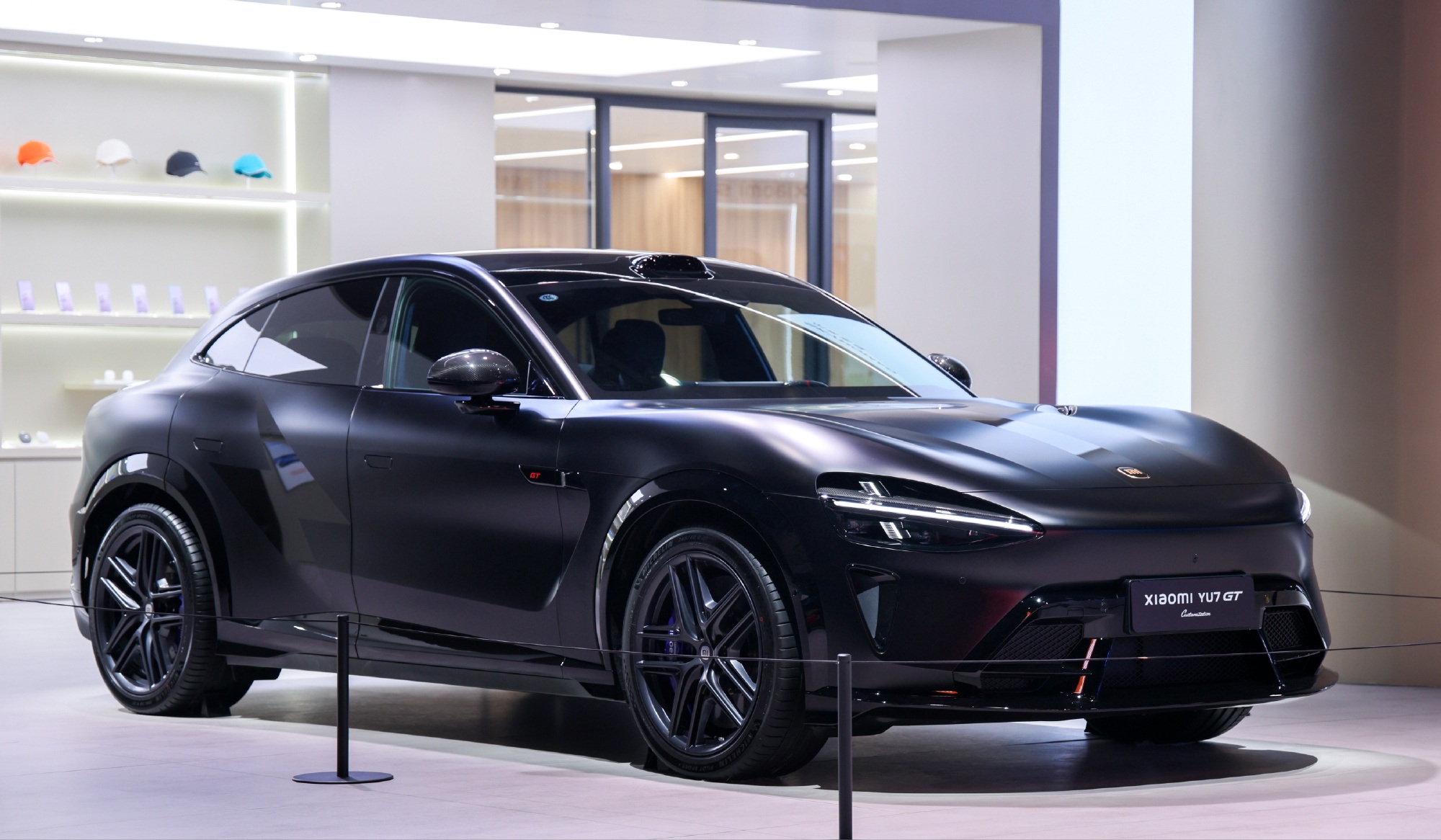
In other words, the Model 3 Standard could align in pricing with Xiaomi SU7 Standard, XPeng’s new P7/P7+; and the Model Y Standard would fall into the same bracket as ONVO L60, Zeekr 7X, XPeng G7.

The core of the debate is competition itself.
Bringing in a RMB 200,000 ($28,100) class car with manual steering wheel adjustment, manual mirrors, no seat ventilation, just 7 speakers and faux-leather seats—in the 2025 Chinese NEV market—no longer qualifies as a “catfish” (i.e. disruptor).
Of course, the Chinese market has long been Tesla’s most unique overseas stage.
The uniquely customized Model Y L exclusive to China already shows that Tesla is accelerating its responsiveness to this most turbulent market demand.
Thus, even if the Standard version is introduced in China, we might as well hope boldly for strong actual specs—and even pricing.
What if they landed a Tesla with a “1-prefix” (i.e. RMB 1xx,000 / below $28,000) price?
Discover more from ChinaEVHome
Subscribe to get the latest posts sent to your email.