The race to mass production points to 2027 as solid-state batteries’ commercial debut.
A critical breakthrough in all-solid-state lithium metal batteries has been achieved by a Chinese research team.

A research team led by Huang Xuejie from the Institute of Physics of the Chinese Academy of Sciences, in collaboration with Huazhong University of Science and Technology and the Ningbo Institute of Materials Technology and Engineering of the CAS, has developed an anion regulation technology that solves the interfacial contact problem between the electrolyte and the lithium electrode in all-solid-state lithium metal batteries.
It is reported that the research team introduced iodide ions into the sulfide electrolyte. During battery operation, these iodide ions move to the electrode interface under the electric field, forming an iodine-rich interface. This layer actively attracts lithium ions, automatically fills all gaps and pores, and maintains close contact between the electrode and the electrolyte.
The prototype battery prepared based on this technology maintained stable performance after hundreds of charge-discharge cycles, far exceeding the level of existing similar batteries.
Wang Chunsheng, a professor at the University of Maryland and an expert in solid-state batteries, commented, “This research solves the key bottleneck problem restricting the commercialization of all-solid-state batteries and takes a decisive step towards their practical application.”
With the breakthrough in scientific research bottlenecks and the acceleration of industrial progress, the commercialization path for all-solid-state lithium metal batteries is becoming increasingly clear.
This year, various battery manufacturers have successively announced mass production timelines for their all-solid-state batteries. According to the plans released by these companies, 2026-2027 will be the critical years for the mass production of all-solid-state batteries.

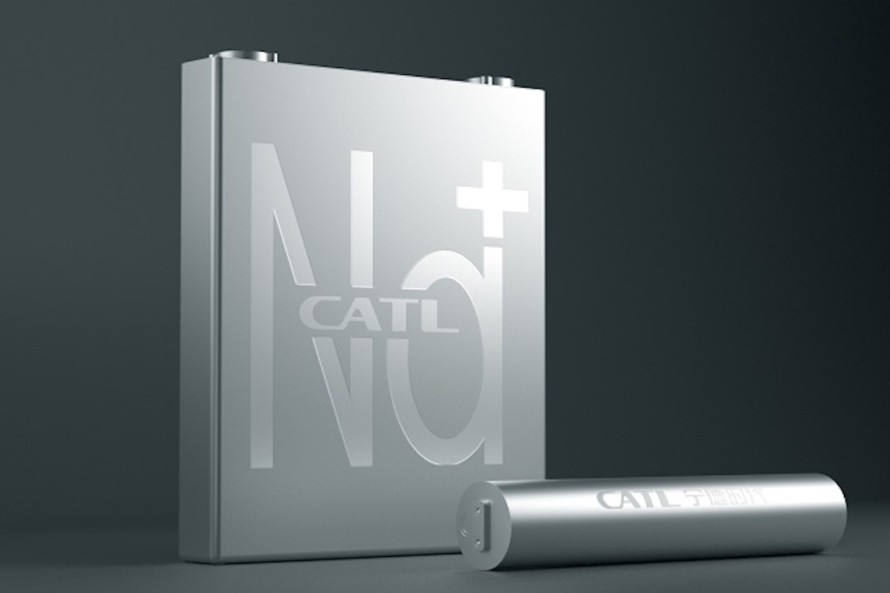
For instance, at the end of May this year, CATL indicated that its all-solid-state battery is expected to achieve small-batch production in 2027. Currently, CATL’s all-solid-state prototype battery has an energy density exceeding 450Wh/kg, is expected to provide a range of 2000 km, and requires only 10 minutes for fast charging.
Other players are also racing ahead: Farasis Energy aims to mass-produce a 60 Ah sulfide cell by the end of 2025, offering 400–500 Wh/kg; CALB’s “Boundless” battery delivers 430 Wh/kg and will enter vehicles in 2027 en route to large-scale output in 2028; EVE Energy, pursuing a sulfide-halide hybrid path, will launch a high-power pack in 2026 and target a 400 Wh/kg high-energy variant by 2028.
On the automotive manufacturer side, BYD has also built a 60Ah all-solid-state battery pilot production line. Laboratory data shows its energy density reaches 450Wh/kg, a 50% improvement over the current Blade Battery, and the official plan is to start batch demonstration and installation in vehicles in 2027.
According to the mass production plans of various manufacturers, the industry generally expects that semi-solid-state batteries are expected to achieve mass production by 2025, and all-solid-state batteries will gradually achieve large-scale commercial use by around 2030.
Discover more from ChinaEVHome
Subscribe to get the latest posts sent to your email.