In the first half of this year, Polestar sold just 69 vehicles in China, recording zero deliveries in both April and May.
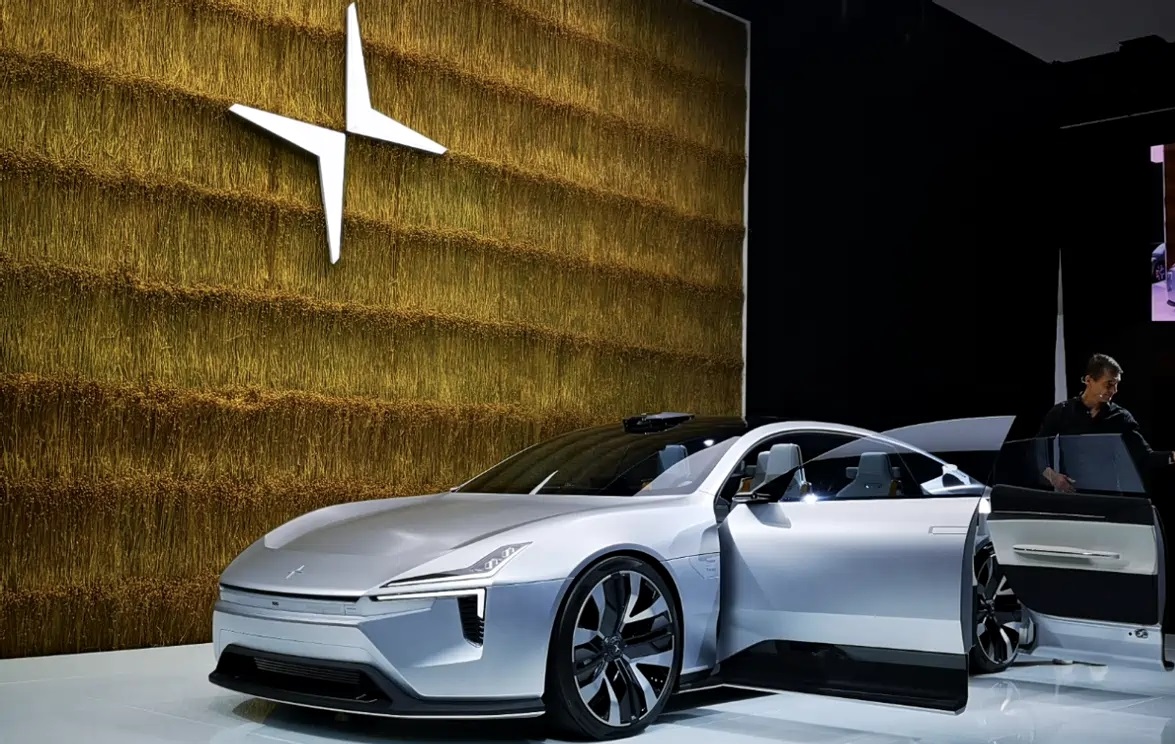
Polestar has closed its last remaining direct sales store in China, located at the L+Plaza in Shanghai’s Qiantan district, according to a Chinese media report on October 13. The shutdown marks the complete withdrawal of the Swedish EV maker’s offline retail network in the country.
Polestar China said the company is “strategically adjusting its operating model in China to better align with local consumer demand,” adding that while the Shanghai store has been shuttered, “all other business operations remain unaffected, and customer rights will not be impacted.”
Customer service representatives confirmed that Polestar has now shifted primarily to an online sales model in China.

However, recent developments suggest the brand is steadily disengaging from the Chinese auto market. In April, Polestar Era Technology—a joint venture between Polestar and Xingji Meizu, a subsidiary of Geely—announced its closure. Several senior executives in the China division departed, and its sales network ground to a halt.
Sales figures reflect the decline. In the first half of this year, Polestar sold just 69 vehicles in China, recording zero deliveries in both April and May. By contrast, its global deliveries in Europe and North America reached 30,300 units during the same period, up 51% year on year.

Originally spun out of Volvo’s performance division, Polestar was established in 2017 as a standalone premium EV brand jointly owned by Volvo and Zhejiang Geely Holding.
But Volvo began scaling back its role in early 2023. The Swedish automaker announced it would divest 62.7% of its 48% stake in Polestar to Geely, reducing its holding to 18% upon completion of the transaction, and confirmed it would no longer provide financial support.
In June this year, PSD Investment Limited—controlled by Geely Chairman Li Shufu—injected a further $200 million into Polestar. While it provided temporary liquidity, it did little to ease the company’s financial strain.
Polestar posted a net loss of $1.193 billion in the first half of 2024, widening 119.4% from a $544 million loss a year earlier. Between 2020 and 2024, cumulative losses exceeded $5.1 billion. By end-2024, the company’s net assets stood at negative $3.329 billion, putting it in a state of insolvency.

With slow product iteration and limited localization, Polestar has struggled to compete against Tesla and domestic players such as NIO, XPeng and Li Auto. Over the past eight years, the company has cycled through seven leaders in its China division without establishing a stable operating structure.
Polestar’s latest strategy still projects annual growth of 30%–35% between 2025 and 2027 and aims for profitability in 2025, but in China at least, the conditions for execution no longer exist.
Discover more from ChinaEVHome
Subscribe to get the latest posts sent to your email.