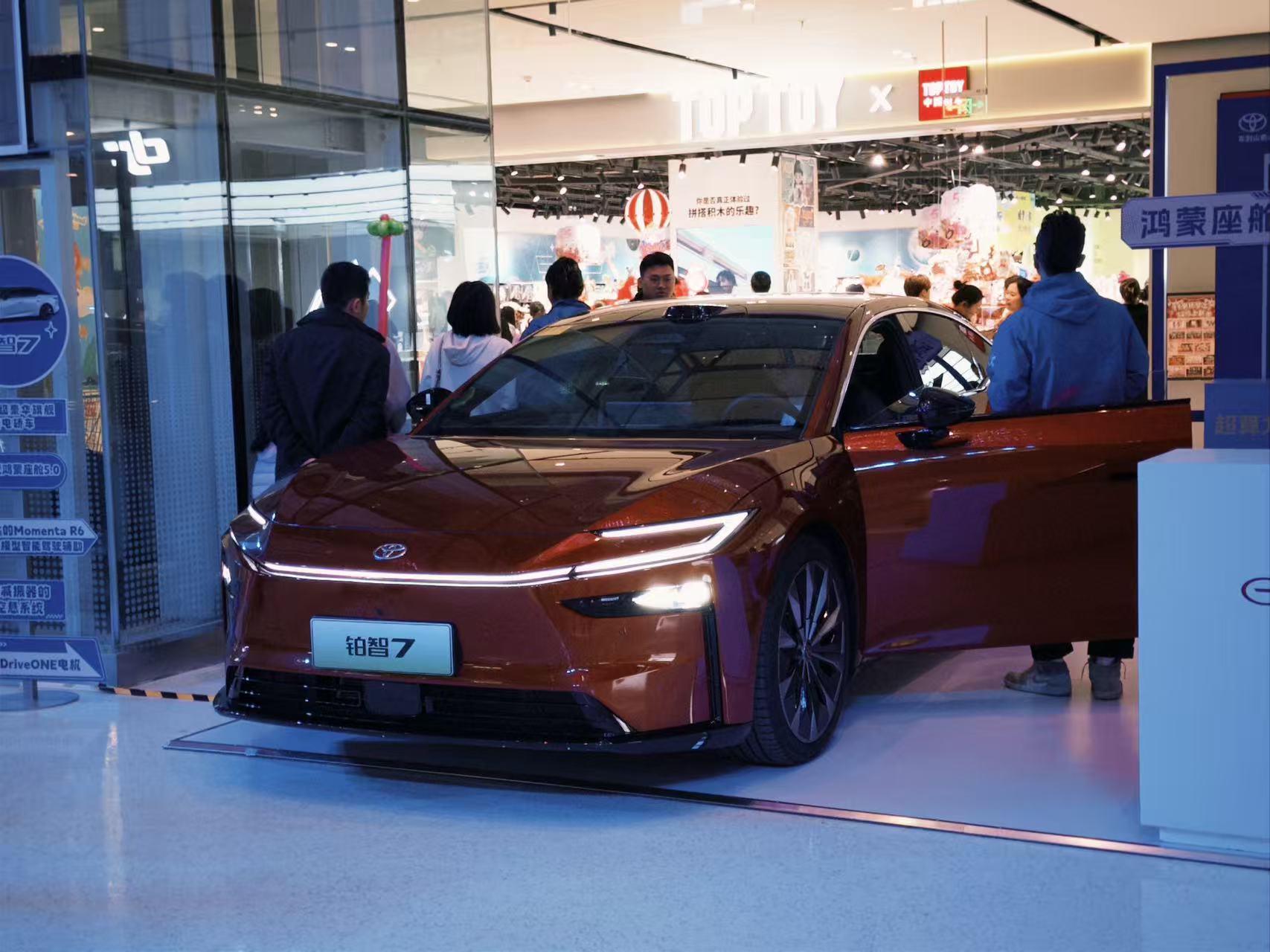
Toyota China is restructuring relationships between its two joint ventures to cope with intensifying NEV competition pressure.
On November 19, Auto Pix reported that Toyota China is accelerating internal restructuring.
Both GAC Toyota and FAW Toyota are preparing to scale back their gasoline lineup and gradually phase out the more than 20-year “twin-car” strategy, laying the groundwork for a deeper transition toward new energy vehicles.

Sources say GAC Toyota will discontinue at least two major internal combustion models in 2026, including a mid-size SUV with monthly sales exceeding 10,000 units and a compact sedan.
Together, these two models contributed around 130,000 units this year, representing one-fifth of GAC Toyota’s sales in the first 10 months.
The long-running “twin-car” strategy—covering Camry/Asia Dragon, Wildlander/RAV4, Levin/Corolla across GAC Toyota and FAW Toyota—once enabled rapid scale expansion.

However, as competition intensified, overlapping models entered internal price conflicts. A person close to Toyota’s sales network said some models fell from monthly peaks near 20,000 units to barely over 1,000, essentially conceding volume to the other joint venture partner.
FAW Toyota will also stop production of a flagship sedan that currently sells more than 10,000 units per month.
At the same time, the two joint ventures are expanding collaboration, including piloting joint retail stores in selected cities to sell both parties’ vehicles under one roof in order to avoid resource duplication.
As the gasoline portfolio contracts, Toyota is positioning NEVs as critical replacements. GAC Toyota’s third production line will begin conversion in the first half of next year to focus on NEV manufacturing. ICE phase-out will be conducted gradually to ease near-term sales pressure.
New-energy models are becoming the primary growth engine. The all-electric bZ3X, launched in March, sold 45,000 units in the first 10 months, surpassing 10,000 in October for the first time, becoming GAC Toyota’s only NEV breakout model.

This month, the bZ3X order target has been raised to 12,000 units, and December is expected to challenge 20,000 units, capturing demand ahead of the purchase tax incentive reduction.
GAC Toyota has set a goal of returning to annual sales of 1 million units between 2028 and 2030, compared with just 770,000 units last year. To fill the gap left by ICE discontinuations, NEV sales will need to increase by at least 300,000 units.
Facing a tougher competitive landscape after the exit of core gasoline models, Toyota China is attempting to break from legacy constraints and reposition itself in a fast-evolving NEV market.
Discover more from ChinaEVHome
Subscribe to get the latest posts sent to your email.