CATL has now supplied power solutions for nearly 900 vessels across multiple categories, securing an estimated 40% share of the global market.
According to a domestic media report on December 4, CATL outlined its marine business roadmap during a press briefing at the 2025 China International Maritime Exhibition, where the company showcased its integrated “vessel–shore–cloud” solution.
Su Yiyi, General Manager of Times Electric Ship, said in an interview that fully electric propulsion has already been deployed across inland rivers, lakes, and coastal waters, with operational use cases steadily maturing.

She added that CATL is working to extend these applications to offshore routes and expects that “in roughly three years,” fully electric vessels could enter the blue-water navigation phase.
Times Electric Ship, founded in November 2022, serves as CATL’s dedicated unit for waterborne mobility. Leveraging the parent company’s expertise in battery chemistry, PACK engineering, and energy-management systems, the team continues to push the electrification of marine transportation.
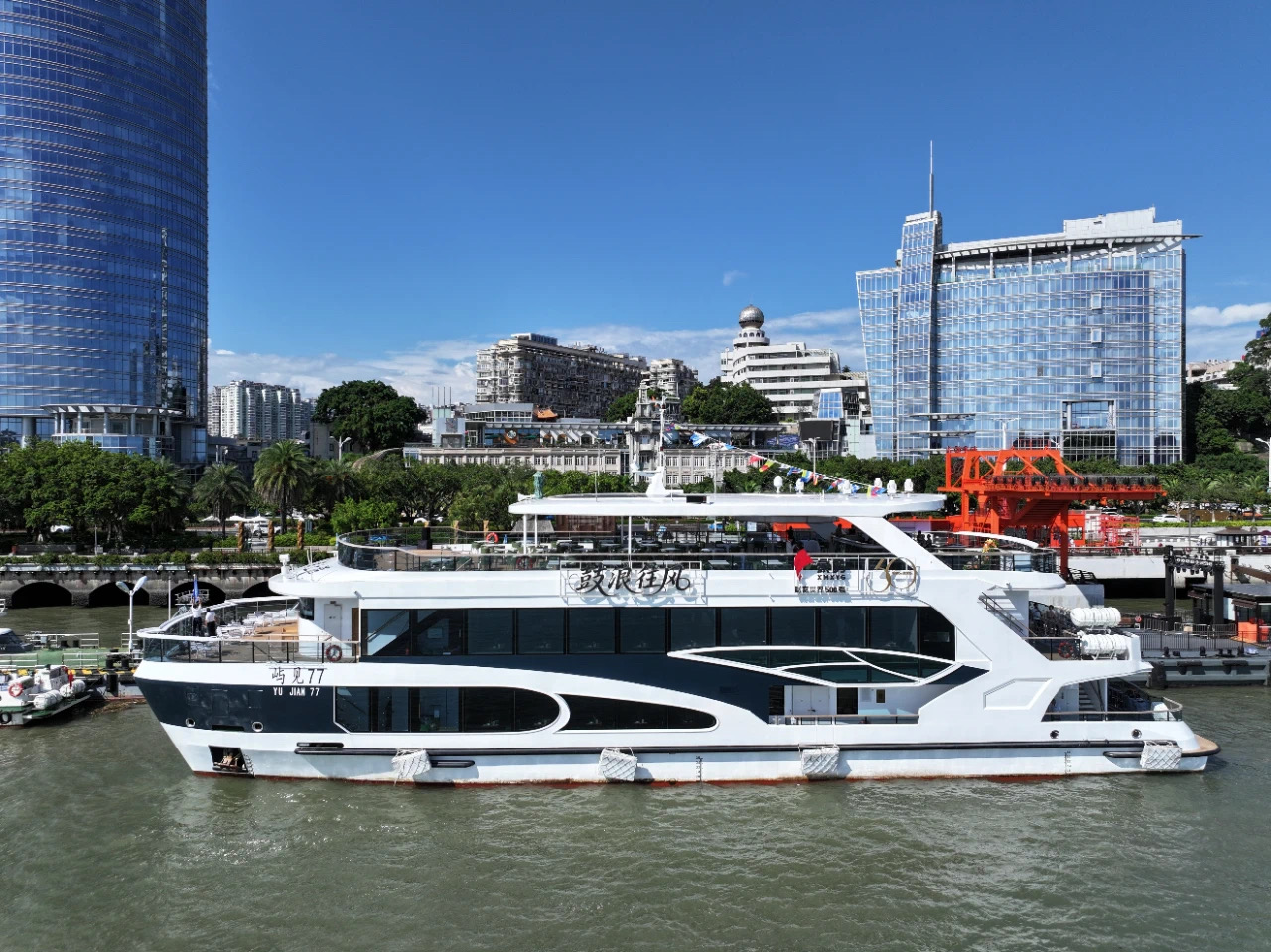
In July, China’s first fully electric offshore passenger vessel, Yujian 77, co-developed with CATL, officially began service in Xiamen Bay.

Equipped with CATL’s marine battery system featuring CTP technology and an integrated CCS high-voltage charging system, the vessel is the first in the marine sector to push battery-pack energy density to 140 Wh/kg.
Yujian 77 carries 3,918 kWh of usable energy and offers an all-electric range of around 100 km. In regular operation, the vessel is expected to reduce annual fuel consumption by nearly 250 tons and cut over 400 tons of CO₂ emissions—equivalent to the yearly carbon sequestration of roughly 20,000 trees.
CATL is also expanding into hybrid sea–air applications. In November, Autoflight—backed by CATL as a strategic investor—unveiled its “integrated sea–air low-altitude economy solution,” combining the “Sunship Zero-Carbon Water Vertiport” with eVTOL aircraft operations.

The Sunship zero-carbon floating airport supports an extended-range mode of over 5,000 km and provides landing and charging capabilities for eVTOL aircraft.
The all-electric eVTOL platform has a maximum takeoff weight of 2 tons and is designed for near-shore missions of up to 200 km.
To date, CATL has delivered power solutions for nearly 900 vessels worldwide, holding about a 40% share of the global market.
Discover more from ChinaEVHome
Subscribe to get the latest posts sent to your email.