China’s auto market shows mixed performance in late 2025, with resilient top sellers amid cautious demand and incentives.
After several years of accelerated demand driven by intensive policy incentives, the pullback of purchase-tax benefits, and increasingly cautious household spending, China’s auto market enters late 2025 with a noticeably subdued atmosphere.
Even so, top-selling products remain resilient.
Tesla’s Model Y posted a 5.7% year-on-year gain in November, Leapmotor’s C10 surged nearly 70%, and sales of the AITO M7 more than doubled—familiar names that continue to anchor the rankings.
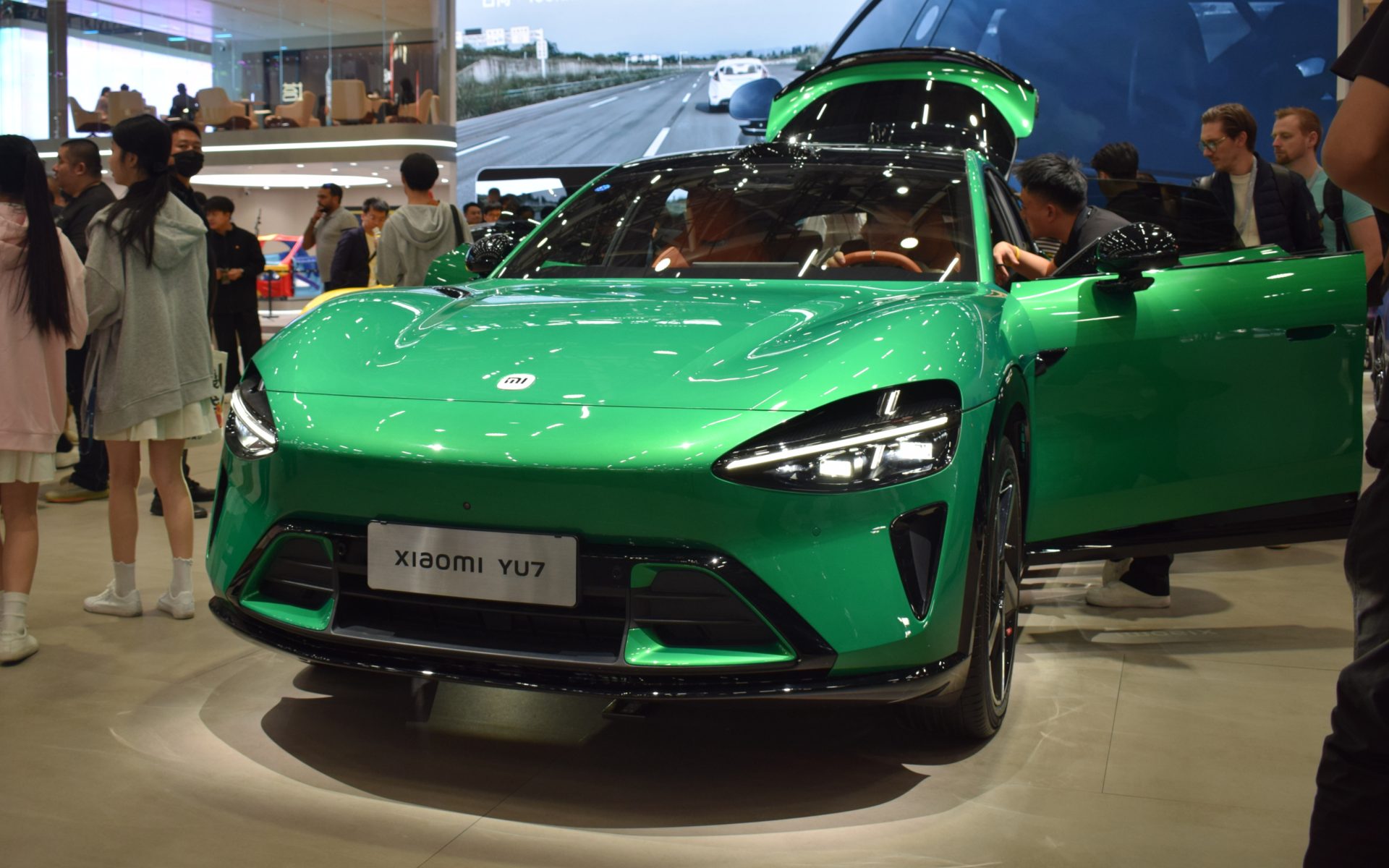
Meanwhile, Xiaomi’s YU7—arguably one of 2025’s most closely watched models—still delivered 33,729 units in November, maintaining a lead of more than 12,000 units over the third-place AITO M7, even as Tesla returned to normal delivery rhythm.
Other newcomers such as BYD’s Seal Lion 06 and the Fangcheng Leopard (Formula Leopard) T7 ranked fourth and fifth.
BYD, currently prioritising overseas markets, also posted record exports for legacy models like the Yuan UP and Song Pro, with the Song Pro alone shipping more than 16,000 units in November.
Market sentiment for 2026 remains cautious. But with major launches such as the revamped Li Auto L series, a sharper push from the Huawei-backed Harmony Intelligent Mobility Alliance (HIMA), Xiaomi’s expansion into higher price segments, and a Galaxy lineup from Geely that rivals this year’s pace, the competitive landscape will only intensify.
For automakers, November and December effectively mark the final window before purchase-tax incentives step down—a tense yet fertile period.
So how did each model perform in November? Below is a breakdown of the month’s results.
No. 1 Model Y: 47,132 units

Following routine early-quarter production adjustments, the Model Y returned to its typical delivery pace in November.
The Model Y sold 47,132 units in November, up 5.7% year-on-year and 141.9% month-on-month, reclaiming the crown in China’s SUV market.
More notably, wholesale data from the China Passenger Car Association (CPCA) shows 58,433 Model Y units shipped in November, contributing to Tesla’s total wholesale volume of 86,700 units—its second-highest month of the year, trailing only September’s 88,321 units.
The Model Y’s surge may also be linked to a mid-month notice by Tesla warning of longer delivery lead times.
On November 19, Tesla announced that the delivery window for the Model Y rear-wheel-drive version and Model Y Long Range had been extended to 4–8 weeks, while other variants would require 4–13 weeks—up from the former 2–5-week range.
Based on these updated timeframes, buyers risk missing 2025 delivery and therefore losing the current, more generous tax incentives.
Combined with the five-year zero-interest program, Tesla’s brand strength, and its powertrain advantages, the Model Y remains highly attractive to consumers.
No. 2 Xiaomi YU7: 33,729 units

Although the YU7 failed to retain the monthly SUV sales title after the Model Y returned to typical output levels, Xiaomi’s flagship maintained a considerable margin over other NEV contenders.
The YU7 sold 33,729 units in November, reflecting only a marginal increase from October’s 33,662 units—likely constrained by production capacity.
Xiaomi has recently accelerated YU7 deliveries. On November 1, the company shortened delivery lead times by 10 weeks for the Standard version, 8 weeks for the Pro, and 4 weeks for the Max.
The Xiaomi Auto app shows the YU7 Max’s current delivery estimate further reduced to 28–31 weeks.
Meanwhile, spy photos of the YU7 GT have begun circulating online. Its launch next year may help strengthen the YU7 lineup’s challenge to the Model Y.
No. 3 AITO M7: 25,264 units

Accelerated ramp-up has clearly boosted AITO M7 volumes, lifting it from sixth place in October to third in November.
The new AITO M7, launched on September 23, saw deliveries jump from 5,970 in September to 16,071 in October and 25,264 in November.
On December 7, cumulative firm orders for the new M7 surpassed 100,000 within 72 days of launch—an average of more than 1,388 units per day.
Four days prior, AITO announced that deliveries had exceeded 40,000 units, and order backlogs remain substantial.
To secure these orders, AITO has offered up to RMB 10,000 ($1,380) in delivery incentives and is aggressively increasing output to deliver as many units as possible ahead of the tax-benefit step-down.
Seres Group Chairman Zhang Xinghai previously said M7 monthly capacity could surpass 30,000 units.
With dual-shift operations now in place, AITO is prioritising M7 production. Whether the M7 can break the 30,000-unit mark in December remains a key question.
No. 4 BYD Seal Lion 06: 25,093 units

Sales of BYD’s Seal Lion 06 softened further, declining 3.7% month-on-month to 25,093 units in November.
Notably, BYD’s wholesale data shows 35,081 units shipped—marking four consecutive months of wholesale growth and bringing cumulative volume since July to 134,665 units.
The Song PLUS, which posted an 11-month decline of 5.8% to 7,871 units, appears to have limited cannibalisation impact, suggesting that the Seal Lion 06 faces stronger pressure from rivals such as Deepal S07 and Leapmotor C10.
No. 5 BYD Fangchengbao Tai 7: 24,019 units

In its second full delivery month, BYD’s Fangchengbao Tai 7 continued to perform strongly.
T7 sales rose 20% month-on-month to 24,019 units in November. On November 27, just 80 days after launch, cumulative Tai 7 sales exceeded 50,000 units.
Improving production contributed significantly, ensuring faster overall deliveries and higher volumes for premium colors such as Frost Mist Grey and Emerald Peak Green.
Fangchengbao’s purchase-tax support policy for the Tai 7 lineup also boosted demand.
Fangchengbao’s split between the city-focused Tai-series and the off-road-leaning Bao-series has sharpened product positioning.
Focused primarily on urban use, the Tai 7 still offers semi-rugged capability—thanks to the DiSus-C suspension system, side-hinged tailgate with optional full-size spare, and its signature boxy design—allowing it to appeal across a broad user base.
No. 6 BYD Yuan UP: 20,628 units

The BYD Yuan UP sold 20,628 units in November, up 4.1% month-on-month but down 3.6% year-on-year, dropping two places to sixth in China’s November NEV SUV rankings.
The standout metric this month is export growth.
The Yuan UP shipped 10,517 units overseas in November, up from 8,500 in October—an increase of 2,017 units, far outpacing domestic growth of 813 units.
As domestic demand softens for this RMB 100,000 ($14,150)-class NEV SUV, BYD’s accelerated global expansion is opening new lanes.
In China, some BYD dealers have launched limited-time discounts for the Yuan UP’s intelligent-driving version, with markdowns reaching RMB 8,000 ($1,100), boosting its appeal.
No. 7 AITO M8: 16,284 units

Under pressure from the new AITO M7 and intensifying competition, the AITO M8 saw another monthly decline.
The M8 sold 16,284 units in November, down 6.9% month-on-month and well below the 21,564 units recorded in July.
Yet the model remains the top-selling vehicle above RMB 400,000 ($55,200) in China across all energy types and categories, ahead of the Audi A6L (15,350 units) and Audi Q5L (11,685 units).
AITO faces multiple challenges next year, including the revamped Li Auto L series and Xiaomi’s entry into the extended-range segment.
In its latest livestream, HIMA also confirmed plans for minor refreshes of the M7 and M8, a major update for the M5, the new M9L, and an all-new M6.
Whether the M8 can maintain its dominance in the RMB 400,000-plus market next year remains to be seen.
No. 8 Leapmotor C10: 15,390 units

Leapmotor’s C10 delivered 15,390 units in November, up 69.8% year-on-year but down 8.6% month-on-month, ranking just behind the Model Y and AITO M7 among mid-size NEV SUVs.
On November 24, cumulative C10 sales passed the 200,000-unit milestone. Since its launch in March 2024, the model has averaged nearly 10,000 units per month over 21 months.
The C10’s ascent has been steady. Its first full sales month in March 2024 saw just 5,368 units, steadily rising to the 6,000 range and stabilising above 11,000 units after the 2026 model launched in May.
Improved value for money has been decisive for the C10’s progress. Still, in a market crowded with high-value mid-size SUVs, sustaining momentum will require continued refinement—something worth watching closely.
No. 9 Geely Galaxy E5: 14,223 units

The Geely Galaxy E5 sold 14,223 units in November, down 25% year-on-year but up 6% month-on-month.
As the first breakout model for the Geely Galaxy brand, the E5 surpassed 210,000 cumulative sales on November 3—just over a year after its August 5, 2024 launch.
Even with a RMB 2,000 ($275) upward price adjustment for the 2026 model introduced in July, its monthly sales have continued to rise.
Balanced dimensions, pricing, and feature configuration give the E5 a clear edge over competitors such as BYD Seal Lion 05 EV, Seal Lion 06 EV, and Leapmotor C10.
Whether the E5 can continue setting new monthly highs before BYD launches the updated Yuan PLUS remains a key storyline.
No. 10 BYD Song Pro: 12,973 units

The BYD Song Pro replaces ONVO L90 as the tenth-ranked NEV SUV in November.
The ONVO L90 appears to have been impacted by the NIO brand ES8 (10,689 units in November, ranked 13th), with L90 sales falling from 11,722 in October to 5,970 in November, dropping to 36th place.
The Song Pro sold 12,973 units in November, up 17.2% month-on-month. Despite being six years into its lifecycle, the model continues to show strong competitiveness thanks to upgrades such as fifth-generation DM-i hybrid technology and the TianShen Eye intelligent-driving system.
More impressive is its export performance: 16,671 Song Pro units were shipped overseas in November—surpassing domestic sales.
The model is now available in markets including Ukraine, Brazil, the Philippines, and the UK.
Local production in Brazil began in October, and BYD’s Brazil plant is expected to raise annual capacity to 300,000 units by late 2026.
Discover more from ChinaEVHome
Subscribe to get the latest posts sent to your email.