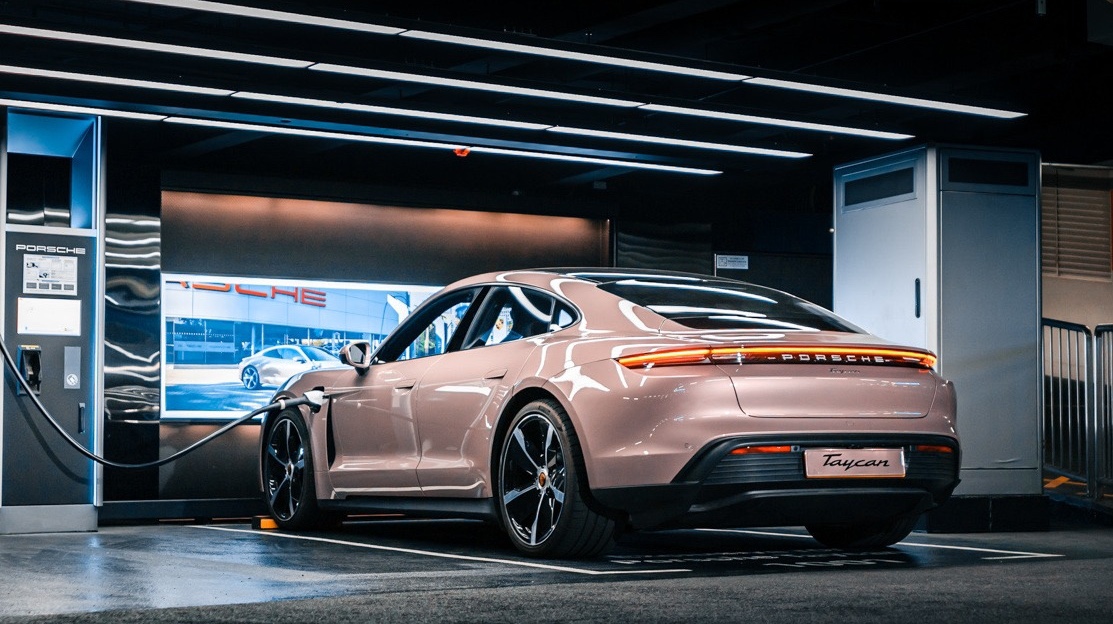
The shutdown applies only to Porsche-exclusive fast charging stations, while dealer chargers, destination charging, and third-party networks will remain accessible.
On December 22, Porsche China announced an adjustment to its exclusive charging services and said it will gradually cease operations of its self-built charging stations.
According to a notice sent to users, Porsche’s self-built charging network will stop operating from March 1, 2026.

Porsche-exclusive fast charging stations, including all Porsche-owned high-power DC fast-charging stations, will be discontinued and progressively removed from the charging maps in the Porsche App and Porsche WeChat mini program.
Porsche said the adjustment applies only to its exclusive charging scenario.
Other charging options will remain available, including chargers installed at Porsche Centers (dealerships), Porsche Destination Charging stations, and third-party charging networks integrated into the Porsche charging map.

In terms of scale, the shutdown will involve more than 200 Porsche-exclusive fast-charging stations nationwide, covering major first- and second-tier cities as well as key transport corridors.
While the network is relatively sizable among luxury brands, its utilization and marginal value have come under pressure amid the rapid densification of public fast-charging infrastructure.
Porsche explained that changes in the market environment and evolving user charging behavior have reduced the role of high-power self-built charging networks in daily mobility, making an “optimization adjustment” necessary.

In recent years, luxury automakers including BMW and Mercedes-Benz have also scaled back their proprietary charging networks or shifted toward partnership-based models.
High capital intensity, heavy asset structures, and long payback cycles have made charging operations difficult to justify as efficiency-driven assets for traditional automakers.
With the exception of companies such as Tesla and NIO, which treat charging infrastructure as a core differentiator closely tied to user experience, most automakers have struggled to build lasting competitive advantages in this area.
Porsche emphasized that the charging service adjustment does not signal any retreat from its electrification strategy.
The brand continues to advance its battery-electric product roadmap, including the upcoming all-electric Cayenne.
Market pressure in China remains a key backdrop. Public data show Porsche delivered 213,000 vehicles globally in the first three quarters of the year, down 6% year on year, while deliveries in China fell 26% to 32,000 units.
Discover more from ChinaEVHome
Subscribe to get the latest posts sent to your email.