According to the plan, CATL’s sodium-ion batteries will see concentrated deployment from 2026 across battery swapping, passenger vehicles, commercial vehicles, and energy storage.
On Dec. 28, Contemporary Amperex Technology Co. Ltd. (CATL) held a supplier conference in Ningde, Fujian, where it for the first time publicly clarified the timetable for large-scale application of sodium-ion batteries.
According to the plan, sodium-ion batteries will see concentrated deployment from 2026 across four major segments: battery swapping, passenger vehicles, commercial vehicles, and energy storage, forming a parallel technology pathway alongside lithium-ion batteries.

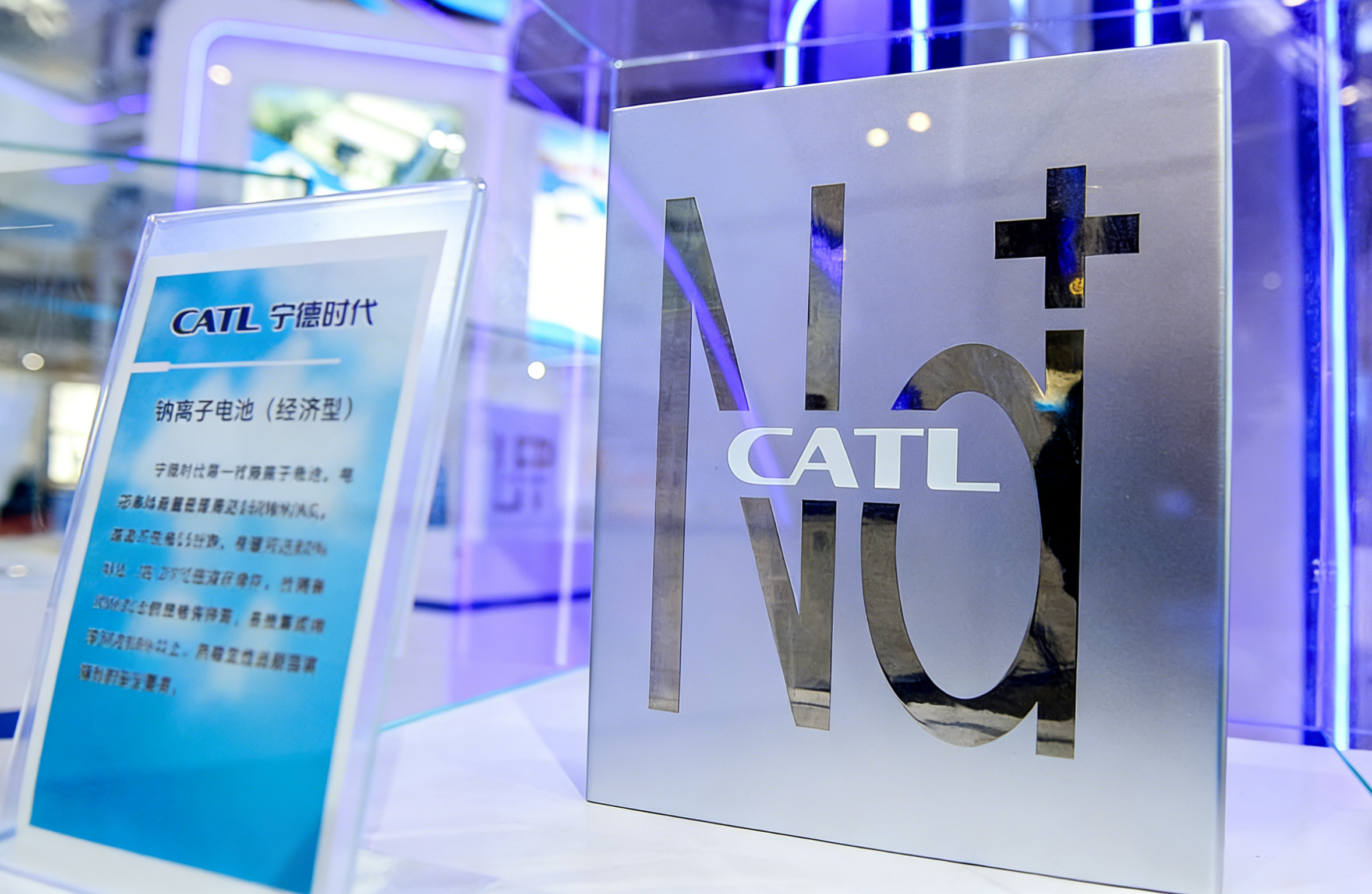
On April 21 this year, CATL unveiled its sodium-ion battery brand “Naxtra” at its first Super Tech Day, stressing that it is the world’s first sodium-ion battery product to achieve large-scale mass production, marking the transition of sodium-ion technology from the laboratory stage to industrial application.
At the product level, the Naxtra system currently covers two main lines: the Naxtra power battery and the Naxtra 24V integrated start-stop battery for heavy-duty trucks. The latter has already made its debut on FAW Jiefang heavy truck models.
CATL said its Naxtra passenger vehicle batteries focus on temperature adaptability, safety, and cycle life, supporting full-range operation from minus 40℃ to plus 70℃.
This is expected to fundamentally address performance degradation issues faced by users in extremely cold environments.

Taking a typical model with a 2.95-meter wheelbase as an example, CATL said Naxtra batteries can deliver more than 200 km of pure electric range in hybrid vehicles, while pure electric models can exceed 500 km, meeting daily commuting and travel needs even under extreme low-temperature conditions.
In September, CATL’s Naxtra power battery passed China’s new national standard certification, becoming the world’s first sodium-ion battery to do so. Related vehicle projects are now being advanced in parallel with customers.

At the industry level, the pace of sodium-ion development is also accelerating. Jianghai Securities noted that 2025 is likely to be a pivotal year for sodium-ion batteries to move from early industrialization toward scaled application.
Average sodium-ion cell prices are around RMB 0.52 per Wh ($0.073 per Wh), and are expected to fall to RMB 0.25 per Wh ($0.035 per Wh) by 2030.
Research Institute SPIR forecasts that global sodium-ion battery capacity for energy storage will reach 580 GWh by 2030, while the global automotive sodium-ion battery market is projected to reach 410 GWh by the same year.
With lithium prices hovering around RMB 120,000 per tonne ($16,800 per tonne), sodium-ion battery costs are now close to those of lithium-ion batteries. However, their cycle life is about 1.5 times longer, resulting in a lower cost per unit of energy stored.
This cost-performance profile helps explain CATL’s decision to accelerate sodium-ion battery deployment at this stage.
Discover more from ChinaEVHome
Subscribe to get the latest posts sent to your email.