- CATL’s Times EV Service signed with Sinochem Oil Sales to jointly convert nearly 2,000 fuel sites into charging and battery-swap stations, leveraging existing site access and customer channels.
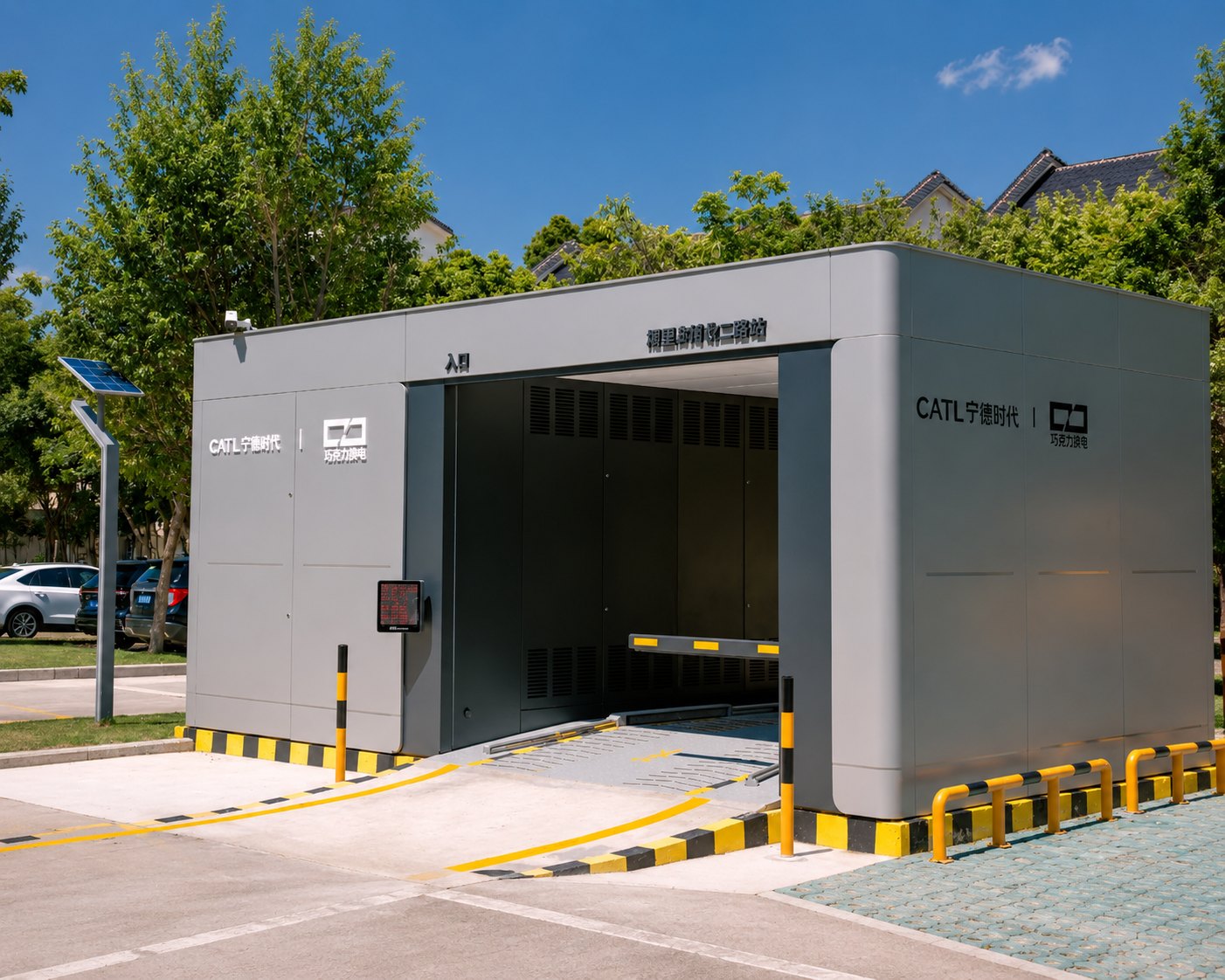
- As of September 2026 CATL reported 2,520 Choco-Swap stations across 200 cities and targets 30,000 stations nationwide, with integrated hubs offering up to three times vehicle throughput per parking space.
- Direct competitors include BYD/Sinopec flash-charging and other energy-fuel partnerships, while execution risks include site retrofits, grid capacity, standardization across partners, and rapid scaling logistics.
CATL’s wholly owned subsidiary Times EV Service has signed a strategic cooperation agreement with Sinochem Oil Sales to jointly develop and operate charging and battery-swapping stations.
Under the agreement, Sinochem Oil Sales will provide sites, government and commercial liaison support, and customer resources. EVOGO will handle station construction, battery equipment installation and maintenance, and commercial operations, integrating battery swapping into the existing energy service network.

Sinochem Oil Sales currently operates nearly 2,000 gas stations across 26 provincial-level regions in China, giving the partnership an established network of sites for battery-swapping deployment.
By adding battery-swapping services to existing gas stations and charging networks, the two companies aim to unlock the value of existing assets and lower the barriers to deploying battery-swapping infrastructure.
Some sites will also be upgraded into integrated energy hubs combining battery swapping and ultra-fast charging. With the same land area and available power capacity, each parking space at these hubs could serve up to three times as many vehicles as one at a conventional charging station.
Similar partnerships have already emerged as energy companies integrate new energy services into traditional fuel networks.

In June, BYD signed a strategic framework agreement with China Petroleum & Chemical Corporation (Sinopec) to develop and operate flash-charging stations under the initiative “10,000-Station Energy Initiative: Fuel & Flash Charge.”
The two companies plan to leverage Sinopec’s nationwide energy service network to accelerate BYD’s “Flash Charging China” strategy. BYD said at the time that it planned to have 20,000 flash-charging stations in operation by the end of 2026.
As CATL accelerates the rollout of its Choco-Swap stations, it is also working with partners across different industries to expand the network’s compatibility and range of applications.

On October 19, CATL, EVOGO and Huawei-backed Yinwang signed a strategic framework agreement to collaborate on a smart battery-swapping ecosystem, connecting vehicle-side, station-side and cloud systems.
Huawei Yinwang will also work with strategic partners to enable participating vehicle models to access CATL’s Choco-Swap network. The companies will explore intelligent energy replenishment features such as autonomous navigation to swap stations, automatic vehicle alignment and fully automated battery swapping.

As of September 2026, CATL had deployed 2,520 Choco-Swap stations across 200 Chinese cities. It plans to expand the network to 30,000 stations, connecting urban locations with highway service areas and advancing the development of unified battery-swapping standards.
Discover more from ChinaEVHome
Subscribe to get the latest posts sent to your email.