This article provides a closer look at what Chinese automotive companies brought to the CES 2026
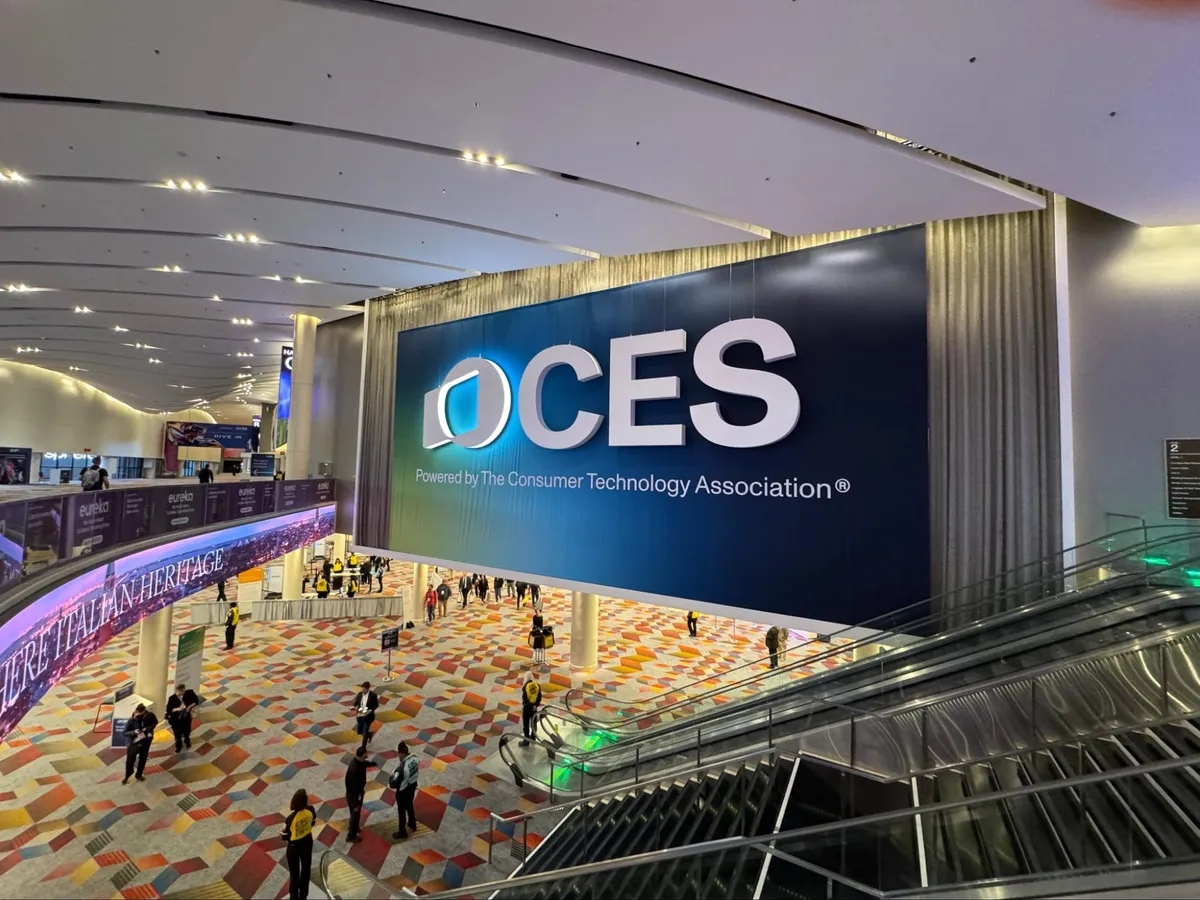
From the first day of CES this year, crowds filled the exhibition halls, particularly the three main halls at the Las Vegas Convention Center (LVCC), which saw constant heavy foot traffic.
This year, “AI+” emerged as the most prominent theme, once again setting the technology agenda for 2026.
Chinese technology companies were out in force.
In the Central Hall, large-scale displays from Hisense, TCL and Dreame were highly visible, while the South Hall directory revealed a long list of technology firms headquartered in Shenzhen.

Chinese automotive and automotive-related companies were, naturally, an integral part of the event.
Compared with CES 2025, Xpeng was absent this year. Zeekr, having fully returned to the “One Geely” framework, did not appear as an independent brand, although parent company Geely presented a range of new intelligent technologies.
Great Wall Motor (GWM) was a familiar face, while Leapmotor—set to further expand overseas in 2026—appeared as a newcomer.
Notably, the Chinese automotive delegation also included a new startup, raising questions about whether it could become a future wildcard in China and global markets.
Here is a closer look at what Chinese automotive companies brought to the CES stage.
GWM
A long-time CES participant, GWM presented one of the most comprehensive automotive displays at the show.
Exhibits included the Wey Alpine 9 MPV, the new Wey Lanshan Intelligent Advanced Edition SUV, the Tank 500 Hi4-T Smart Edition, and even motorcycles shipped to Las Vegas.
Such a large-scale presence reflects the fact that overseas sales now account for more than 40% of GWM’s total volume.
GWM Chairman Wei Jianjun has also stated that the company will continue to pursue an “ecosystem go-global” strategy, including overseas manufacturing and local R&D centers.
GWM CTO Wu Huixiao attended in person and delivered all on-stage presentations in English.

GWM’s global ambitions were underpinned by its technology roadmap. At LVCC, the company showcased a broad range of technologies, including ASL 2.0, its next-generation large model dubbed Agent of Space & Language.

Wu’s presentation highlighted advances in intelligent driving and smart cockpit systems, notably ASL 2.0 and GWM’s self-developed Coffee EEA 4.0 electronic architecture.
The ASL 2.0 concept resembles Tesla’s Grok-style assistant under Full Self-Driving conditions, functioning as an intelligent personal assistant.
GWM also displayed foundational technologies such as the Hi4-Z hybrid architecture, semi-solid-state batteries, hydrogen fuel cell engines, and a V8 engine.

Together, these exhibits outlined GWM’s future direction: leveraging large AI models to enhance cockpit and driver-assistance systems while continuing to deepen its hybrid technology capabilities to compete in both domestic and overseas markets.
Geely
On the day before CES officially opened, Geely held a global launch event in Las Vegas, unveiling its intelligent driving brand G-ASD and revealing its WAM, an action-enhanced world model, marking the evolution of its full-domain AI system into version 2.0.
G-ASD serves as the English brand name for Geely’s “Qianli Vast” intelligent driving system.

Going forward, Geely’s core brands—including Galaxy, Zeekr and Lynk & Co—will uniformly adopt the G-ASD system.
According to Geely, WAM integrates VLA and world-model technologies, enabling better capture and understanding of motion.
Geely emphasized the “high model density” of G-ASD, meaning broader use of large AI models with significantly expanded parameter scales.
Its cloud-based multimodal models combined with world models reach parameter counts in the 100-billion range.
Beyond intelligent driving, WAM also underpins the in-vehicle intelligent agent EVA, forming a cross-domain foundational platform that enhances vehicle-level understanding and interaction.
At the booth, Geely showcased models such as the Zeekr 9X, Zeekr 009 and Galaxy M9, alongside an interactive robot that attracted visitors.

Demonstrations of G-ASD and the latest EVA system also drew international audiences.
Geely said that, subject to regulatory approval, it will advance highway L3 and low-speed L4 functions this year and explore Robotaxi operations.
In essence, Geely aims to re-enter the top tier of new-energy vehicle competition by strengthening its AI system capabilities.
The launch of an English-language brand signals clear ambitions for overseas markets, where G-ASD is likely to appear.
Leapmotor
Leapmotor’s CES 2026 announcements were highly targeted. In partnership with Qualcomm, it unveiled a cross-domain integrated central computing controller based on dual Qualcomm 8797 chips, with the upcoming Leapmotor D19 set to debut the system.

Leveraging the high computing power of dual 8797 chips, the controller unifies control of the smart cockpit, driver assistance, body control and vehicle gateway, significantly simplifying electronic architecture and reducing system complexity.
The system supports up to eight 3K/4K displays and 18 audio output channels, enabling a premium in-car entertainment experience.
For driver assistance, it supports up to 13 cameras along with lidar and millimeter-wave radar, enabling L2-level assistance and point-to-point parking scenarios.
The Qualcomm 8797 chip is built on a 4 nm process and delivers 320 TOPS of dense AI computing power. With a dual-chip setup, the Leapmotor D19 reaches 640 TOPS dense and 1,280 TOPS sparse computing power, rivaling Nvidia solutions.

By jointly launching a next-generation flagship chip platform with Qualcomm, Leapmotor used CES to demonstrate its position in the global new-energy vehicle landscape.
As China’s leading emerging brand by sales, Leapmotor plans to increase its overseas exposure in 2026, first establishing a high-end presence before introducing more affordable products.
Dreame’s Starry Sky Plan
At Dreame’s booth, ChinaEV Home founder Elliot encountered a striking vehicle: the Nebula Next 01 Concept.
The car comes from a Chinese startup known as Starry Sky Plan.
Company representatives said this was Starry Sky Plan’s first CES appearance, noting that the firm has assembled a team of around 1,000 people spanning vehicle R&D, manufacturing, supply chain and intelligent hardware, while forming partnerships with global Tier 1 suppliers.

The Next 01 Concept is a widebody coupe with an aggressive, low-slung design.
Its styling centers on a “lightning waistline” concept, with extensive aerodynamic elements and a large fixed rear wing, evoking comparisons to supercars such as Lamborghini.
According to official specifications, the vehicle features a quad-motor setup with Dreame-developed motors capable of 200,000 rpm, delivering a combined output of 1,399 kW and a 0–100 km/h acceleration time of 1.8 seconds. It is built on an 800 V platform.
Starry Sky Plan said it has targeted global markets from the outset, avoiding price-based competition and starting at the high end. As a new entrant, its road ahead remains long.
Black Sesame Technologies
The Venetian Expo hosted numerous Chinese supply-chain companies, including Black Sesame Technologies.
This marked Black Sesame’s fifth CES appearance. Its flagship product this year was the Huashan A2000 intelligent driving chip.
The Huashan series focuses on intelligent driving and has already been deployed with automakers such as Dongfeng, Geely, Hongqi and JAC, including production models from Lynk & Co.
According to company representatives, the A2000 uses a large-core architecture and algorithm–hardware co-design, incorporating its latest Jiuxiao NPU, with measured performance comparable to Nvidia’s top-tier autonomous driving chips.

Black Sesame demonstrated VLM and VLA applications running on A2000 platforms. Shortly before CES 2026, the chip passed U.S. regulatory review and officially entered global markets.
Elliot was also surprised to learn that Black Sesame has expanded into intelligent AI imaging solutions, used for products such as Li Auto’s Livis AI glasses.

As core hardware capabilities advance, Black Sesame is transitioning from a pure hardware supplier to a broader solution provider, reflecting a wider trend among Chinese companies at CES.
Other Chinese Auto-related Enterprises
Beyond the brands mentioned above, many other Chinese automotive players appeared at CES 2026.
NIO did not set up a booth, but the ET9 was prominently displayed at Park MGM’s Dolby Live exhibition hall, positioned at the center of the venue.
Dolby invited global partners and media to the Live hall, where the ET9 featured live demonstrations, including the “Horizon Edition.”

A NIO ET5 was also brought to Las Vegas by supplier Ambilight.
Online sources indicate that lidar suppliers Hesai and RoboSense were present, while ECARX, ThunderSoft and PATEO showcased smart cockpit systems.
Upstream suppliers such as Desay SV and Hangsheng Electronics also appeared at CES 2026.
Neolix, a Chinese autonomous delivery vehicle company, also attended. Founder Zhao You told Elliot that Neolix has achieved the world’s first commercial deployment of a 10,000-vehicle autonomous fleet.

Globally, Neolix is targeting developed markets with high labor costs and has begun expansion into the United Arab Emirates.
While consumer electronics brands still dominate attention at CES, Chinese automotive companies across the value chain have not lagged far behind in the AI era.
For most automakers, overseas expansion in 2026 is only the beginning.
Looking ahead to CES 2027 and beyond, Chinese OEMs and supply-chain companies may increasingly stand shoulder to shoulder with global leaders such as Bosch and Nvidia.
Discover more from ChinaEVHome
Subscribe to get the latest posts sent to your email.